
First-time visitors to Calabria almost always head straight for the Tyrrhenian coast between Tropea and Scilla, leaving the Ionian side of Catanzaro province largely to itself. Yet it is right along the Gulf of Squillace, where citrus groves slope down to the water and medieval hill towns watch over the coast, that some of Southern Italy’s most honest cooking is still practised.
From 16 to 23 June 2026, this stretch of coastline hosts the second edition of the Calabria Food Fest, a week-long travelling programme designed to connect food-focused travellers directly with local growers, olive mills, and family kitchens. Mid-June is the ideal window to explore the Costa degli Aranci (Coast of Oranges) before the heavy heat of July and August arrives, when the beaches fill up and kitchen service inevitably speeds up.
What to expect from the Ionian table#
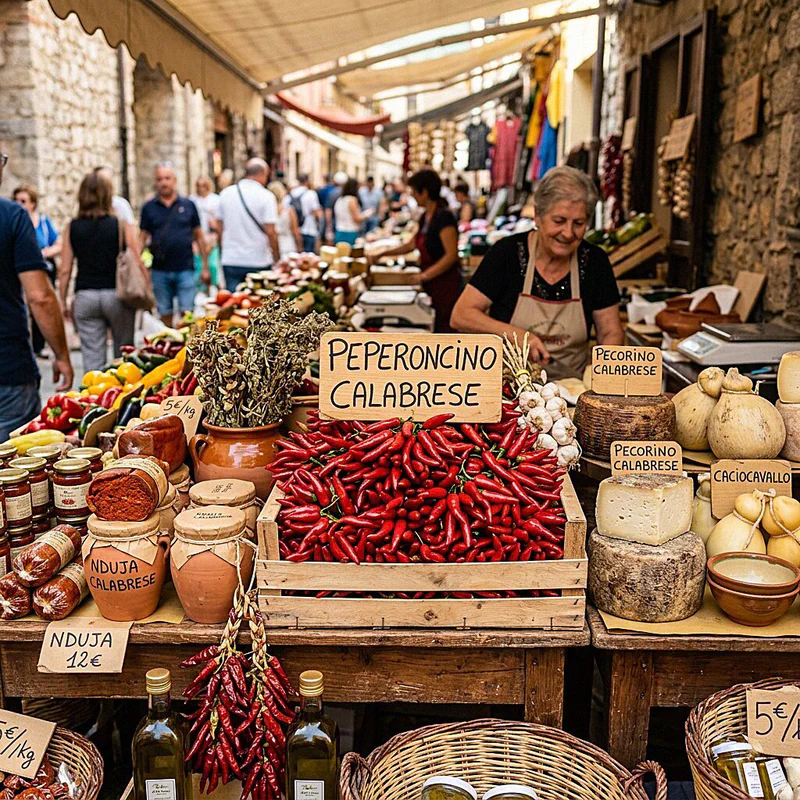
Unlike the busier Tyrrhenian resorts, the Ionian shore keeps a substantial, agrarian cooking style rooted as much in the mountain pastures of the interior as in small-boat coastal fishing. Here, peperoncino is never used merely to mask mediocre ingredients; it gives lift to slow-simmered beans, wild greens, pork ragùs, and rockfish soups.
When you buy cured meats or preserves in this part of Calabria, you can tell right from the cut and the back label what you are dealing with: the difference between a small-batch producer and a tourist-shop jar shows immediately in the coarse grain of the meat, the natural colour of the fat, and an ingredient list that stops at three items. The real advantage of visiting during the festival week is sitting down with the people who raise the pigs, press the olives, and age the cheeses, and asking them directly about their curing times.
Your coastal base: Montepaone and logistics#
Throughout the festival week, the coastal base is Montepaone Lido, set right in the curve of the Gulf of Squillace. Logistics centre on Hotel Rada Siri (on Via Venticinque Aprile), a few minutes’ walk from the water and surrounded by citrus trees: a practical hub that lets you move between the hillside villages and the seaside towns in a matter of kilometres rather than spending hours in a car.
Most international and domestic travellers fly into Lamezia Terme Airport (SUF), which sits about 51 kilometres away (roughly a 45-minute drive across the Isthmus of Catanzaro, the narrowest strip of land in Italy between the Tyrrhenian and Ionian seas). For those registered for the full festival programme, dedicated transfers from Lamezia airport and shuttle vans for every inland excursion are included, a welcome practical detail given that the evening tastings pour generous measures of local Cirò and Greco di Bianco wines.
The culinary stops on the programme#
Squillace Castle and the terracotta craft#
Climbing inland from the coast, the first major stop leads up to Squillace Castle, the Norman stronghold commanding the entire gulf from its ridge. Inside the stone walls, the programme schedules one of the main gala evenings of the week, combining producer talks, live cooking demonstrations, and a dinner where local farmers and artisans introduce their own dishes at the table.
Before heading up to the fortress for the evening, it is well worth the detour to walk through the historic centre of Squillace, famous for centuries for its slip-decorated and incised terracotta (ceramica ingobbiata e graffita). In traditional Calabrian kitchens, local earthenware pots and pignatte were never decorative souvenirs; they were essential kitchen tools built to simmer beans and ragùs slowly beside the embers without scorching the bottom.
Soverato: Ionian seafood at Brezza Fish & Chill#
Dropping back down to the waterfront, the itinerary moves a few kilometres south to Soverato (at Via Marina 24) for an evening by the sea at Brezza Fish & Chill. The kitchen here is led by Michelin-starred chef Luca Abbruzzino, who opened this seafront address to focus on raw Ionian catch, crisp dry-battered fried fish, and clean, light cooking techniques far removed from the heavy sauces of old-fashioned beach restaurants.
With bluefish, red prawns, and daily Ionian catch, you can judge the kitchen’s discipline immediately: when the flesh stays firm, moist at the centre, and smells cleanly of the sea without aggressive dressings, you know both the cold chain and the cooking times were respected to the minute.
Agriturismo Fassi in Guardavalle: rolling fileja by hand#
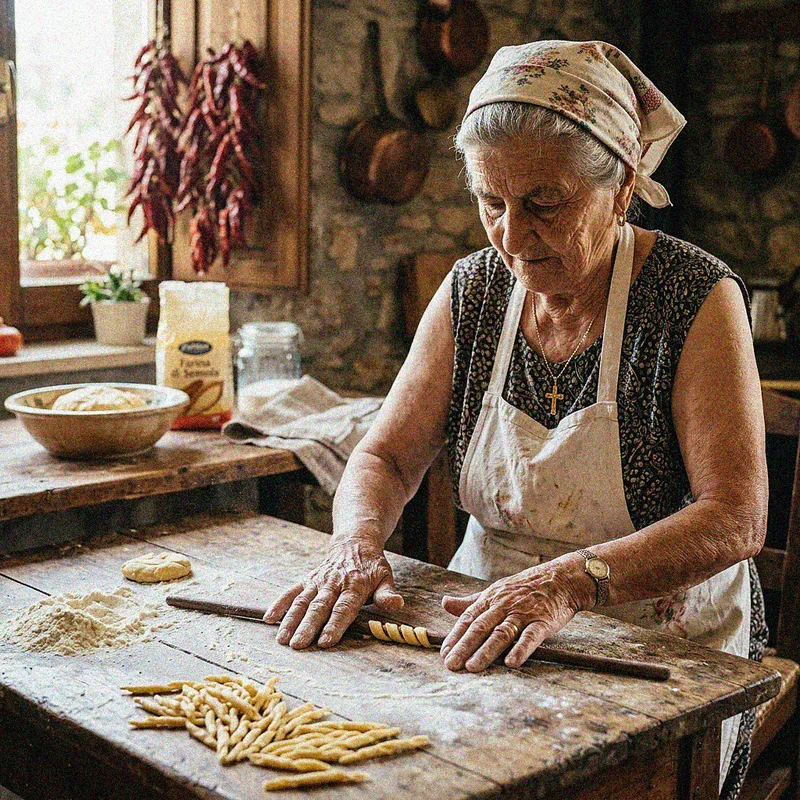
Continuing south along the SS106 coastal road to Guardavalle (in Contrada Pietrarotta), the stop at Agriturismo Fassi shifts the focus to hand-shaped fresh pasta. Here the practical workshop is led by home cooks who roll dough every day and teach guests how to shape fileja using the traditional dinàculu, a thin dried reed rod around which a strip of durum-wheat semolina and water dough is rolled.
As soon as you try rolling them on the wooden board, you realise everything depends on palm pressure and dough hydration: if the semolina is too wet, the pasta sticks to the rod; if it is too dry, it cracks before hollowing out. Once slipped off the reed, good fileja should remain slightly thick at the edges and rough to the touch, ready to trap a Sunday pork or goat ragù.
Practical tips for planning your trip#
If you buy cured meats such as soppressata, capocollo, or wedges of aged pecorino at a market stall, always ask the vendor to vacuum-seal them for your bag and keep the original back label showing the batch and ingredient percentages: vacuum-sealing not only protects them in your checked luggage, it stops the aroma of chilli and garlic from perfuming every shirt you own.
- When to go: The Calabria Food Fest runs from 16 to 23 June 2026; in mid-June the days are long, the Ionian Sea is already warm enough for swimming, and you avoid both the August traffic on the SS106 highway and the waits at coastal tables.
- Booking ahead: Places for the hands-on pasta workshops at the farmhouse and the evening dinner inside Squillace Castle are strictly limited, so book your spot well in advance.
- What to pack home: Alongside ’nduja from Spilinga (flip the jar or casing label and check that it lists only pork, Calabrian chilli, and salt, with no colourings or preservatives), look for orange-blossom honey (miele di zagara) from the Ionian groves and bunches of wild mountain oregano dried on the stem, which keeps a resinous aroma completely different from supermarket jars.
If hand-shaped regional pasta fascinates you, you will find the same artisanal precision in my guide to hand-stamped corzetti pasta in Liguria, while travellers crossing over to the Tyrrhenian coast to explore the folk traditions of Vibo Valentia province can read our guide to the I Tri da Cruci festival in Tropea.