
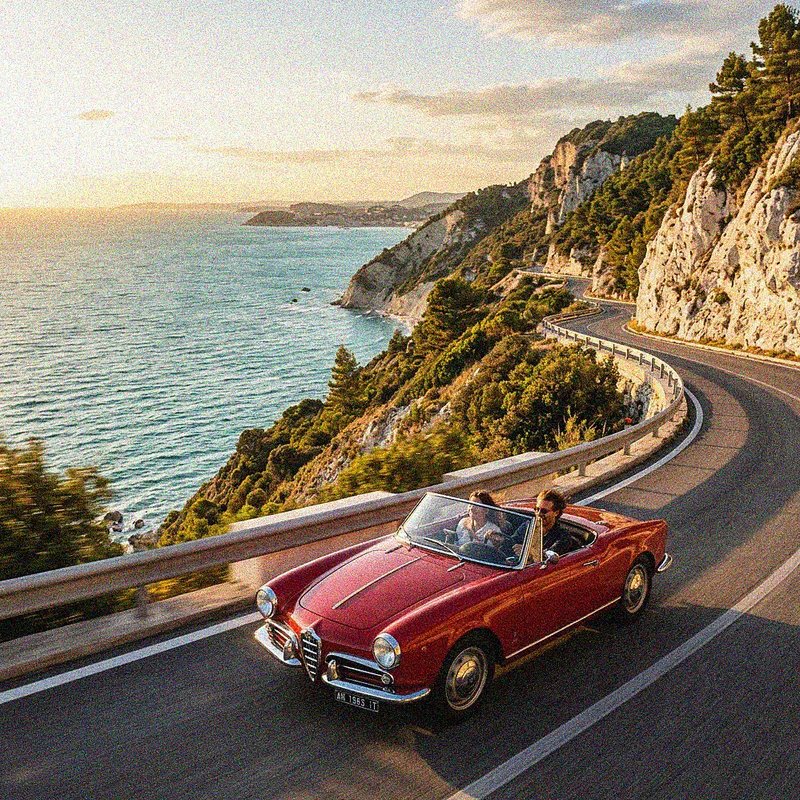
On the road, I discovered that the Adriatic coast isn’t just a destination; it’s a rhythm that changes with every gear shift. Most people think of it as just one long beach, but they couldn’t be more wrong. From the calculated chaos of the Riviera Romagnola to the silent, white limestone cathedrals of the Conero, this route is a masterpiece of Italian variety.
Last August, I started my journey in Ravenna, where the mosaics are as sharp as the morning air, and headed south with the top down and the salt already stinging my eyes. The best part of this route is the way the landscape evolves from flat, sandy horizons to dramatic, pine-covered cliffs that dive headfirst into the turquoise sea. It’s a drive that demands an energetic playlist and a complete lack of a fixed schedule. If you’re driving in Le Marche, don’t miss the stretch between Ancona and Sirolo, where the road hugs the curves of Monte Conero like a lover.
Rock ’n’ Roll in Senigallia#
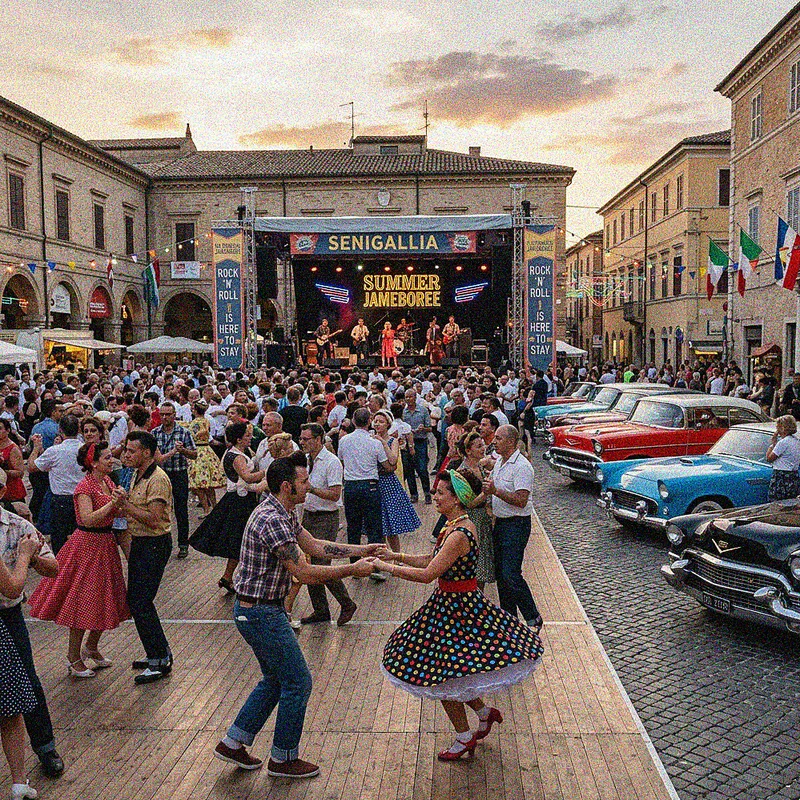
The first major stop for any road trip explorer has to be Senigallia for the Summer Jamboree (if you are planning the trip for this year, keep in mind it runs from July 31 to August 9). It’s not just a festival; it’s a time machine that transports the entire town back to the 1940s and 50s. I spent three days surrounded by vintage American cars, people dancing swing in the piazze, and the smell of hair pomade and sea salt. It’s an explosion of rock ’n’ roll energy that makes you want to trade your modern rental for a ‘57 Chevy.
But here’s my technical advice for the Jamboree: parking in the center is a nightmare that even I won’t attempt. My secret is to park near the train station and walk in, or better yet, find a hotel on the outskirts that offers a shuttle service. If you are traveling with little ones, I highly recommend reading Elena’s guide on why the Velvet Beach is perfect for families.
From Neon to Wild Nature#
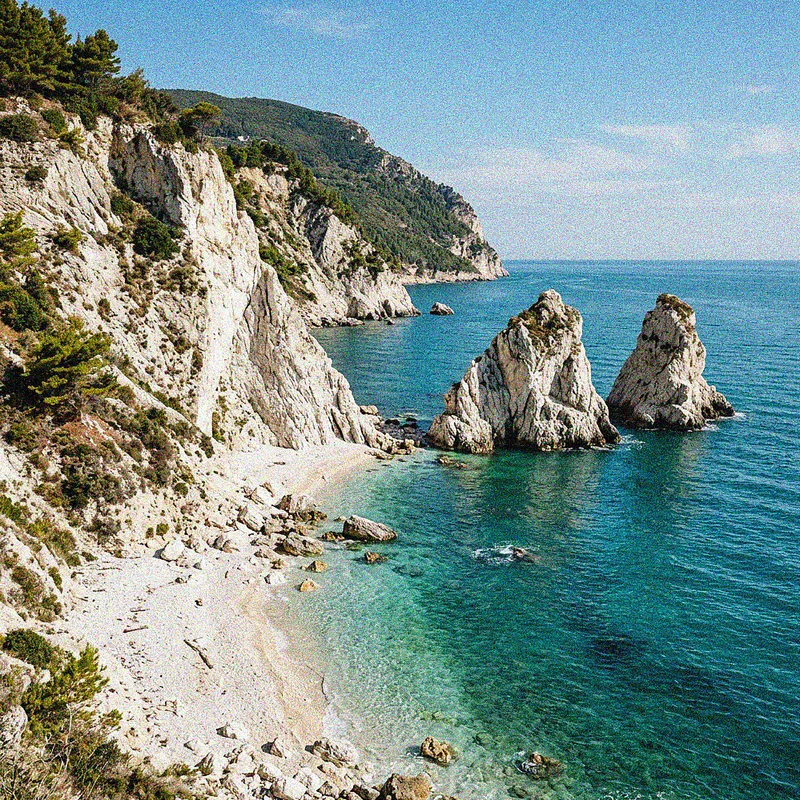
As you push further south into the Conero, the vibe shifts from neon to nature. This is where you ‘dive’ in the literal sense. The Spiaggia delle Due Sorelle in Sirolo is a cathedral of white rock that can only be reached by boat or a very challenging trail that requires actual hiking boots—don’t be the tourist in flip-flops here, please. If the idea of hiking sheer cliffs over the sea excites you, you should definitely check out our guide to the best panoramic trails of the Conero Riviera. The water is so clear it feels like swimming in a gin-clear pool, surrounded by the silence of the cliffs. It’s a stark, beautiful contrast to the bustling bagni of Rimini.
Speaking of Rimini, if you’re there in early July, the ‘Notte Rosa’ (Pink Night) is an experience you won’t forget, even if you try. The entire coast turns pink—lights, drinks, fireworks, even the sand seems to have a rosy tint. It’s loud, it’s crowded, and it’s peak Italian coastal madness. It’s the perfect place to see the ‘real’ commercial Italy before you head back to the wilder parts of the coast.
Abruzzo and Molise: Trabocchi and Engines#
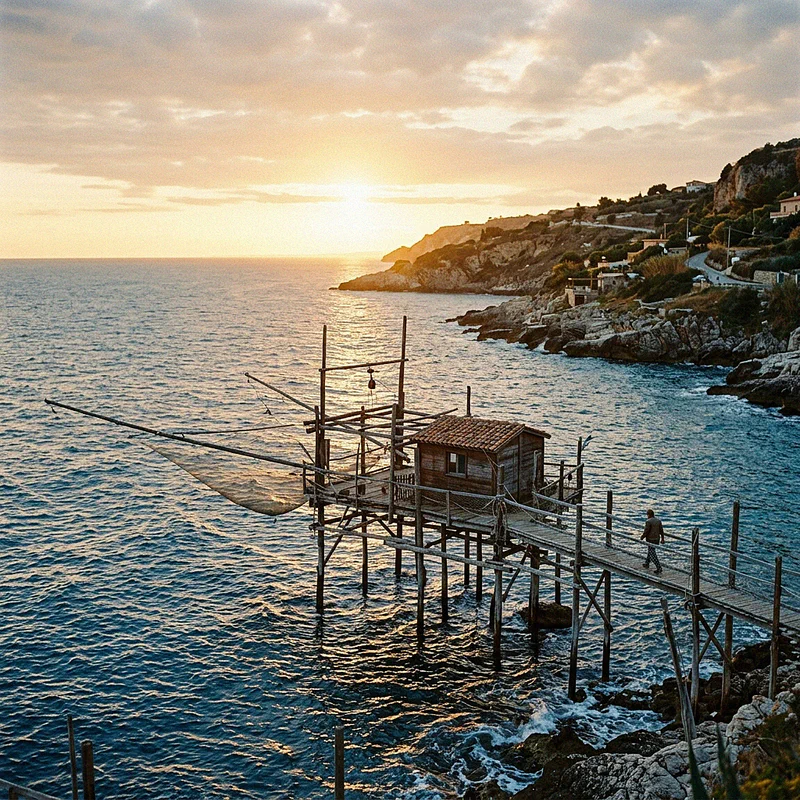
Further south, the road takes you through Abruzzo and the Trabocchi coast. These ancient wooden fishing platforms look like giant spiders standing over the waves. Many have been converted into restaurants where you can eat the freshest seafood you’ll ever taste while the waves crash beneath your feet. It’s a sensory experience that defines the ‘dine’ part of this journey. The smell of grilled calamari mixed with the spray of the Adriatic is a scent I wish I could bottle.
The Hairpins of Gargano#
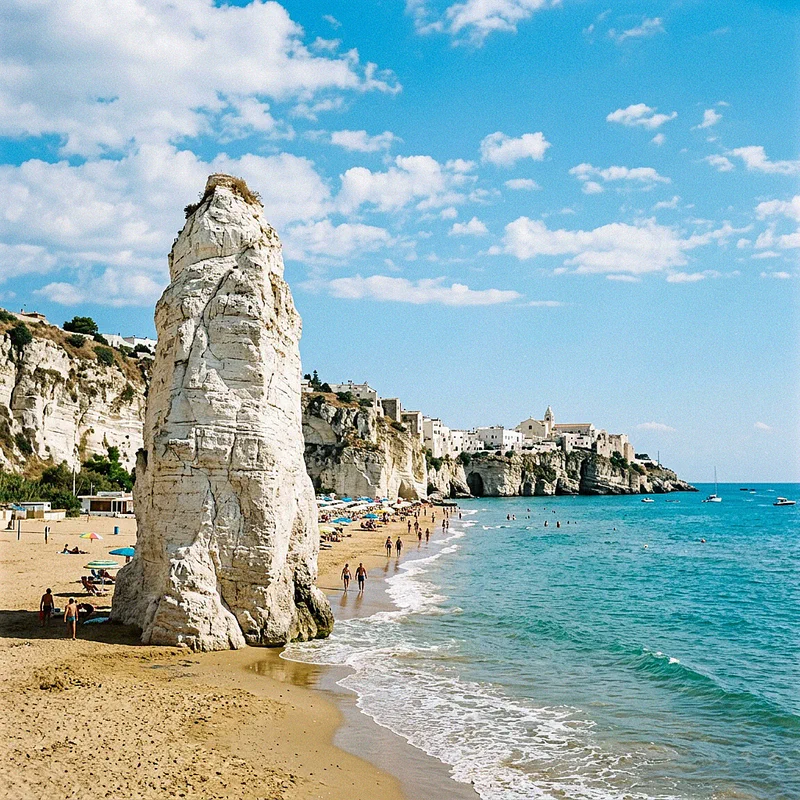
Finally, you reach the Gargano in Puglia, the ‘spur’ of the Italian boot. The road from Peschici to Vieste is a technical masterpiece of hairpins and breathtaking views that will test your brakes and reward your eyes. Vieste itself, with its white houses perched on the edge of the limestone cliffs, is the perfect place to end the trip. The Pizzomunno monolith standing guard over the beach is a sight that stays with you long after you’ve returned the keys—it’s a symbol of a love story so ancient it feels carved into the very rock.
Before you get to Puglia, however, don’t overlook the tiny region of Molise. The coastal town of Termoli is a fortified gem with a ‘borgo antico’ that feels like a maze of narrow, sun-bleached alleys. It’s home to some of the best ‘brodetto alla termolese’ (fish soup) on the entire coast. I recommend parking outside the castle walls and walking in; the silence of the old town is a refreshing break from the hum of the engine. The local ’trabucchi’ here are still very much part of the landscape, providing a skeletal, artistic silhouette against the blue horizon.
The Foresta Umbra in the heart of the Gargano provides a cool, dark canopy of ancient beech and oak trees that feels worlds away from the sun-drenched beaches below. It’s a place of deep shadows and silence, perfect for a mid-day hike when the coastal heat becomes too much. But keep your eyes on the road; the local cows and sheep often decide that the asphalt is the perfect place for a nap, especially on the winding mountain passes. It’s all part of the authentic Adriatic experience.
Road Survival#
But here’s my final local warning: Italian drivers on the Adriatic coast in August treat roundabouts like a gladiatorial arena. Use your blinkers, be decisive, and never assume the person to your left is going to stop. And for the love of all things holy, avoid the overpriced tourist-trap parking lots that charge 20 euros for a patch of dust. Look for the blue lines further back and walk a bit—your wallet and your peace of mind will thank you.
If the final part of the journey through the Gargano has enchanted you, I highly recommend my deep dive dedicated exclusively to the white cliffs and the Foresta Umbra. It’s the wild heart of Italy’s spur, where the road challenges the sea. Keep driving, keep exploring, and never settle for the main road.