Salve, fellow travelers and history enthusiasts! I’m Alessandro, and my heart beats to the rhythm of Italy’s past. There are moments, when I wander through ancient ruins, that I truly feel like Indiana Jones, unearthing forgotten stories with every step. Today, let me transport you to a place where myth and history intertwine, a landscape so profoundly steeped in antiquity that it whispers tales across millennia: Agrigento, and its breathtaking Valley of the Temples.
Agrigento, or Akragas as it was known to its ancient Greek founders, is more than just a city; it is a living piece of Italian history. Perched majestically on Sicily’s southern coast, this place has witnessed centuries of human endeavor, from its golden age as one of Magna Graecia’s most powerful cities to its subsequent transformations under Roman, Arab, and Norman rule. While Agrigento is a standout destination on the island, Sicily has much more to offer. As Luca recently explored in her article about Discovering Sicily’s Best-Kept Secret Islands in 2025, there are numerous lesser-known islands off the coast of Sicily that are waiting to be discovered, each with its own unique charm and history.

The Valley of the Temples: A Journey Through Time#
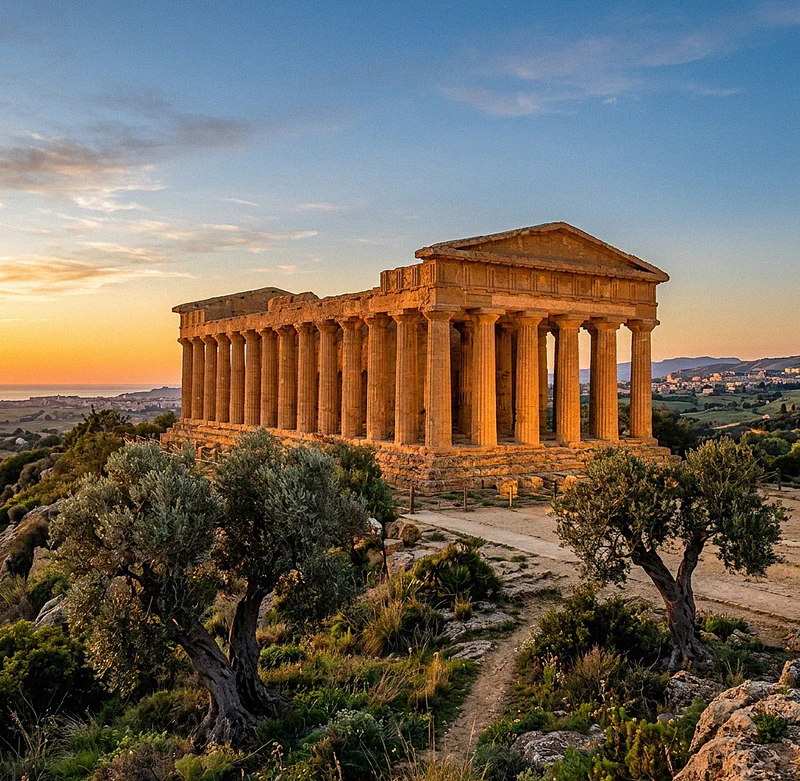
Imagine a panorama of golden-hued Doric temples, rising majestically from an emerald landscape, silhouetted against the azure Mediterranean sky. This is the Valley of the Temples, a UNESCO World Heritage site and undoubtedly the crown jewel of Agrigento. My first visit here felt like stepping directly into the pages of an ancient text, a truly humbling experience.
Founded by Greek colonists from Gela and Rhodes around 580 BCE, Akragas quickly flourished, becoming a beacon of culture and power in the Mediterranean. Its prosperity reached its zenith under the tyrant Theron, between 488 and 473 BCE. While the city faced a tragic decline after the Carthaginian siege in 406 BCE, leading to eventual Roman rule, the magnificent temples remain, enduring testaments to its glorious past.
As you embark on the Via Sacra, the main path winding through the archaeological park, allow yourself to be enveloped by the sheer scale and beauty of these ancient structures. The air itself seems to hum with the echoes of philosophers, priests, and citizens who once walked these very grounds.
The Enduring Majesty of the Temples#
The Temple of Concordia: This is, without a doubt, the most exceptionally preserved Doric temple in the entire Greek world, save for the Parthenon. Standing proudly on the ridge, its almost complete structure is a marvel. It owes its remarkable state to its conversion into a Christian basilica in the 6th century CE. Built between 450 and 440 BCE, its elegant proportions and enduring strength are a testament to ancient Greek engineering and artistry. When the sun dips low, casting a warm, golden glow upon its columns, it’s a sight that will forever be etched in your memory.
The Temple of Juno (Hera Lacinia): Located on the easternmost edge of the ridge, this temple, dedicated to the goddess of marriage and childbirth, offers breathtaking panoramic views of the valley and the sea. Though more ruined than Concordia, its remaining columns still evoke a sense of its former grandeur. It’s said that weddings were once celebrated here, a poignant thought as you gaze upon its ancient stones.
The Temple of Hercules (Heracles): The oldest of the temples in the Valley, dating back to around 500 BCE, this temple once housed a famous bronze statue of Hercules. Though only eight columns remain standing, re-erected in the 20th century, its sheer size hints at its colossal original form. It stands near what would have been one of the city gates, a powerful guardian to ancient Akragas.
The Temple of Olympian Zeus: Prepare to be awestruck by the sheer ambition of this structure. Though largely in ruins, it was once the largest Doric temple ever built, intended to commemorate the victory over the Carthaginians. What remains today are colossal foundations and scattered fragments, including immense stone figures known as Telamons, or Atlases, which once supported the entablature. One impressive Telamon replica lies on the ground, allowing you to truly grasp the monumental scale of the original.
The Temple of Castor and Pollux (Dioscuri): Though only four columns with a partial entablature stand today, reconstructed in the 19th century, this iconic landmark is a symbol of Agrigento’s archaeological park. It’s often featured in photographs and postcards, instantly recognizable.
The Serene Oasis of Kolymbethra Garden#
Hidden behind these walls of ancient history, nestled within the Valley of the Temples itself, is the enchanting Kolymbethra Garden. This serene oasis, once a vast artificial lake and later a lush agricultural area fed by an intricate system of ancient Greek aqueducts, is a marvel of both nature and ancient engineering. Strolling through its groves of citrus, olive, and almond trees, amongst blooming Mediterranean flora, offers a peaceful respite from the grandeur of the temples. It’s a perfect spot to reflect on the ingenuity of the ancients and enjoy a moment of tranquility.
Practical Tips for Visiting the Valley of the Temples#
- Opening Hours: The archaeological park is generally open daily from 8:30 AM to 7:00 PM, with the last entry at 6:00 PM. However, during the summer months (typically July to September), there are often glorious evening openings, extending until 11:00 PM or even midnight on holidays and pre-holidays. Imagine seeing the temples illuminated under the stars – a truly magical experience! Always check the official website for the most current schedule.
- Tickets: A standard admission ticket costs €14 per person, with concessions available for €7 (e.g., EU citizens aged 18-25). Children under 18 often enter for free. A wonderful secret for budget-conscious travelers: entrance is free on the first Sunday of every month! Consider purchasing a combined ticket that includes the Archaeological Museum and the Kolymbethra Garden for a more comprehensive experience. Booking your tickets online in advance is highly recommended, especially during peak season, to avoid queues.
- Getting Around the Valley: The park is extensive, so comfortable walking shoes are an absolute must. For those who prefer not to walk the entire length, or for a welcome break during the hot Sicilian summer, an internal electric shuttle bus runs along the Via Sacra. It costs a few euros per ride and has several stops near the main temples, making it incredibly convenient.
- Best Time to Visit: To truly capture the magic and avoid the crowds and intense heat, I always advise visiting either early in the morning, right when the gates open, or in the late afternoon, leading up to sunset. The light at these times is simply divine, casting long shadows and painting the temples in hues of gold and orange. Spring (April-May) and autumn (September-October) offer the most pleasant weather conditions for exploration.
Beyond the Temples: The Charms of Modern Agrigento#
While the Valley of the Temples is undeniably the main draw, to truly know Agrigento, one must venture into its historic center, known locally as Girgenti. This part of the city, built upon a hill for defensive purposes in the Middle Ages, presents a fascinating contrast to the Greek ruins below, with its labyrinthine streets, Arab-influenced courtyards, Norman palaces, and Baroque churches. Getting lost here is not a problem, it’s an invitation to discover.
A Stroll Through Girgenti#
Begin your exploration on Via Atenea, the beating heart of Agrigento’s historic center. Often referred to as “il salotto” (the living room) of the city, this elegant main street is perfect for a leisurely passeggiata. Lined with charming shops, cafes, and historic palaces, it bustles with local life. Keep an eye out for architectural gems like Palazzo Celauro, where the famous German writer Goethe once stayed during his Italian journey.
Wander off Via Atenea and explore the narrow, winding alleys that climb the hillside. You’ll stumble upon hidden piazzas and unexpected architectural delights. At the very top of the historic center, you’ll find the impressive Cathedral of San Gerlando, founded in 1301. Its elevated position offers fantastic views over the city and, on a clear day, even a glimpse of the sea.
A Sweet Secret: Monastero di Santo Spirito#
For a truly unique and delicious experience, seek out the Monastero di Santo Spirito. This medieval Cistercian monastery, a significant monument in Agrigento’s history, is still home to cloistered nuns. And here’s the secret: these nuns are the custodians of ancient recipes, producing exquisite traditional sweets!
I remember my first time, hesitantly approaching the unassuming entrance. You ring a bell, and a small, rotating “ruota” (wheel) appears, through which you can place your order and receive your treats, maintaining the nuns’ contemplative life. It’s a charming, almost clandestine, transaction. Their couscous dolce (sweet couscous), made with local pistachios, almonds, and chocolate, is legendary, a recipe dating back to the 1300s. Don’t miss their frutta martorana (marzipan fruits) and biscotti ricci (curly almond biscuits). It’s a taste of history, lovingly preserved.
Deepening Your Understanding: The Regional Archaeological Museum#
To truly appreciate the treasures of the Valley of the Temples, a visit to the Regional Archaeological Museum “Pietro Griffo” is indispensable. Located just opposite the eastern entrance to the Valley, this museum houses an extensive collection of artifacts unearthed from ancient Akragas. From intricate pottery and impressive sculptures to everyday objects, it provides invaluable context to the grand ruins you’ve explored, bringing the daily life of this ancient Greek city vividly to life. It’s a must for any serious history buff.
Savoring Agrigento: A Taste of Sicily#
No journey through Italy is complete without indulging in its culinary delights, and Agrigento, with its fertile lands and abundant coastline, offers a true feast for the senses. Sicilian cuisine is a glorious fusion of Greek, Arab, and Norman influences, and Agrigento’s dishes are no exception.
Start with hearty, traditional fare like macco di fave, a rich and comforting fava bean soup, often enjoyed with pasta. Another local specialty is pasta al carciofo, a seasonal delight featuring the region’s excellent artichokes. You absolutely must try ricotta and cavatelli all’agrigentina, a robust pasta dish with handmade cavatelli, fresh tomatoes, eggplant, and a generous sprinkle of salted ricotta.
Given Agrigento’s proximity to the Mediterranean, fresh seafood is paramount. Look for exquisitely prepared sardines, red snapper, and sole. A unique local specialty is polpette di sarde, flavorful meatballs made from sardines, eggs, and breadcrumbs. And, of course, no visit to Sicily is complete without sampling the street food! Grab an arancina, a fried, stuffed rice ball, or a slice of sfincione, a thick-crusted Sicilian pizza.
For dessert, beyond the monastic sweets, indulge in classic Sicilian cannoli, refreshing granita, or the almond-based cubaita (Sicilian nougat). The local pistachios and almonds feature prominently in many confections.
My Recommended Trattorias and Restaurants#
Agrigento boasts a wonderful array of dining options, from charming trattorias to elegant restaurants with views.
- Osteria Ex Panificio: Tucked away on a main street in the old town, this restaurant is housed in a former bakery. It offers traditional Sicilian fish and seafood dishes, and in summer, you can enjoy dining on their terrace. The ambiance, with old bakery equipment, is truly unique.
- Il Re di Girgenti: For a more refined dining experience with a view, Il Re di Girgenti offers contemporary Italian cuisine in a stylish setting, often with stunning vistas of the ancient temples.
- La Terrazza degli Dei: As the name suggests, “The Terrace of the Gods” provides a breathtaking view of the Temple of Concordia. Here, you can enjoy contemporary fish and seafood dishes, beautifully reinterpreted, while soaking in the enchanting atmosphere.
- Trattoria dei Templi: Located on the road leading up to Agrigento from the temple area, this family-run trattoria is known for its delicious traditional food, especially its daily homemade pasta specials and fresh fish. Ask the brothers Giuseppe and Simone for their recommendations!
Practical Tips for the Modern Traveler#
To ensure your journey through Agrigento is as seamless and enriching as possible, here are some insider tips:
How to Get There#
- By Air: The closest major airports are Palermo Falcone Borsellino (PMO) and Catania Fontanarossa (CTA). From there, you can easily connect to Agrigento.
- By Bus: This is often the most convenient and cost-effective way to reach Agrigento from other Sicilian cities. Direct buses operated by companies like Cuffaro run regularly from Palermo (Piazzetta Cairoli, near Palermo Centrale station) to Agrigento (Piazzetta Rosselli), taking approximately 2 hours and costing around €9. From Catania Airport, Sais Trasporti offers services to Agrigento.
- By Train: Direct train services connect Palermo Centrale to Agrigento Centrale. The journey takes roughly 2 to 2.5 hours, with tickets ranging from €17 to €29. Agrigento Centrale station is conveniently located in the city center.
- By Car: For those who love the freedom of the open road, renting a car is an excellent option, allowing you to explore Sicily at your own pace. The drive from Palermo to Agrigento takes about 2 hours (130 km). There are designated parking areas at the Valley of the Temples, such as Porta V - Sant’Anna or near the Temple of Giunone.
Getting Around Agrigento#
- Within the City: Agrigento’s historic center is best explored on foot. Its narrow, winding streets are pedestrian-friendly, but be prepared for some uphill climbs!
- To the Valley of the Temples: From Agrigento’s city center, you can take a local bus. Buses (lines 1, 2, 2/, 3, 3/) depart from Piazzale Rosselli or the central railway station. My advice: take Bus 2/ to the Temple of Giunone (eastern entrance) and then walk downhill through the park. From the lower exit (Porta V), you can catch Bus 1 back to the city.
Hidden Booking Secrets and Accommodation#
- Book in Advance: Especially if you’re traveling during peak season (late spring, summer, early autumn), secure your accommodation and any specific guided tours well in advance.
- Where to Stay: For an authentic Agrigento experience, consider staying in the historic center (Girgenti). This allows you to soak in the evening atmosphere, enjoy local eateries, and easily explore the city’s charming alleys. Options like Hotel Exclusive, Hotel Del Viale, or the delightful B&B Salotto Di Athena offer comfort and proximity to the city’s heartbeat. If you dream of waking up to ancient views, some hotels like Colleverde Park Hotel offer stunning panoramas overlooking the Valley of the Temples.
- Guided Tours: While self-exploration is rewarding, a knowledgeable local guide can unlock deeper insights into the history and significance of the Valley of the Temples. Consider booking a guided tour for a richer understanding.
What to Pack#
- Comfortable Shoes: I cannot stress this enough! You’ll be doing a lot of walking, especially in the Valley of the Temples and the hilly historic center.
- Sun Protection: A hat, sunglasses, and high-SPF sunscreen are essential, particularly during the warmer months, as shade can be scarce in the archaeological park.
- Water: Stay hydrated! Carry a reusable water bottle, especially when exploring the Valley.
Agrigento is a city that truly captures the soul of Sicily, a place where the echoes of ancient civilizations resonate with the vibrant pulse of modern Italian life. From the awe-inspiring grandeur of the Valley of the Temples to the intimate charm of Girgenti’s alleys and the delectable flavors of its cuisine, it offers a journey through time that is both educational and deeply personal.
So, pack your bags, prepare your senses, and let Agrigento reveal its timeless stories to you. If you’re looking to immerse yourself in a region that embodies the essence of Italian heritage, you might want to consider the rolling hills of Tuscany, which I’ve had the pleasure of exploring in-depth as I wrote in my guide to wine lovers’ dream destinations. For a deeper dive into Italy’s rich wine culture, I recommend checking out A Journey Through Italy’s Historic Wine Regions. Buon viaggio!