
As I recently had the chance to re-explore the charming hilltop town of Orvieto, I was struck by the golden hues of its medieval architecture, reminiscent of a bygone era. I still remember my first time in Orvieto. I was walking across Piazza del Duomo under a blazing late-September sun, dazzled by the golden glare of the mosaics. Then, turning the corner behind the cathedral, I caught the eye of an elderly lady sitting on a straw chair in front of her door. With a nod, she pointed to a tiny, almost invisible stone arch. “Down there is the real city,” she whispered to me in a thick local dialect.
However, if you’re drawn to the allure of Italy’s rich cinematic heritage, you might want to head to the Venice Lagoon instead. My colleague Alessandro has a wonderful guide to the lesser-known Venice Lido, which he explores in “A Walk Through the Venice Film Festival’s Golden Years”(/posts/the-lidos-golden-age-a-historians-walk-through-the-venice-film-festivals-roots/), uncovering the fascinating history behind the festival and its iconic golden age.
She was absolutely right. Imagine a city that not only stands proudly on a volcanic tuff rock, but also hides a whole world beneath your feet. A labyrinth of history, mystery, and stories whispered by time.
If you’re tired of the usual postcard photos and want to really feel Italy’s authentic pulse, then Orvieto is your next stop. And trust me, most tourists never find this place… or rather, they never really explore it, walking right over its caves without even realizing it.
Orvieto Underground: A Journey Through Time#
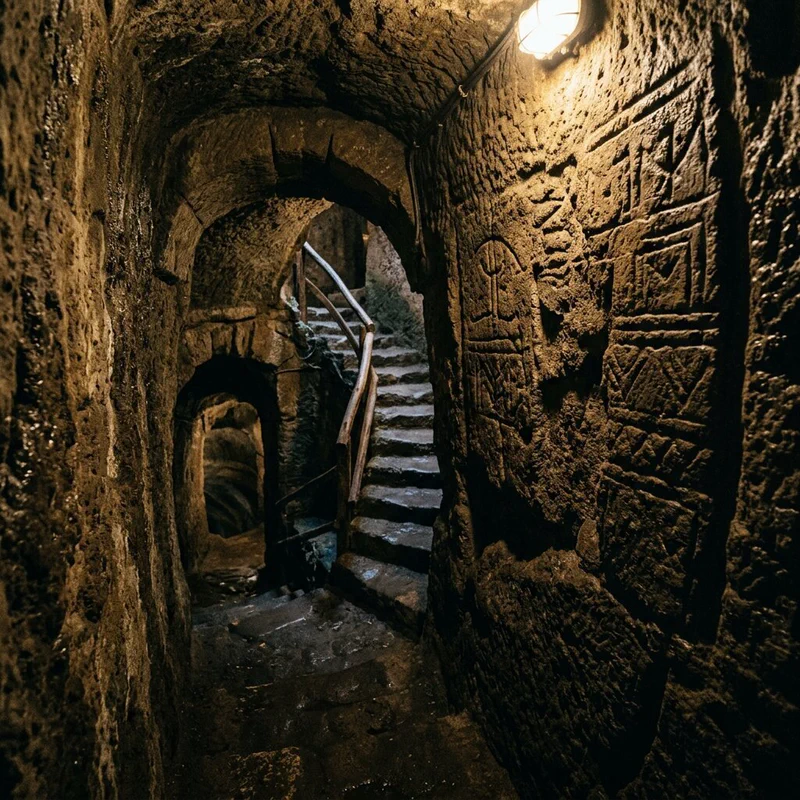
Orvieto is not just its magnificent Duomo or picturesque streets; it’s mostly what lies beneath. Centuries of history have carved out this rock, creating an incredible network of caves, tunnels, and wells.
Get ready for an experience that will leave you speechless, away from the noisy crowds and Instagram influencers who often clutter the narrow alleys, usually for a photo that doesn’t do justice to the real beauty.
Here are the must-see stops on your journey into Orvieto’s hidden heart:
Orvieto Underground (Orvieto Sotterranea): The ultimate starting point is in Piazza del Duomo, 23. I highly recommend taking the guided tour: when I first descended here, the rush of damp chill that wrapped around me gave me goosebumps. Walking through these silent cavities, surrounded by the damp smell of earth and tuff, is the only way to understand the incredible ingenuity of the inhabitants who, over the centuries, carved out dovecotes (essential in case of siege) and ancient medieval olive mills. A perfectly preserved labyrinth that will take your breath away.
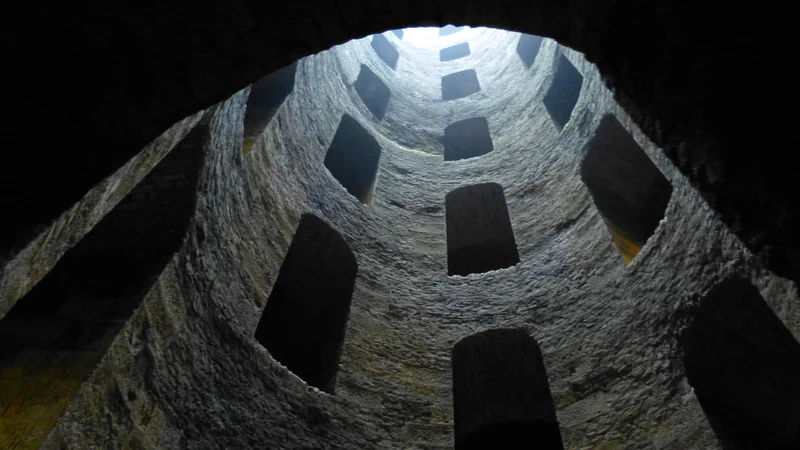
Pozzo di San Patrizio: An absolute masterpiece of 16th-century engineering designed by Antonio da Sangallo the Younger. With its 53 meters of depth and two independent helical ramps of 248 steps each, descending here is an experience almost hypnotic that I still remember in vivid detail. When you lean out of the huge arched windows open to the central void, the spiral perspective makes you feel tiny, enveloped in a twilight interrupted only by warm, golden lights illuminating the green water at the bottom.
Pozzo della Cava: Located in Via della Cava, 28, it’s Orvieto’s oldest well, entirely hand-carved into the tuff. I had the good fortune to chat with Marco Sciarra, whose father Tersilio rediscovered this well in 1984 during the renovation of his medieval house. Marco showed me the ancient Etruscan chisel marks on the rock: it’s mind-boggling to think of the pure manual labor involved. If you happen to be here during the Christmas season, don’t miss the evocative Presepe nel Pozzo: life-size mechanical characters move in the heart of the tuff cave in an indescribable atmosphere.
Il Labirinto di Adriano: (Via della Pace, 26). This is no ordinary attraction; it’s an incredible story of chance that I love to retell. In 1970, pastry chef Adriano Di Mario, while working on the renovation of the back room of his family’s pastry shop (open since 1962), began digging and found himself in front of an immense complex of over twenty connected Etruscan caves. Today, his son Maurizio, a tremendously talented chef and master pastry chef whom I had a wonderful chat with, combines his love for archaeology with memorable cuisine within these spectacular spaces.
How to Get to Orvieto: Forget Your Car in the Center#
Orvieto stands on an impervious rock. The best way to visit is not to drive through the historic streets, but to use public transport and enjoy the scenery.
- By Train and Funicular (The Perfect Choice): Orvieto is on the main Florence-Rome line. Regional and InterCity trains stop here regularly. Once you get off at Orvieto Scalo station, you can leave your car in the parking lot and take the historic water funicular: a fascinating five-minute journey that drops you off in Piazza Cahen, at the gates of the historic center.
- By Car: If you arrive by car via the A1 highway, exit at Orvieto and follow the signs to the large parking lot at Campo della Fiera. From there, a very convenient system of elevators and escalators carved into the rock will take you directly to the surface, just a couple of steps from the medieval quarter.
Where to Eat in Orvieto: My Absolute Favorite Spot#
Orvieto’s cuisine is sincere, earthy, and rich in strong flavors. If you ask me where to go to avoid the typical tourist traps and enjoy an unforgettable meal, I have only one name for you: Trattoria del Moro Aronne (Via San Leonardo, 7).
I still remember my first time dining there. The owner, Cristian, practically forced me to order their signature dish: the legendary Nidi di rondine al pecorino e miele (swallow’s nests with pecorino and honey). He was absolutely right. When they served that steaming plate—delicate rolls of fresh egg pasta stuffed with sharp pecorino cheese, baked until perfectly crispy on the edges, and drizzled with warm local honey—I understood why this place is a local institution. The contrast between the salty, sharp cheese and the sweet honey is an absolute revelation that creates an instant addiction. If you are visiting Orvieto, this isn’t just a suggestion; it’s a mandatory pilgrimage.
Not to Miss on the Surface: Beyond the Underground#
Even if the underground is the real treasure, don’t forget to enjoy Orvieto’s beauty on the surface.
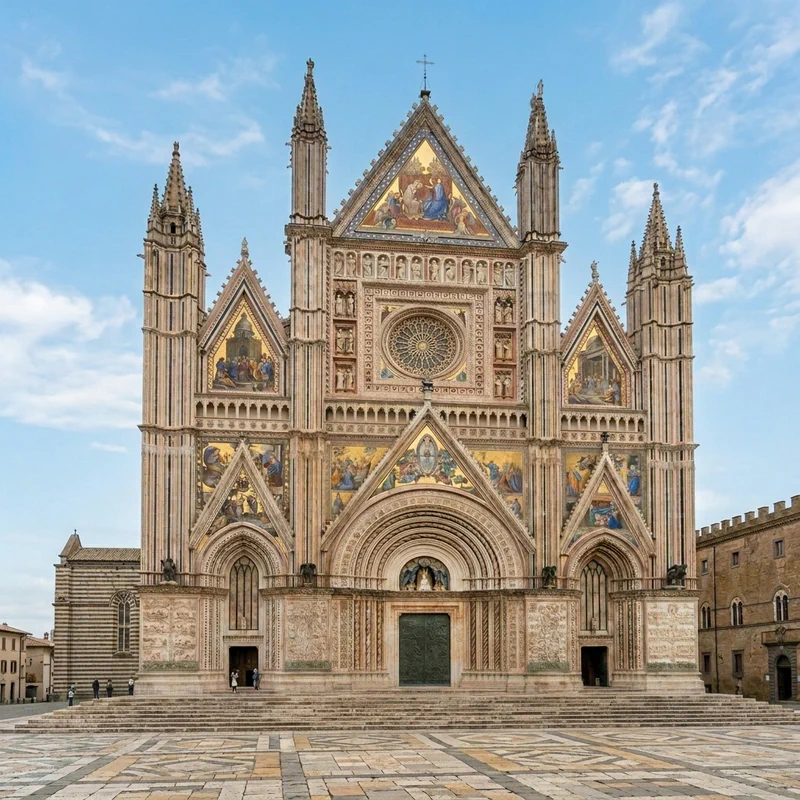
- Orvieto Cathedral: A 13th-century Gothic masterpiece. Its golden facade and mosaics are breathtaking.
- Take your time to admire the details and frescoes inside. It’s an incredible work of art.
Torre del Moro: Climb to the top for a spectacular panoramic view of the city and the surrounding Umbrian countryside.
- It’s the perfect way to get your bearings and appreciate Orvieto’s unique position.
Palazzo del Capitano del Popolo: An imposing 14th-century palace in Piazza del Popolo, once an administrative center.
- Today, it often hosts markets and events, so you might find some local surprises.
Luca’s Secret Tips for an Authentic Experience#
- The Best Time to Visit: Spring (April-May) and autumn (September-October) are ideal. The weather is mild, and the crowds are less intense compared to summer.
- Book Tours in Advance: Especially for Orvieto Underground and Pozzo della Cava. Places are limited, and tours sell out. You can usually book online on their official websites.
- Explore the Alleys: My secret is… getting lost in the side alleys, away from the main streets. Often, that’s where you find the most authentic artisan shops and the most beautiful views.
- Avoid Traps: Beware of restaurants with overly touristy menus or improvised guides. Always look for places frequented by locals. And, by the way, I hate when they charge you for the “cover” just for some stale bread! This kind of thing ruins the experience.
- Watch Out for Tourist Buses: Sometimes they block the local scenic roads, somewhat spoiling the atmosphere. If you can, explore on foot or with local public transport.
Orvieto is a city that invites you to dig deeper, to look beyond the surface, and to discover its real secrets. Don’t be just any tourist; be an explorer. Dive into its depths, taste its authentic flavors, and let yourself be enchanted by its millennial history.
If you appreciate the flavors and mystical silence of Umbria, it is highly recommended to read the account of truffle hunting in the Umbrian woods. Alternatively, if you prefer the unchanged atmosphere of medieval villages, do not miss the guide to discovering Bevagna and its ancient crafts.
I promise it will be an experience you’ll carry in your heart. I look forward to hearing about your discoveries! Until the next adventure!