
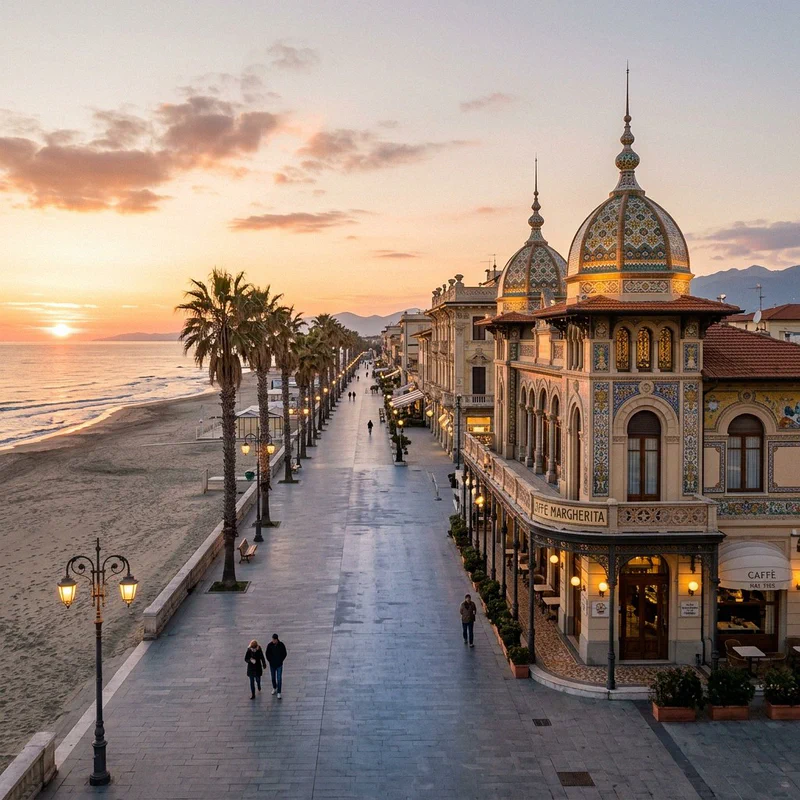
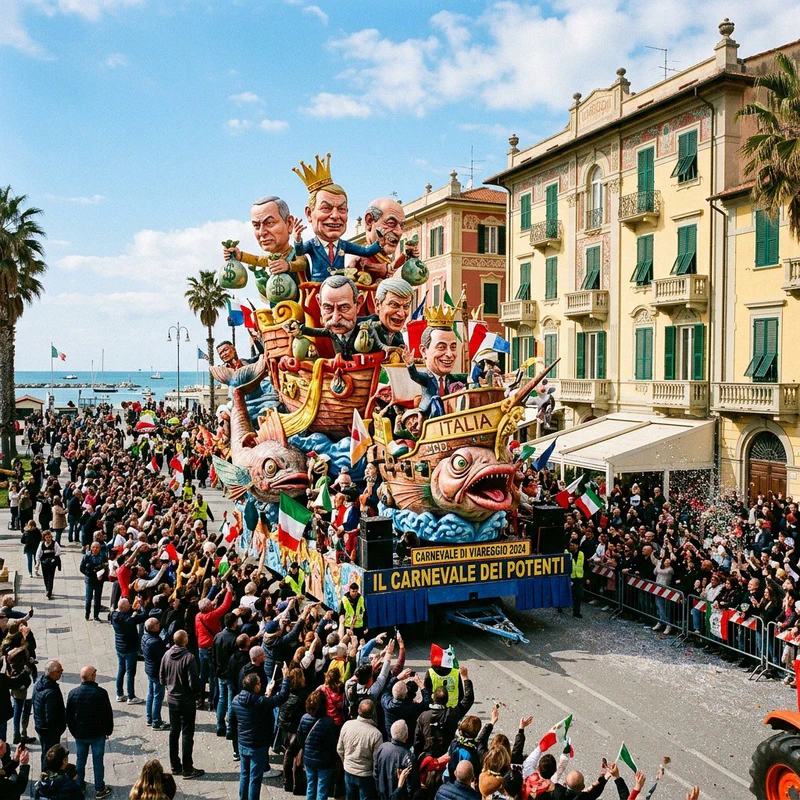
The crisp February breeze carries the scent of saltwater and the aroma of warm fritters. In Viareggio, the Carnival is not just a parade, but a collective ritual that transforms the Tuscan seaside promenade into a living stage. As the sun sets beyond the horizon, painting the Liberty-style facades of historic buildings with hues of pink, the entire promenade comes alive with intimate light. The gigantic allegorical floats, masterpieces of papier-mâché crafted by skilled artisans, seem to dance against the winter sky. In the background, the sharp peaks of the Apuan Alps rise, often snow-capped in February, creating an extraordinary contrast between the white marble profile and the blue horizon of the Tyrrhenian Sea. The sound of laughter and music fills the air, mingling with the smell of sugar and spices. It’s a truly magical experience.
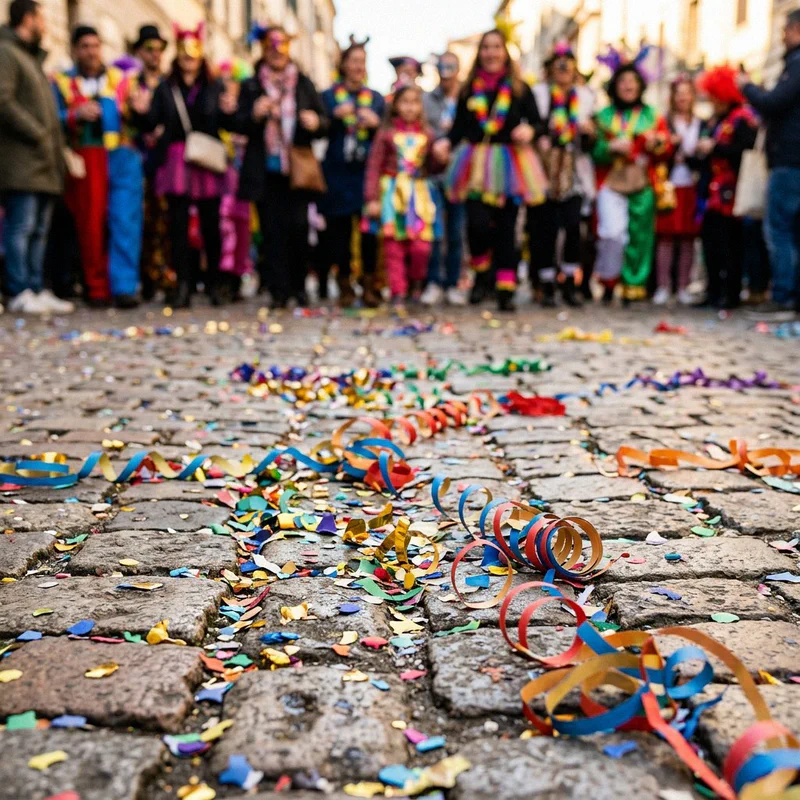
I still remember my last trip here in February with my partner. We arrived at sunset, as the lights of the promenade began to reflect off the windows of Caffè Margherita. We walked hand in hand, shielding ourselves from the cold wind, as colorful confetti floated gently in the crisp air and the music of the bands echoed in the distance. It was in that precise moment, facing the silent majesty of the illuminated floats advancing along the promenade, that I understood the intimate essence of this place: the perfect union of the melancholic charm of the winter sea and the overwhelming joy of the festival. The feeling of being part of a centuries-old tradition is exhilarating. Life is a celebration.
This year, the masked parade on February 12th falls exactly two days before Valentine’s Day. If you’re looking for a destination for a romantic getaway, forget the usual and cheesy commercial packages that large hotels try to sell you for the lovers’ festival. Strolling on the pier surrounded by the scent of saltwater and getting lost among the Liberty-style buildings invaded by confetti is a much more authentic (and a bit crazy) way to celebrate love, away from every cliché. It’s an experience that will leave you with unforgettable memories.
How to Reach the Parade#
Getting to Versilia for the parades requires a minimum of strategy to avoid traffic stress. The train is the most convenient and fastest solution, since Viareggio train station is just over a ten-minute walk from the seaside promenade where the masked parades take place. If you decide to arrive by car, keep in mind that the road checkpoints around the seafront avenues are closed many hours before the event starts. I advise you to park in the free exchange areas on the outskirts of the city and use the dedicated shuttle buses. The journey is part of the adventure.
The February sea breeze, as romantic as it is, can be ruthless and penetrate to the bone. Dress in layers, or your romantic stroll will turn into a desperate hunt for a hot tea. The cold wind may be biting, but it’s a small price to pay for the magic of the carnival.
The Liberty Promenade and the Citadel#
During the morning, before the masked parade, take a quiet stroll along Viale Regina Margherita. This historic coastal street hosts famous Liberty-style architectures, including Caffè Margherita with its beautiful majolica tiles signed by Galileo Chini. It’s the perfect place for a relaxing espresso in an atmosphere of bygone days. Another unforgettable experience to breathe in the true maritime soul of the city is the pier walk (dedicated to Sandro Pertini). This concrete walkway stretches into the sea for over a kilometer alongside the port canal. Walking to the red lighthouse during the day or at sunset, with the sound of waves crashing against the rocks and local fishermen motionless with their lines, offers an exceptional view of the Apuan Alps, which seem to rise directly from the water, embracing the entire profile of the Versilian coast. The scenery is breathtaking, with the sea and the mountains blending together in perfect harmony.
If you want to delve deeper into the history of this event, visit the Carnival Citadel. In the hangars of this modern complex, you can observe the papier-mâché giants up close and discover the secrets of the cart makers. The citadel is a treasure trove of carnival history and culture. It’s a must-visit for anyone interested in the art and craftsmanship of the carnival.
To enjoy the float parade without the suffocating crowd, buy tickets online for the Numbered Tribune of Piazza Mazzini. You’ll have a perfect elevated view of the imposing papier-mâché figures without having to fight for every inch of space. The experience is worth it.
Where to Eat: Sea Flavors and Intimate Dinners#
The cuisine of Viareggio is inextricably linked to the port and its historic boats. To avoid touristy pre-packaged menus, venture into the streets of the Darsena or the historic center:
- Trattoria da Miro (Via Michele Coppino, 160): A safe haven for lovers of seafood cuisine. Here you must order the spaghetti alla trabaccolara, a typical dish prepared with freshly filleted fish, born on board the historic fishing boats of the Adriatic fishermen who settled in Viareggio.
- Il Buco (Via San Martino, 76): A cozy and reserved venue, ideal for a romantic dinner based on fresh seafood and traditional dishes cooked with care.
- Fritto sui pescherecci: For an informal but unforgettable lunch, go along the port canal and look for the moored fishing boats that prepare express fish fry. Eating hot fish from the packet on the pier is a true local experience. The smell of fried fish and the sound of seagulls fill the air, creating a lively atmosphere.
Local Gastronomy: Beyond Seafood#
The culinary tradition of Viareggio reserves excellent surprises even for those who love sweet flavors:
- Cenci and rice fritters: The indispensable sweets of the Tuscan Carnival. Cenci are thin and crunchy sheets sprinkled with powdered sugar, while the fritters are soft, fragrant with orange, and golden fried.
- Scarpaccia viareggina: Not to be confused with the savory version of the inland area of Camaiore. The scarpaccia of Viareggio is an unusual baked dessert prepared with fresh zucchini, flour, sugar, eggs, and vanilla. A delicate flavor that will surprise you. The combination of flavors and textures is a delight.
A Centuries-Old Ritual#
The history of Viareggio is linked to its strategic position: it was born in the Middle Ages around the Via Regia, the coastal road wanted by the Republic of Lucca, which had its only outlet to the sea here. Its famous Carnival began much later, in 1873, when some young wealthy people organized a parade of decorated carriages. The event became legendary with the introduction of papier-mâché technique in 1925, and in 1930 saw the birth of its undisputed symbol: Burlamacco, the official mask with white and red colors designed by the futurist painter Uberto Bonetti.
During the period of the masked parades, Viareggio evenings are animated by the rioni (outdoor neighborhood parties) and the Canzonetta, a satirical theatrical review in local dialect that irony politics and society. If you visit the city at the beginning of summer, in June you can also attend the Festa di Sant’Antonio, with the evocative procession of illuminated boats in the Darsena canal. The festivities are a celebration of life and community.
Conclusion: A Moment of Pure Poetry#
Experiencing the Viareggio Carnival means being conquered by a festive energy and the colors of confetti flying in the fresh February air. Perfect for a romantic getaway, this corner of Tuscany in winter offers unforgettable glimpses, especially when the lights of the floats turn on at sunset reflecting on the sea water. It’s a special appointment that combines the mastery of craftsmanship with the hospitality of Versilia, a journey that will leave you with the warmth of a timeless party in your heart. The carnival is a celebration of love, life, and beauty.