
Carnival in Italy smells of sugar and boiling oil. It is that time of year when dieting becomes an abstract concept and frying is elevated to a supreme art in the kitchens of every village. Every region jealously guards its own secret, with grandmothers guarding the pans like priestesses of an ancient tradition. From Venetian alleys to southern squares, the air fills with a fragrance that promises sins of gluttony without regret. Powdered sugar is the only mask that truly counts.
As soon as you enter a pastry shop in Venice in February, you are overwhelmed by the warm smell of good oil and raisins soaked in rum. The sound of tongs fishing boiling fritole from copper vats is a familiar music for every Venetian foodie. The windows are filled with trays overflowing with golden pearls, ready to disappear in minutes among the hands of passers-by. It is an ancestral call that pushes you to wait patiently in line along with the locals who know exactly where to find the real quality. Patience here pays in flavor.
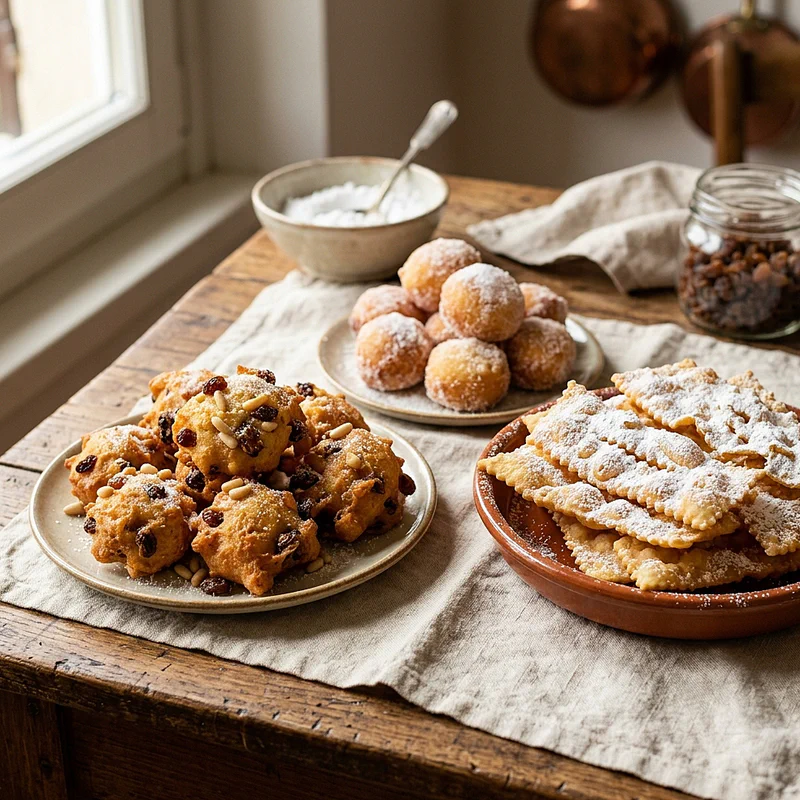
The fritole are the undisputed queens of the Lagoon. The authentic version must be soft, almost creamy inside, enriched with raisins and pine nuts that crunch pleasantly under the teeth. Many tourists settle for those filled with chantilly cream or chocolate, but the real experience is the classic one without frills. The simplicity of the dough, when made to perfection, needs no excessive toppings to shine. It is a bite of Venetian history that warms your soul.
Quick Venetian Fritola Recipe#
If you want to try bringing a piece of Venice home, here are the essential coordinates to avoid mistakes:
- Ingredients (9): Flour, milk, eggs, sugar, yeast, raisins, pine nuts, a splash of grappa, and oil for frying.
- Oil Temperature: Fundamental! Keep the flame constant between 170°C and 180°C (340°F - 355°F).
If the oil is too hot, the fritter will stay raw in the center; if it’s too cold, it will absorb too much grease. The secret of old pastry chefs is the “constant bubble.”
Moving toward the rest of Italy, we encounter chiacchiere. Call them what you want — frappe, bugie, cenci, or galani — but the substance must be thin as a sigh and fragile as glass. The challenge consists in eating them without getting completely covered in powdered sugar, an undertaking that almost always ends with a laugh. The artisanal sheet is recognized by the bubbles that form during rapid frying, a sign of manual processing done with passion. Avoid the packaged ones that taste like cardboard.
Don’t forget the castagnole, small fried pearls that recall the shape of a chestnut. They are typical of Central Italy and conquer with their irresistible softness that recalls Sunday breakfasts. If made well, they melt in your mouth, releasing a slight aftertaste of anise or fresh orange zest. They are the perfect end-of-meal to conclude a festive day, perhaps accompanied by a glass of sweet wine. Small bites, great satisfaction.
The legacy of the Venetian fritoleri#
The history of fritters is rooted in the nobility of the Serenissima. In 1700, the Republic of Venice officially declared the fritola as its national sweet, a title few other delicacies can claim. There was a real guild, the fritoleri, who enjoyed exclusive rights to produce and sell these delights in the streets. Every pastry chef had his own area and secrets, protecting the recipe like a state treasure. The prestige of this trade was such that it was passed down from father to son.
To prepare a fritter to perfection, technique is as fundamental as the ingredients. The dough must rise slowly in a warm environment, away from drafts that could compromise the final fluffiness of the paste. A touch of grappa or rum serves not just for the aroma, but helps the structure puff up correctly during contact with the boiling oil. The frying temperature must be constant, neither too high to avoid burning the outside, nor too low to prevent the sweet from absorbing too much oil. It is a subtle balance that requires eye and expert hand.
Today, walking through the Sestiere of Cannaregio or San Polo, you can still find historic bakeries that respect this ancient discipline. The raisins must be the sultana type, left to soak until they become plump and fleshy, ready to explode with flavor at every bite. The pine nuts must be Mediterranean ones, lightly toasted to release their essential oils before being incorporated into the leavened dough. It is not just a snack, it is a ritual that links the Venetian to his land and maritime history. Whoever tastes a real fritola never goes back.
The thousand identities of the chiacchiera#
If fritters are a soft body, chiacchiere are the crispy soul of Italy. It is fascinating how the exact same dough of flour, butter, sugar, and eggs takes different names as you cross the peninsula. In Tuscany we call them cenci, in Rome they become frappe, in Piedmont they are bugie, and in Veneto you find them as galani. Every name brings a different nuance of local tradition and a small variation in the thickness of the sheet. The result, however, does not change: they must crunch under your teeth. Aggiornamento: My colleague Luca recently explored the hidden gems of Veneto, including the breathtaking lagoons you can discover in his guide to The Secret Waterways of Veneto.
The true art of the chiacchiera lies in its thinness. A poorly rolled sheet will result in being heavy and chewy, losing that lightness that makes the sweet paradoxically “ethereal” despite the frying. In Roman homes, tradition dictates that white wine or anise liqueur be used to make the dough even more crumbly and aromatic. Once dipped in the oil, the strips of dough must puff up instantly, creating those characteristic air bubbles that are the hallmark of artisanal quality. Haste is the enemy of perfection.
Then there is the matter of the final topping. Although powdered sugar is the universal choice, in some areas of southern Italy it is not uncommon to find chiacchiere drizzled with honey or even cooked must. This variant adds a sticky and complex note that transforms the sweet into a richer and more structured culinary experience. Personally, I remain faithful to the simplicity of powdered sugar, which allows one to fully appreciate the clean taste of well-made fried food. It is an ancient pleasure that never tires.
Southern Carnival: Between Migliaccio and Sanguinaccio#
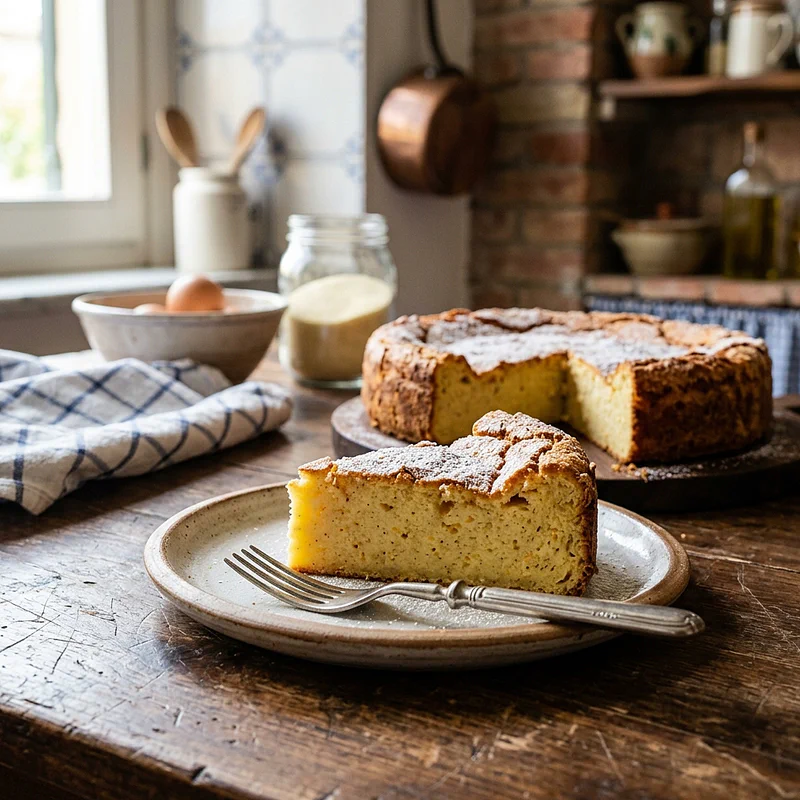
If we head down toward Naples and southern Italy, Carnival takes on even more intense tones and rich ancient flavors. The absolute king of Campanian tables is the Migliaccio, a semolina and ricotta cake that has its origins in poor rural cooking. Once millet was used (hence the name), today replaced by semolina, but the consistency must remain that of a firm pudding scented with citrus. It is a sweet that is not fried, but cooked slowly in the oven until it forms that irresistible brown crust. Every bite is a dive into the past.
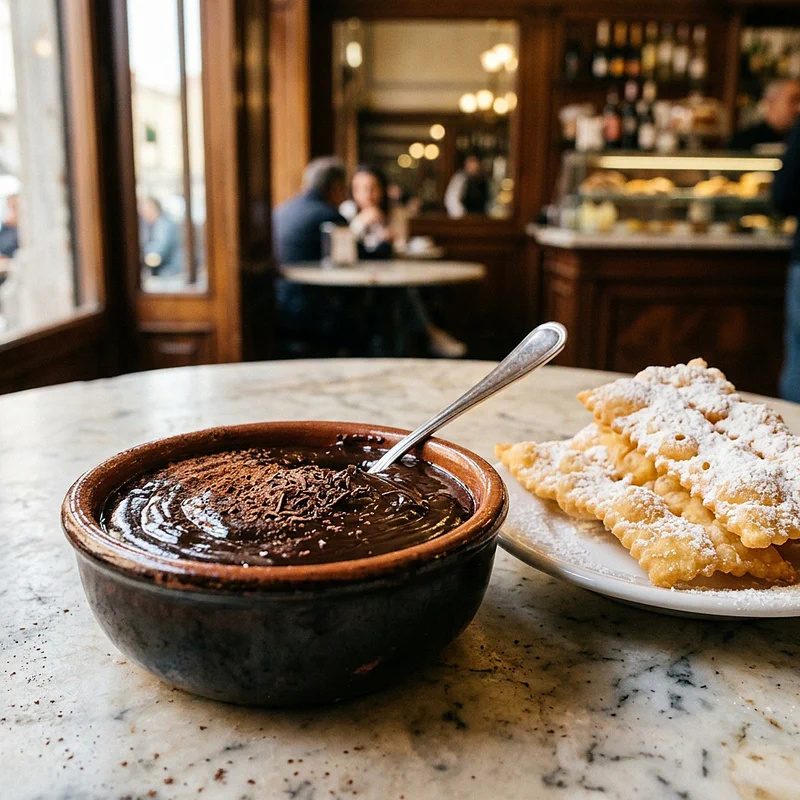
Alongside the miglioraccio, the Sanguinaccio dolce cannot be missed—a dense and velvety dark chocolate cream. Historically it was prepared with fresh pig’s blood, a symbol of abundance and “no waste” in peasant culture, but today the law prohibits its sale. The modern version focuses everything on the quality of the cocoa and the presence of candied fruit and chocolate chips that add crunchiness to the cream’s softness. It is the perfect companion for dipping chiacchiere, creating a contrast of textures that is addictive. A true gourmet symphony.
In Sicily and Calabria, instead, Pignolata reigns—small balls of fried dough covered by a two-tone glaze: white with lemon and black with chocolate. It is a baroque sweet in flavor and appearance, perfectly representing the visual richness of southern cities during the parades. The balls must be crispy outside and hollow inside, ready to welcome the enveloping sweetness of the hand-made glazing. It is a work of patience that is rewarded by the joy of whoever receives it as a gift. The south knows how to celebrate.
What I really can’t stand: I detest those who call “baked chiacchiere” a real specialty. The chiacchiera is born fried; the baked one is just a sad biscuit trying uselessly to give itself a healthy air. If you want to celebrate Carnival, do it with courage and accept the fat as part of the sacred ritual. Life is too short to eat Carnival sweets that don’t get your fingers dirty.
If after all this frying you feel like discovering other seasonal flavors, I recommend my guide on spring festivals in Veneto and Lombardy. Or, if you have a trip south planned, don’t miss the secrets of Palermo street food.
If you’re already enchanted by the rolling hills of Tuscany, a region steeped in history and art, consider embarking on a road trip through its picturesque landscapes. A newer guide exploring the best of Tuscany, including its most scenic drives and hidden gems, has since been published, offering a comprehensive 7-day itinerary for an unforgettable autumn adventure: Embark on a Tuscany Road Trip.