
The Dolomites are Italy’s rugged crown jewel, offering world-class climbing, hiking, and Via Ferrata (iron paths). These fixed-cable climbing routes were originally built during World War I and now serve as a playground for adventurers seeking thrills in the vertical realm.
If you’re ready to step beyond casual hikes and push your limits, the Dolomites’ most challenging Via Ferrata routes will test your grit. Trust me, they’re worth every drop of sweat. But before you clip into that cable, preparation is key—because the mountain doesn’t care about your followers, respect it.
As I mentioned in my guide to the Sentiero Italia, the Dolomites host some of the most spectacular (and demanding) high-altitude stages of the entire traverse.
What is a Via Ferrata?#
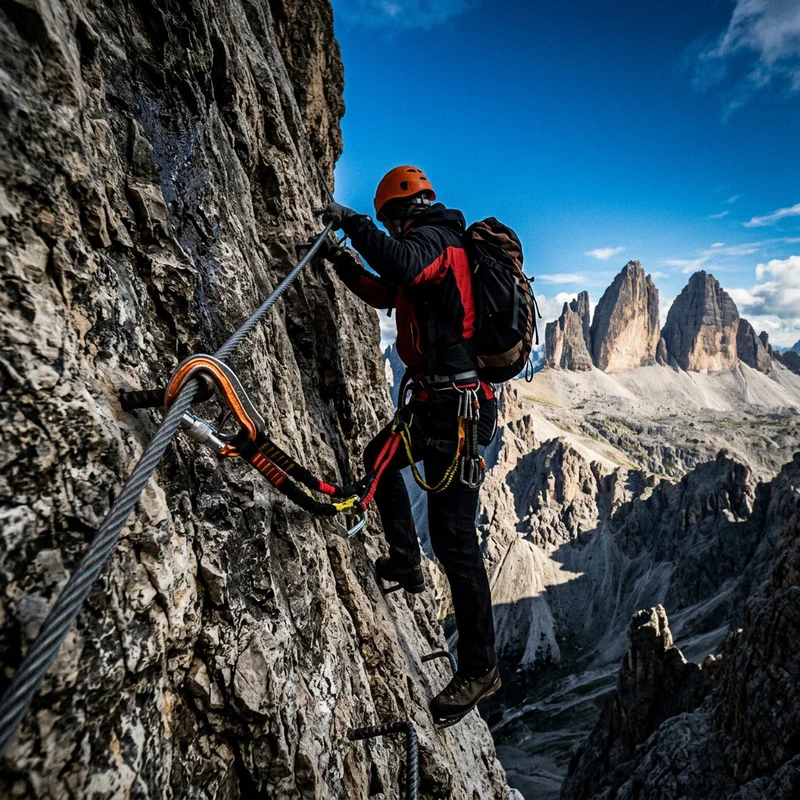
A Via Ferrata (Italian for “iron path”) is a protected climbing route equipped with steel cables, ladders, and rungs anchored into the rock. These routes allow climbers to safely navigate steep, exposed terrain.
Why Try It?#
- Epic Views: Panoramas you simply can’t reach on a regular hike.
- Physical Challenge: A test of strength, endurance, and mental focus.
- Historical Significance: Many routes traverse WWI battlefields, with remnants of tunnels and bunkers.
Key Technical Details#
- Difficulty Levels: Via Ferrata routes are graded on a scale from A (easy) to E (extremely difficult).
- Elevation Gain: Expect gains of 500–1,200 meters depending on the route.
- Best Time to Visit: Late June to September, when the snow has melted.
Gear Checklist: What You’ll Need#
Safety and preparation are non-negotiable. Here’s what you’ll need:
- Via Ferrata Kit: Includes a harness, lanyard with energy absorbers, and carabiners.
- Helmet: Protects against falling rocks.
- Gloves: Essential for gripping steel cables.
- Sturdy Boots: No city shoes, please! Opt for approach shoes or lightweight mountaineering boots.
- Weatherproof Layers: The weather can change fast in the mountains.
- Backpack: Lightweight, but large enough for water, snacks, and a first-aid kit.
Pro Tip: You can rent gear in towns like Cortina d’Ampezzo or Bolzano. Just make sure it’s certified and in good condition.
Must-Try Via Ferrata Routes in the Dolomites#
Here are three challenging routes to add to your bucket list:
1. Via Ferrata Cesare Piazzetta#
- Location: Passo Pordoi, near Canazei.
- Difficulty: E (extremely difficult).
- Elevation Gain: ~600 meters.
- Highlights: A vertical start that demands upper-body strength, followed by exposed ridges with jaw-dropping views of the Marmolada Glacier.
- Insider Tip: Start before sunrise to avoid crowds and catch the alpenglow.
2. Via Ferrata delle Bocchette Centrali#
- Location: Brenta Dolomites, near Madonna di Campiglio.
- Difficulty: C/D (moderate to difficult).
- Elevation Gain: ~800 meters.
- Highlights: A high-altitude traverse with spectacular ladders, narrow ledges, and views over lush green valleys.
- Insider Warning: This route is not for the faint-hearted—don’t look down if you’re afraid of heights!
3. Via Ferrata Ivano Dibona#
- Location: Cristallo Group, near Cortina d’Ampezzo.
- Difficulty: C (moderate).
- Elevation Gain: ~700 meters.
- Highlights: Historic WWI tunnels and a breathtaking suspension bridge.
- Safety Note: Double-check weather forecasts; storms can roll in fast.
Practical Tips for Your Adventure#
Getting There#
If you’re driving to these trailheads, you’ll likely travel along the iconic Great Dolomite Road. My colleague Marco has put together an expert driver’s guide to this route, which is a masterpiece of alpine engineering in its own right.
- Closest Airports: Venice Marco Polo (VCE) or Verona Villafranca (VRN).
- Train Connections: Take the train to Bolzano or Trento, then switch to regional buses.
- Driving: Renting a car is the easiest way to access trailheads. Roads are winding but well-maintained.
Where to Stay#
- Rifugios (Mountain Huts): Book well in advance, especially for peak season. Rifugio Lagazuoi and Rifugio Tuckett are excellent options.
- Towns: Stay in Cortina d’Ampezzo for easy access to multiple routes.
Responsible Tourism#
- Leave No Trace: Pack out all trash, including snack wrappers and bottles.
- Respect Wildlife: Keep your distance and don’t feed animals.
- Be Quiet: Let the sound of the wind and your breath guide you. No loud music, please!
Final Thoughts: Are You Ready to Clip In?#
Taking on a challenging Via Ferrata in the Dolomites isn’t just about the climb—it’s about discovering a wilder, more authentic side of Italy. These routes demand respect, focus, and preparation, but the rewards are unforgettable.
Two wheels, one trail, zero distractions…or in this case, two carabiners, one cable, and no regrets. So, lace up your boots, clip into the iron path, and let the Dolomites show you what you’re made of.
Since writing this, my colleague Giulia recently explored the authentic side of Lazio’s May Day celebrations and shared her experience in a beautiful post: A Taste of Lazio’s May Day Traditions. If you’re interested in learning more about the region’s unique customs and delicious local ingredients, be sure to check it out.