
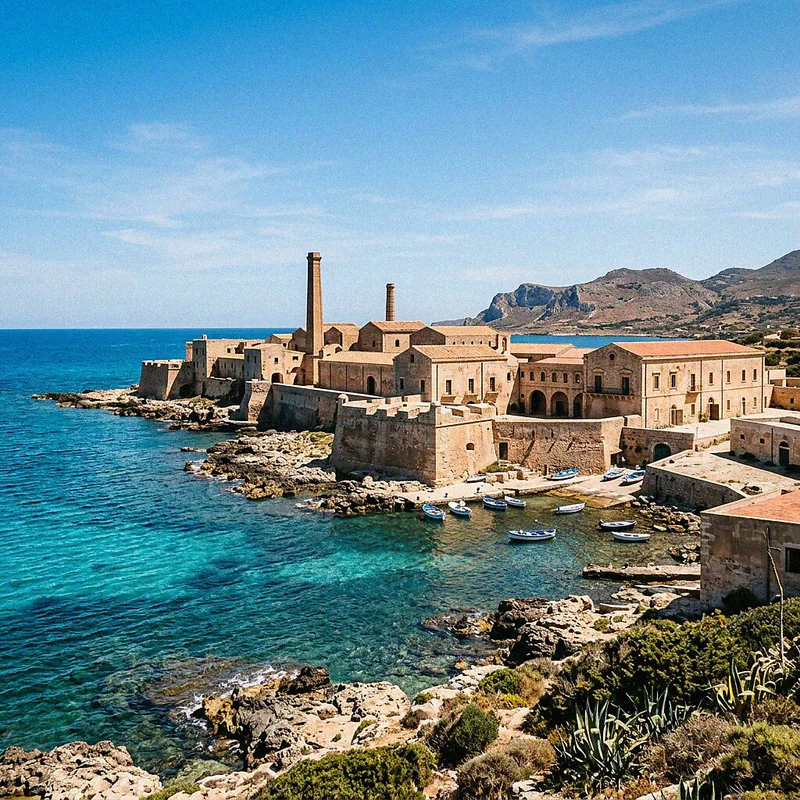
I am drawn to the island of Favignana, off the western coast of Sicily, where the past lingers in every corner. The island is home to the magnificent Florio Tonnara, a testament to human ingenuity and the power of the sea. As I step into the Tonnara, I am enveloped by the smell of salt water and the sound of seagulls crying above me, transporting me to a bygone era. The experience is a poignant reminder of the island’s history, where the “mattanza” - the tuna hunt - once defined life for generations. It is a place that still whispers stories of the past.
Update: If you want to discover the most secret soul of this “butterfly of the Egadi”, I recommend reading my colleague Luca’s post on the cinematic secrets of Favignana. And if you are traveling with little ones, don’t miss Elena’s guide on the hidden treasures of Sicily for families.
The Florio Tonnara: An Industrial Cathedral#
This extraordinary structure, defined as a true industrial cathedral, reminds me of the majesty of the great works that celebrate the union between man and sea.
The history of the Ex Stabilimento Florio delle Tonnare di Favignana e Formica is a fascination that fascinates even the greatest of history buffs. Its grandeur is rooted in the history of the Florio family, who transformed traditional fishing into a sophisticated operation, with Vincenzo Florio pioneering the method of preserving tuna in oil. Later, under Ignazio Florio senior and his son, the island became a glamorous salon, hosting notable figures such as Kaiser Wilhelm II and Gabriele D’Annunzio. Donna Franca, known as the “Queen of Sicily,” left an indelible mark, celebrated for her beauty and elegance. Today, the Tonnara serves as a museum, meticulously preserving the machines, boats, and the spirit of tuna fishing.
- Explore the vast halls: Witness the massive anchors, tuna nets, and the “Galleria delle Macchine,” which showcase the industrial power of the Tonnara.
- The “Stanza dell’Olio”: See the vintage tins where tuna was once hand-packed in oil, a true journey through 20th-century branding and a testament to the island’s culinary heritage.
- Echoes of History: Don’t miss the holographic installations where the voices and stories of former workers come to life, offering a haunting glimpse into the past.
- Ancient Secrets: The museum also houses precious Roman rostra recovered from the sea, remnants of the epic Battle of the Egadi. My only pet peeve here is the occasional monotone audioguide, but fortunately, the Florio Tonnara usually offers a more engaging experience. It is a place that will leave you in awe.
Traveling to Favignana: Your Gateway to the Egadi Islands#
Arriving in Favignana is an adventure in itself, allowing you to embrace the slow travel ethic. Your journey usually begins by flying into one of Sicily’s airports, such as Palermo or Trapani, and then taking a bus or taxi to the port. From there, you can take a ferry or hydrofoil to the island, operated by companies such as Liberty Lines or Siremar. I recommend booking tickets in advance, especially during the high season, to avoid long queues and sold-out departures. The sea is waiting for you, and the journey is part of the fun.
Flights and Transfers#
- Palermo (PMO): A major international hub with bus services like Segesta Autolinee connecting to the port of Trapani.
- Trapani (TPS): Closer to the port, about 30 minutes away, offering a more convenient option for those with limited time. The choice of airport depends on your travel plans and preferences.
Ferry or Hydrofoil: The Embrace of the Sea#
Once in Trapani, you can take a ferry or hydrofoil to Favignana, with operators like Liberty Lines and Siremar offering frequent daily departures. The travel time varies, with hydrofoils taking about 30-40 minutes and conventional ferries taking 55 minutes to 1 hour and 20 minutes. I prefer the hydrofoil for its speed and convenience.
Insider Tip: Book ferry or hydrofoil tickets in advance, especially during the high season, to avoid the hassle of long queues and sold-out departures. It is a tip that will save you time and stress.
Navigating Favignana: Island Life at Your Own Pace#
Once you arrive on the island, you will immediately feel its relaxed rhythm, without a train station to disturb the peace. The port area and city center are wonderfully walkable, with amenities, bars, and restaurants just a few steps away. I recommend renting a bicycle to explore the island, discovering hidden coves and panoramic paths along the way. Scooters are also available for rent, offering a bit more speed and convenience.
- On Foot: Explore the port area and city center on foot, taking in the sights and sounds of the island.
- Bicycles: My favorite way to see the island, allowing you to discover hidden gems and enjoy the panoramic views.
- Scooters: Ideal for those who prefer a bit more speed, with rental options available throughout the island.
- Local Buses: Tarantola operates seasonal bus services, connecting key points on the island.
- Taxis: Available for convenience, although I prefer the freedom of exploring on my own. The choice of transport depends on your preferences and travel style.
Beyond the Tonnara: Favignana’s Other Charms#
While the Florio Tonnara is a highlight, Favignana offers a wealth of other experiences, from hiking to the island’s highest point to visiting elegant buildings like Palazzo Florio. The island is renowned for its crystal-clear waters, with beaches like Cala Rossa and Cala Azzurra offering spectacular views and relaxation. I also recommend visiting the Castle of Santa Caterina, with its panoramic views and strategic past.
- Castle of Santa Caterina: Hike or take a taxi to the highest point of the island for panoramic views and a look at Favignana’s strategic past.
- Palazzo Florio: An elegant neo-Gothic building, once the residence of the Florio family, which now houses a permanent painting exhibition and the municipal library.
- Beaches and Coves: Favignana is famous for its crystal-clear waters, with beaches like Cala Rossa, Cala Azzurra, and Lido Burrone offering spectacular views and relaxation.
- Bue Marino: A popular spot for snorkeling, with its caves and crystal-clear waters. The island has something for everyone, whether you prefer history, nature, or relaxation.
Savoring Favignana: A Culinary Journey#
No trip to Italy is complete without indulging in the local gastronomy, and Favignana does not disappoint, with its fresh fish and authentic Sicilian flavors. I recommend visiting “Quello che c’è c’è” for Mediterranean cuisine, with its focus on fresh and seasonal dishes. Camparia, located within the restored Tonnara complex, offers a unique dining experience, combining tradition and innovation.
- “Quello che c’è c’è”: A wonderful place for Mediterranean cuisine, with its focus on fresh and seasonal dishes.
- Camparia: Located within the restored Tonnara complex, it offers a unique dining experience that combines tradition and innovation. The island’s cuisine is a reflection of its history and culture.
I must admit that one of my pet peeves is finding low-quality “replica” souvenirs made abroad, instead of local artisanal products or culinary delights. Opt for a jar of bottarga or some local capers to take home, a more authentic and delicious memory of your trip. It is a choice that will support the local community and leave you with a genuine taste of the island.
Practical Tips for Your Favignana Adventure#
To truly experience the “real” Italy, a bit of clever planning goes a long way, from choosing the best time to visit to booking ferry tickets and accommodation in advance. The low seasons, from April to May and September to October, are my favorite, with a mild climate and fewer crowds. However, be aware that museum hours can be capricious, with some months offering continuous openings and others having a mid-day break.
- Best Time to Visit: The low seasons, from April to May and September to October, offer the best balance between weather and crowds.
- Hidden Booking Secrets: Book ferry tickets and accommodation in advance, especially during the high season, to avoid the hassle of long queues and sold-out departures.
- Embrace the Rhythm: Favignana thrives on a relaxed pace, so don’t rush; allow yourself to get lost in its charm. The island is a place to unwind and soak up the atmosphere.
Favignana, with its powerful Florio Tonnara, is more than just a destination; it is an immersion into the Sicilian soul, with its rich history, spectacular landscapes, and warm hospitality. So pack your bags, prepare your senses, and let it take you on this unforgettable journey through time. You won’t regret discovering these fascinating echoes of the past. It is an experience that will leave you enchanted.