
As a mother of two who has called Italy home for over a decade, I’ve learned that the best way to see the “real” soul of a city is to follow the rhythm of the locals, especially during the sweltering heat of July. My children, Leonardo and Beatrice, have grown up participating in these celebrations, and the Festa dei Noantri is the one they look forward to most every year. The name itself, which in Roman dialect means “Festival of Us Others,” captures the proud and communal essence of the Trastevere district.
It is a moment where time seems to stand still: while the rest of the capital swarms with tourists under the scorching sun, Trastevere closes itself in its ancient embrace to celebrate its protector. Just as I learned while exploring the Tuscan hills with my kids (Update: I just published a guide on Pienza and the Secrets of Pecorino for Little Foodies), the key to enjoying these festivals is to let yourself be guided by the curiosity of the little ones.
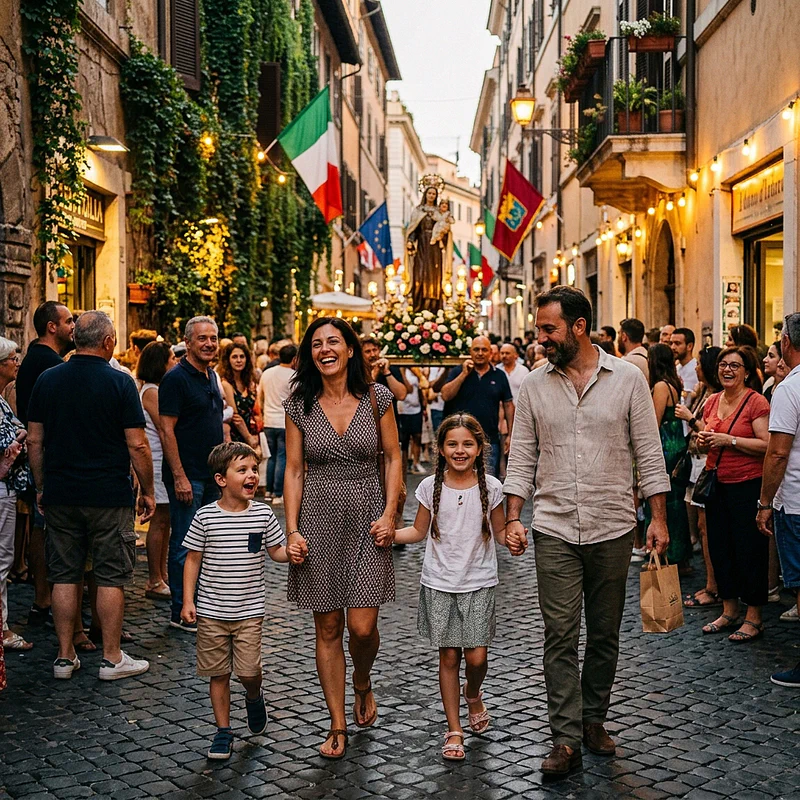
What exactly is the Festa dei Noantri?#
The festival is dedicated to the Virgin of Carmel, affectionately called by Romans “Madunnuccia” or “Madonna Fiumarola.” The legend, which I always tell Leonardo and Beatrice as we walk toward the river, says that in 1535, after a frightening storm, some local fishermen found a statue of the Virgin carved from cedar wood right at the mouth of the Tiber.
They brought it to the church of Sant’Agata, and since then she has been the protector of the Trasteverini—those inhabitants who consider themselves the “true” Romans, guardians of a tradition that refuses to bend to modernity. Today the festival lasts for two weeks in the second half of July, starting on the Saturday after the 16th. It is a vibrant mix of solemn religious fervor and boisterous street party, an experience that, despite the crowds, remains one of the most beautiful ways to create lasting family memories.
Managing the Procession with Kids: My Mom Tips#
The highlight is undoubtedly the first Saturday, when the heavy statue of the Madonna, covered in gold and precious fabrics, is carried on the shoulders of the Portatori (porters) through the narrow alleys.
Elena’s Practical Tip: If you are traveling with an infant, forget the stroller for this specific moment. Trastevere’s cobblestones (sampietrini) are famous for their irregularity, and the crowds make it difficult to move. Use a baby carrier or wrap. For older kids like mine, I recommend positioning yourself in Via della Lungaretta or Piazza Santa Maria in Trastevere at least an hour before the procession passes.
The wait is part of the magic: Leonardo loves watching the residents hang precious drapes from their balconies, while Beatrice is enchanted hearing the old ladies shouting “Viva Maria!” from their windows. On the second Sunday, however, the “Fiumarola” procession takes place: the statue is placed on a boat and escorted along the Tiber by rowing clubs. Seeing the reflections of the candles on the water at sunset is a moment that enchants even the most difficult teenagers.
Where to Eat: Authentic Flavors for the Whole Family#
You cannot say you’ve experienced the Festa dei Noantri without eating like a Trasteverino. During these weeks, the district becomes an open-air dining room. Long tables are set up directly in the alleys, and the air fills with the aroma of porchetta, abbacchio (lamb), and peperonata.
For an authentic meal that kids will also enjoy, I suggest avoiding places with “Tourist Menus” in plain sight. We love going to Da Teo in Piazza dei Ponziani. It’s slightly tucked away from the main chaos, which makes it perfect for families who need a bit more space. Their tonnarelli all’amatriciana are legendary, and the staff treats children like little princes.
If you prefer something quicker, grab a slice of pizza from La Boccaccia in Via Pascarella. My kids always fight over the last piece of the one with potato and rosemary: simple, crispy, and perfect for a quick picnic on a square step. If you’re looking for more culinary inspiration in the capital, don’t forget my guide to the Best Trattorias in Rome for the 2025 Jubilee.
Practical Secrets for a Stress-Free Visit#
- The Importance of “Nasoni”: Rome in July is roasting. Teach the children to find the nasoni, the typical cast-iron fountains. The water is ice-cold, delicious, and free. It’s a great way to stay hydrated without buying dozens of plastic bottles.
- Evening Magic: The festival really starts after 8:00 PM, when the sun sets behind the Janiculum Hill. The temperatures drop and street performers begin their shows. For once, forget bedtime: the best way to experience Rome is to let the kids run in the piazza under the watchful eye of parents, while you enjoy a gelato or a glass of fresh Frascati wine.
- The Mandatory “Grattachecca”: Stop at one of the historical kiosks on the Lungotevere for a grattachecca. It’s hand-shaved ice topped with fruit syrups and coconut pieces. It’s the symbol of the Roman summer, and for Leonardo and Beatrice, it’s the final prize of every walk.
Why This Festival is Special#
In a world of pre-packaged tours, the Festa dei Noantri offers something rare: a glimpse into the beating heart of a community that resists. It is one of the few places where you can still feel the spirit of “Noantri”—the sense of belonging of those who stay and protect their roots.
As I always tell my children, the most beautiful souvenirs are not the ones you buy in shops, but the stories we carry inside. Update: Many months after this festival in Trastevere, I took my children to a coastal paradise I adore; I recommend reading my story about the Magic of Sperlonga, a true paradise for families just a short distance from Rome.
See you soon, Elena