Ciao! I’m Giulia. To me, Italy is a map drawn in flavors, and if there is one place where the sun seems to concentrate all its energy into a single drop of liquid, it’s Cortona. Perched high on a hill overlooking the Val di Chiana, this ancient city isn’t just a film set for Under the Tuscan Sun; it’s a living kitchen where the soil produces some of the most intense olive oil and surprising wines in all of Italy.
You haven’t truly lived until you’ve tasted olive oil that’s so fresh it makes the back of your throat tingle—that’s the sign of real pizzichino, the high polyphenol content that we Italians crave.
If you love the idea of exploring these hilltop gems where the stone and the soil tell a story, you should read my colleague Luca’s guide to Pitigliano, a town literally carved from the rock.
The Liquid Gold: Cortona’s Olive Oil#
The olives around Cortona are mostly Frantoio, Leccino, and Moraiolo varieties. Because of the altitude and the stony soil, the trees have to struggle, and that struggle creates an oil of incredible complexity.
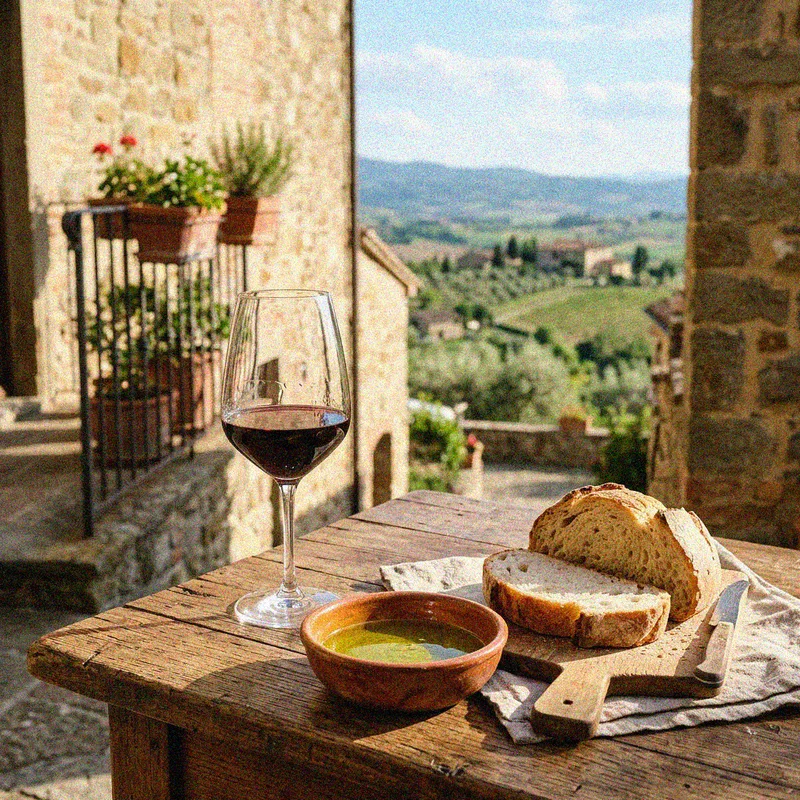
My nonna always told me that olive oil is like wine; it has its own vintage and its own personality. In Cortona, the oil is robust, with notes of artichoke and freshly cut grass. My favorite way to enjoy it is the simplest: Fettunta. Just a thick slice of unsalted Tuscan bread, toasted over an open fire, rubbed with a clove of garlic, and drenched in the new season’s oil.
My biggest pet peeve? Seeing people use “flavored” oils like truffle or chili oil to mask the taste of a bad harvest. A real oil shouldn’t need a costume! It should be proud, green, and spicy on its own.
If you enjoy these raw, manual traditions, you’ll find a similar soul in my guide to the hand-stamped corzetti of Liguria.
The Surprise of the Syrah#
While most of Tuscany is obsessed with Sangiovese (which I love!), Cortona has a special secret: Syrah. This grape has been here for over a century, and it has found its perfect home in these clay soils.
Cortona Syrah is different from the spice-heavy versions of the Rhône or the fruit bombs of Australia. It is elegant, silky, and deeply connected to the earth. When you visit a local cantina here, don’t just ask for a tasting; ask to see the vineyards. Standing among the vines, smelling the wild herbs growing between the rows, you begin to understand why the wine tastes of the land.
As my colleague Alessandro explored in his Wine Lover’s Grand Tour, the best wines are the ones that tell the story of their historic regions.
Giulia’s ‘Nonna-Approved’ Tips for Cortona#
- Look for the ‘Frantoio’: If you visit in late October, head to a local frantoio (olive mill). The smell of the first pressing is intoxicating. Buy a bottle directly—still warm and vibrantly green.
- The Chianina Match: Cortona Syrah is the perfect partner for Chianina beef. If you find a trattoria serving Bistecca alla Fiorentina from local Chianina cattle, don’t hesitate. It’s a match made in heaven.
- Aperitivo at Sunset: Head to the Piazza della Repubblica. Order a glass of Syrah and watch the locals do their evening passeggiata. It’s the true rhythm of Italian life.
Italy is best discovered through the senses—the smell of the crush, the taste of the oil, and the warmth of a sun-baked stone wall. In Cortona, these elements come together in a way that is honest, traditional, and deeply welcoming.
Join me for a bite, and let’s find the soul of Tuscany together.
Buon appetito, and look for the green!
With love, Giulia