
Most tourists never find this spot. While everyone else is busy taking selfies in the main squares of Courmayeur, I prefer the raw, unpolished roar of a hidden waterfall. Gran Paradiso isn’t just about the peaks; it’s about the secrets tucked away in its granite folds.
I spent last week wandering through the Valle di Ceresole, where the air smells of damp pine needles and ancient stone. The silence here is heavy, almost physical, broken only by the distant, rhythmic thunder of falling water that seems to vibrate through the soles of your boots. It’s a place that makes you feel small in the best possible way, reminding you that nature doesn’t need an audience to be magnificent. My secret tip is to head towards the Noasca falls just after a summer storm, when the volume is at its peak and the air is thick with a prismatic mist. The sheer power of the water hitting the rocks creates a spray that tastes like pure, ancient ice and carries the metallic tang of melting glaciers.
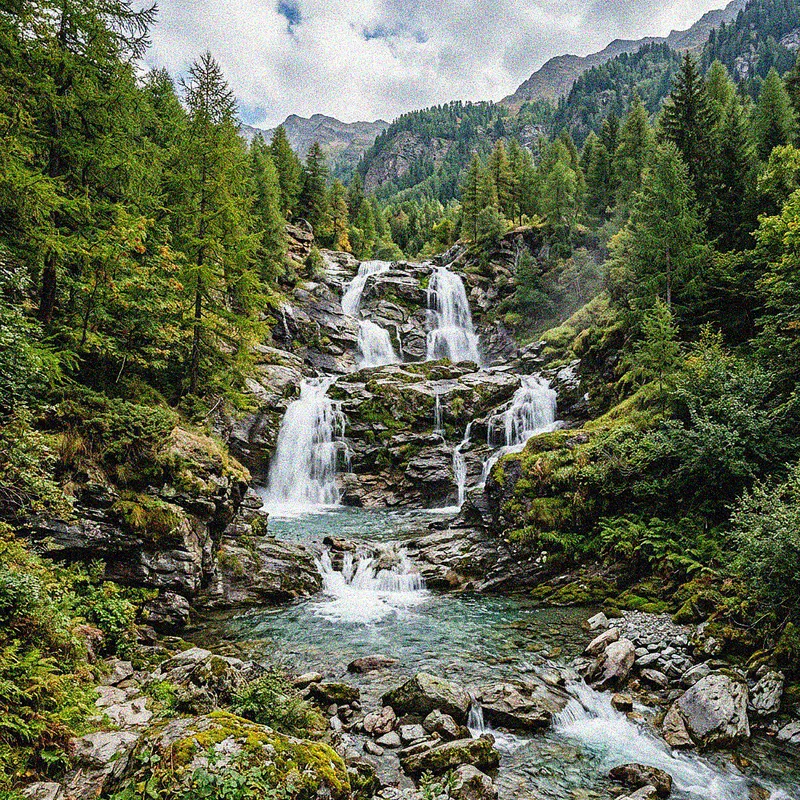
The path starts modestly, winding through a forest of larch and fir that seems to swallow the outside world whole. You’ll hear it before you see it—a low vibration that resonates in your chest like a drum. The mist hits your face long before the pool comes into view, carrying the sharp, cold scent of moss that has never seen the sun. It’s a sensory overload that no Instagram filter can ever truly capture, a raw connection to the earth that feels both ancient and immediate.
I remember one afternoon near the base of the Lillaz waterfalls. The sun was dipping behind the peaks, and the spray caught the light in a way that made the whole valley seem to glow with an ethereal, golden dust. It wasn’t just a sight; it was a physical weight on my skin, a reminder of the mountain’s absolute indifference to our presence. That’s the thing about Gran Paradiso—it demands your full attention. You can’t just ‘see’ it; you have to feel the spray and hear the stones grinding against each other in the current.
The Secret Canyons of Valle Orco#
If you really want to get away from it all, head to Valle Orco. This valley is the rougher, less manicured sibling of the more famous Aosta valleys, where the granite is sharper and the silence is deeper. Here, the waterfalls aren’t just scenic backdrops; they are the architects of the landscape, carving deep, shadowed grooves into the heart of the mountain.
The Cascata di Noasca is a 30-meter leap of faith that has been drawing travelers since the 1800s. The real secret here? You can actually walk behind the veil of water. Standing there, with a wall of liquid thunder between you and the world, is a transcendental experience that makes all the technical gear and muddy trails worth it. To get to the more secluded spots, you have to follow paths that are little more than a suggestion—a faint line through the ferns and giant granite boulders that requires a bit of intuition. My pet peeve is people who think they need a GPS for every single step; sometimes, the best navigation is just the sound of moving water and the feel of the rock under your boots.
The Ritual of the Mountain Meal#
After a day of chasing waterfalls, your body is going to demand fuel. And in Gran Paradiso, fuel means one thing: Polenta Concia. This isn’t just food; it’s an engineering feat of Fontina d’alpeggio and melted butter.
I stopped at Rifugio Fonti Minerali in Ceresole Reale, a staple for climbers and hikers who know their mountains. The owner served a polenta that had been slow-cooked in a copper pot, rich with woodsmoke and the sharp tang of local cheeses. It was heavy, satisfying, and tasted of the very slopes I had been climbing all day. If you’re feeling adventurous, ask for the ‘buleta’—a ball of polenta stuffed with cheese that is a rare gem of the Ribordone tradition. You don’t eat this food; you experience it as a warm embrace after the cold breath of the glaciers. If you’re looking for a similar authentic flavor, I recommend checking out Giulia’s journey through the Walser culinary traditions, where the food tells the story of those who learned to master these peaks.
Luca’s Local Warnings#
But here’s my local warning: don’t be that person who ignores the weather signs because they have a ‘schedule’ to keep. Alpine storms in August are no joke; they arrive with a violet sky and a sudden drop in temperature that can turn a sunny stroll into a survival situation in minutes. I’ve seen tourists trying to hike in sneakers while a thunderstorm rolls in over the peaks, their faces pale with a realization that comes far too late.
Also, if I see one more tourist bus blocking the narrow road to Valsavarenche because the driver didn’t trust the local signage, I might actually lose my mind. Respect the pace of the mountains and the people who live here. They were here long before us, and they’ll be here long after our digital footprints have vanished. If you treat the land with respect, keep your eyes open, and listen to the silence, Gran Paradiso will show you a side of Italy that most people only see in their dreams. It’s raw, it’s beautiful, and it’s waiting for those who aren’t afraid to get their boots dirty.
Aggiornamento: If the rugged peaks of the north have whetted your appetite for untamed beauty, you’ll find a similar alpine thrill in the majestic landscapes of Valle d’Aosta. My colleague Marco recently explored the region’s hidden treasures in his article about the road trip to Valle d’Aosta’s castles, uncovering the charm of Fénis, Verrès, and Bard. Stay curious.