
Introduction#
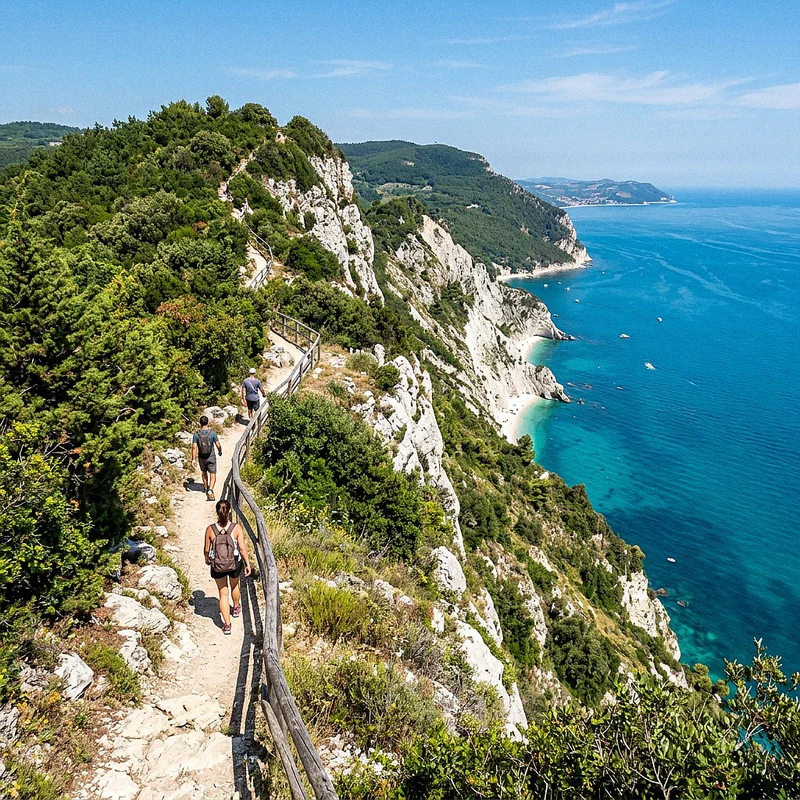
The Conero Riviera is a true gem set in the beautiful Marche region, in the province of Ancona. Imagine a coastline that stands out between the intense green of Monte Conero and the bright blue of the Adriatic Sea, with trails that seem painted and villages that envelop you with their timeless charm, like Sirolo and Numana. It’s one of those places that call you, a promise of pure nature and adventure. I first discovered this area on a Saturday morning in late August. I had read about these breathtaking trails and decided to explore them, ready to immerse myself in a landscape that promised to be incredible. I wasn’t wrong. The scent of pine needles greeted me as soon as I arrived, mixing with the saltiness of the sea. If you’re looking for a place that combines physical activity, natural beauty, and a corner of peace away from the chaos, Conero is the right place. It’s a destination that will leave you in awe.
How to Reach the Conero Riviera#
Getting to the Conero Riviera is quite simple, but it requires some planning, especially if you want to avoid getting lost between buses and unpredictable schedules. The most convenient solution for those traveling by public transport is to take the train to Ancona Centrale, a well-connected railway hub to the main Italian cities. From there, the most direct way to reach Sirolo or Numana is to take the bus. It’s a short journey, but I advise you to check the schedules in advance, because on weekends off-season the buses don’t always pass frequently. You can also opt for a more picturesque alternative, taking a ferry or a boat from Ancona. Sailing along the coast to Numana or Sirolo will give you a unique perspective on the promontory. I still remember my first boat tour here: the wind in my hair, the rhythmic sound of the waves, and the view of the white cliffs approaching slowly. It was like entering a painting. A practical tip: if you intend to explore the trails, try to leave early in the morning. The parking lots near the trailheads tend to fill up quickly, and an early start will allow you to enjoy the first light of day that illuminates the sea and the Mediterranean scrub in total solitude. It’s really worth it.
The Best Trails of the Conero Riviera#
The trails of the Conero Park are a gift for those who love walking immersed in nature, offering views that leave you speechless. The routes, beautifully maintained and marked with the unmistakable white and red flags of the CAI (Italian Alpine Club), are many and vary in difficulty. The Conero Traverse Trail (CAI Signpost 301) is the main artery of the promontory and a challenge worth facing. We’re talking about approximately 8 km of length with a cumulative elevation gain of about 400 meters. The terrain is a mix of compact dirt and exposed limestone: I highly recommend using trekking poles to unload your knees in the continuous ups and downs. The effort is amply rewarded when you reach the Belvedere Nord: you’ll find yourself in front of a dizzying view that spans from the blue of the Adriatic to the Marche hinterland. I still remember the silence broken only by the song of the cicadas and the rustle of the wind through the branches of holm oaks and maritime pines. Technical Details (Conero Traverse):
- Difficulty: E (Hiking)
- Elevation Gain: +/- 400 m approximately
- Time: 3h 30m
- Starting Point: Fonte d’Olio / Ex Cava
- Signpost: CAI 301
For those seeking something more scenic but shorter, the Passo del Lupo Trail (CAI Signpost 302) gives you wonderful glimpses of the famous Due Sorelle beach. The route usually starts from the Sirolo cemetery and crosses a thick Mediterranean scrub before opening up onto the void. Be careful with the fact-check here: you can safely reach the belvedere (the actual “pass”), but the final descent to the beach is strictly forbidden by a municipal ordinance due to the extremely high risk of deadly landslides. I walked the first part of this trail one spring morning, and the view of the white stacks emerging from the crystal-clear sea left me speechless, stopping exactly where the CAI signpost imposes the halt.
Technical Details (Passo del Lupo):
- Difficulty: E (Hiking) up to the belvedere
- Elevation Gain: +/- 150 m approximately
- Time: 1h 30m (round trip)
- Starting Point: Sirolo Cemetery / Bar Belvedere
- Signpost: CAI 302
Finally, there are the “vertical” trails that descend to the coves, like the San Michele Trail (CAI Signpost 304). Although it’s only about a kilometer long, it features significant slopes (up to 20%) on a gravelly surface. A short but intense route that guides you through the vegetation until you almost touch the water, accompanied by the pungent scent of wild rosemary and broom.
Technical Details (Descent to San Michele):
- Difficulty: E (Hiking - requires a firm step)
- Elevation Loss: - 120 m approximately
- Time: 30m (only descent)
- Starting Point: Parco della Repubblica (Sirolo)
- Signpost: CAI 304
A technical warning: as beautiful as the place may seem, it’s essential to be prepared. Never wear unsuitable shoes like city sneakers or worse, flip-flops, because the downhill trails are steep, dusty, and slippery. I’ve seen too many people regret this choice, stuck halfway down.
Where to Eat and Sleep#
After a day of hiking, nothing beats a good meal based on local products and a comfortable bed. Fortunately, the towns of Sirolo and Numana offer several excellent options.
If you’re in Sirolo, I recommend looking for a panoramic trattoria in the square. There are simple places, but where the wild mussels of Portonovo (a local Slow Food presidium) and the sea view make every bite unforgettable. The first time I was there, I ordered a plate of spaghetti with mussels that I still remember with nostalgia: an explosion of savory flavors, enhanced by the absolute freshness of the seafood.
For accommodation, there are historic hotels embedded directly on the promontory, former monasteries renovated to offer comfortable rooms and a spectacular view overlooking the sea. After a day spent walking, immersing yourself in the silence of the mountain with the distant sound of the waves is pure magic.
If you prefer a more rustic option, the hinterland just behind the coast is full of charming and welcoming agriturismos. Many offer breakfast with local products, artisanal jams, and homemade tarts.
Tips and Warnings#
The Conero Riviera is a paradise, but like any natural place, it needs to be respected. It’s a fragile ecosystem, and human impact, especially in the summer months, is heavy.
First of all, don’t leave trash behind. It seems obvious, but too often I’ve seen tissues or plastic bottles abandoned among the bushes. Please, always carry a bag with you to collect your trash and bring it back down. It’s a small gesture that makes a big difference.
Avoid listening to music with Bluetooth speakers while walking. One time, during one of my favorite hikes to escape the chaos, I found myself behind a group with a loudspeaker blasting music at full volume. The song of the birds and the sound of the wind were completely covered. Let nature give you the soundtrack.
Finally, a technical issue for those who share the trails: mountain bikers. If you’re on a bike, remember that on the narrow and blind trails of Conero, pedestrians always have priority. There’s nothing more dangerous than a bike coming down at full speed behind a blind curve without a bell.
Conclusion#
The Conero Riviera is much more than just a beach destination; it’s a vertical experience that combines sea and mountain. Here you can find trails that challenge your endurance and a nature that embraces you with its rough beauty. If after all this elevation gain you’re looking for a moment of well-deserved rest by the sea, I suggest exploring the famous velvet beach of Senigallia, less than an hour’s drive north.
Remember to respect this place and leave only footprints. The mountain, as I always say, doesn’t care about your followers or the number of photos you’ve taken. Live it with authenticity and preparation. Whether you’re an experienced hiker or a weekend walker, Conero will give you emotions that you’ll carry with you forever.