
Forget the usual August in Sardinia. Most people picture crowded beaches and tourist traps, but I found something truly different inland. On August 14th, Sassari transforms into a city alive with raw energy, far from any postcard view. If you’re planning a family trip to Sardinia, however, you’ll be glad to know that there’s still plenty to explore beyond the mainland. My colleague Elena has a wonderful guide to Sardinia’s best child-friendly beaches and hidden gems, which includes some off-the-beaten-path destinations that are perfect for families. Exploring Sardinia’s Hidden Beaches with Kids
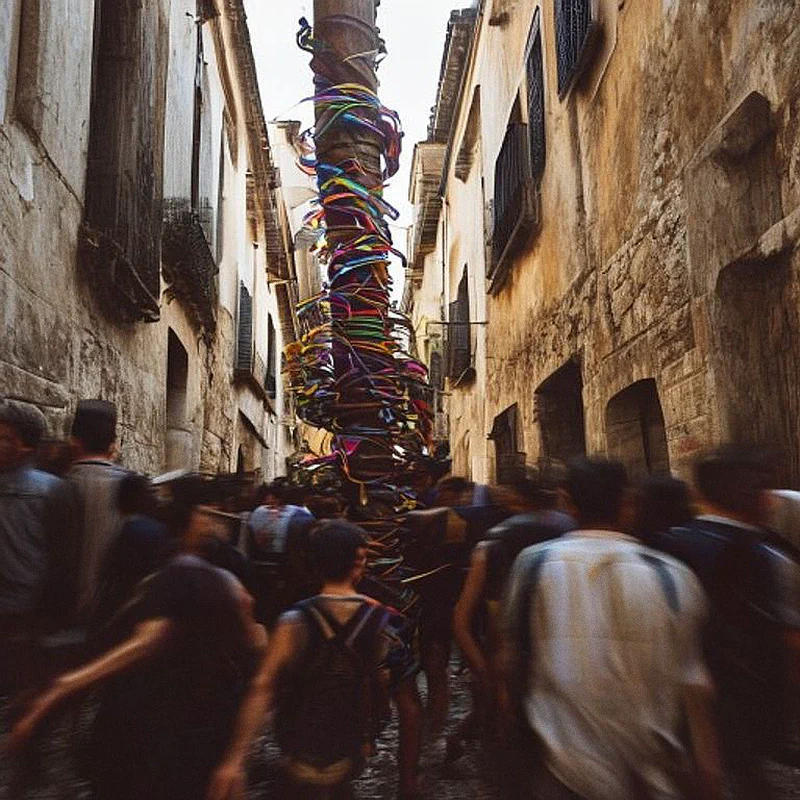
The summer air in Sassari’s old town is thick with intense, clashing smells. Smoke from horse meat grills mingles with wild fennel and the heavy scent of melting wax. Crowds pack the narrow alleys, where the white limestone’s glare makes the afternoon heat almost suffocating.
The Vow’s Origins and the Dressing Fever#
This isn’t just some show for tourists; it’s a deep-rooted identity ritual. Its origins trace back to a solemn vow made to the Assumption of Mary in 1652. The city thanked her for saving them from a devastating plague.
Over centuries, the original wax candles morphed into massive, decorated wooden columns, the Candelieri. These impressive structures are now the parade’s centerpiece. Since 2013, this cultural heritage has been protected by UNESCO.
The festival actually kicks off long before the evening parade, stirring the streets from the early morning of August 14th. This is the intimate, feverish moment of the “vestizione,” or dressing, where each Gremio decorates its candeliere at its historic headquarters or the Obriere’s home. It’s a private, intense preparation.
The massive columns get adorned with colorful paper garlands, fresh flowers, and long silk ribbons called bandoffas. Walking the deserted morning streets, listening to the excited voices of the gremianti working amidst the scents of wax and glue, offers a truly special vibe. This early atmosphere is something evening tourists completely miss.
Each Gremio represents an ancient guild of arts and crafts from the city. From the Massai, the landowners with the oldest historical prestige, to the Viandanti (Travelers), Fabbri (Blacksmiths), and Ortolani (Greengrocers), each proudly guards its insignia. The “vestizione” is a family affair, passed down through generations under the watchful eyes of neighborhood elders.
The Descent and the People’s Verdict at the Civic Theater#
In the late afternoon, the real Faradda begins, a descent winding from Piazza Castello along Corso Vittorio Emanuele and Corso Vico, reaching the Church of Santa Maria di Betlem. Eleven enormous wooden columns, each weighing several hundred kilos, are hoisted onto the shoulders of vigorous teams of bearers. The obsessive rhythm of the drummers and the shrill sound of the fifes echo in spectators’ ears, creating an almost shamanic atmosphere.
The bearers don’t just walk; they make the candelieri dance and spin with rapid, coordinated movements. Sweat pours down their faces, strained from the physical effort, as the crowd cheers on the gremianti with shouts and warm applause. Sassari folklore says the more spectacular turns and fluid dances a candeliere performs, the more prosperous the agricultural and commercial year will be.
The most politically charged moment of the parade happens halfway, in front of the Palazzo Civico, the old Civic Theater. This is where the “Intregu” ceremony takes place, a symbolic exchange of the flag between the Mayor and the Gremio dei Massai. In front of the palace door, the Mayor offers a traditional toast, uttering the phrase “A zent’anni!” (To a hundred years!).
The crowd below responds with warm applause if the administration has done well, or with a shower of deafening whistles if popular discontent is widespread. It’s a primal, fascinating form of direct democracy you won’t witness anywhere else. This raw public verdict is truly something to behold.
Snails and Zimino: Sassari’s Wild Flavors#
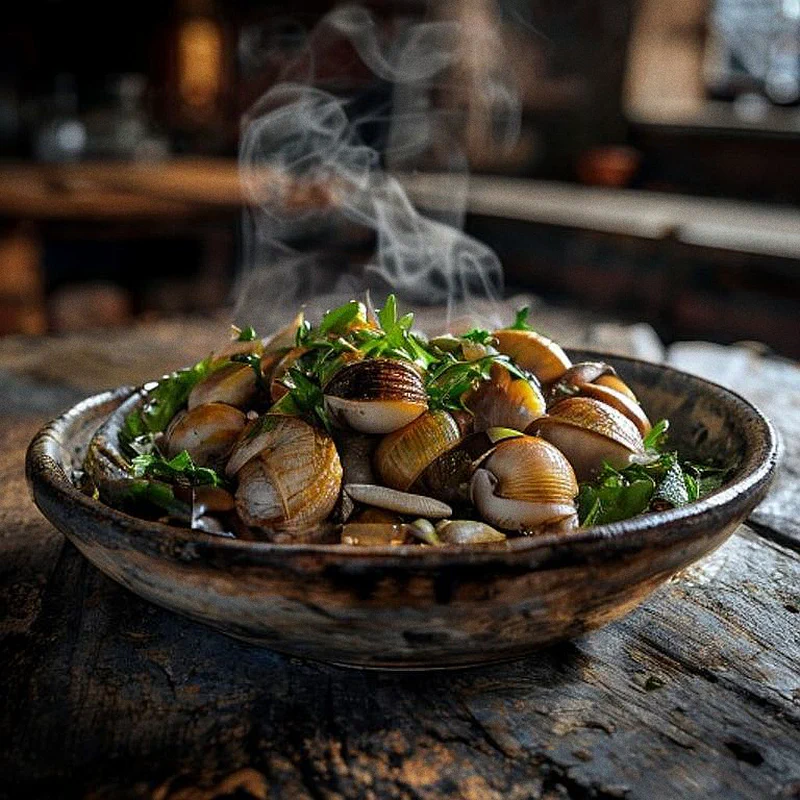
The parade is long and tiring, so knowing how to refuel during breaks is crucial. Faradda’s food is rough and flavorful, light-years away from the refined fish dishes served on the island’s coasts. The real local specialty, found in every tavern or temporary stall in the old town, is ciogga minuda.
These are small land snails boiled with garlic, parsley, and spicy chili pepper, served in large communal dishes. Eating them requires a manual technique and some practice. You have to grasp the snail and decisively suck the mollusk directly from its shell, performing the characteristic gesture locals call suzzare.
For those seeking even more extreme flavors, street grills offer zimino, veal entrails cooked over an open flame. The metallic, fatty, and smoky taste of zimino is a pillar of Sassari cuisine. It tends to divide travelers between absolute love and total rejection.
To wash down these specialties, skip the commercial drinks and order a glass of Cagnulari. This is a robust, spicy native red wine. Alternatively, a chilled bottle of Ichnusa beer will help you battle the evening’s oppressive heat.
Eating these simple foods on a stone bench, surrounded by songs in Sassarese dialect, will make you feel like part of the community for a night. It’s an authentic immersion.
How to Plan Your Night in Sassari#
Tackling the Faradda requires a bit of logistical planning to prevent the festival from becoming a stress nightmare. The old town is completely closed to traffic during the parade, and surrounding streets are subject to strict ZTL controls. The best advice is to park your car near Piazzale Segni, in the modern part of the city, and reach the center on foot or by using the free municipal shuttles.
The crush along Corso Vittorio Emanuele can get suffocating, especially during the parade’s peak hours between 8:00 PM and 10:00 PM. If you prefer to enjoy the spectacle in relative calm, position yourself on the steps of Piazza Castello to witness the Candelieri’s departure. This offers a less intense view.
If you want to experience the most dramatic and emotional moment, wait until late at night near the Church of Santa Maria di Betlem. Here, the candelieri enter one by one, bending to pass under the Gothic portal. It’s a truly powerful sight.
Luca’s Insider Advice: Wear comfortable, strictly closed-toe shoes. By the end of the night, streets are covered in wood splinters, crushed cans, and slippery wax residue. Avoid open sandals unless you want to risk injuring your feet in the crowd.
Also, bring a bottle of water to cope with the suffocating heat that gets trapped between the city’s old limestone walls until dawn. Staying hydrated is key.
Sardinia’s unique cultural identity is a testament to its enduring traditions, where the island’s strong sense of community and heritage continues to thrive. Those who appreciate the rustic flavor of local festivals like the Festa dei Noan Trios will find a similar spirit in the island’s many hidden gems. For instance, Family-Friendly Adventures on Sardinia’s Untouched Coastlines highlights the lesser-known spots on the island that offer a tranquil and authentic experience for visitors. This island refuses to bend to the whims of beach tourism, instead, preserving its natural beauty and cultural richness for those who seek a more authentic Sardinian experience.