
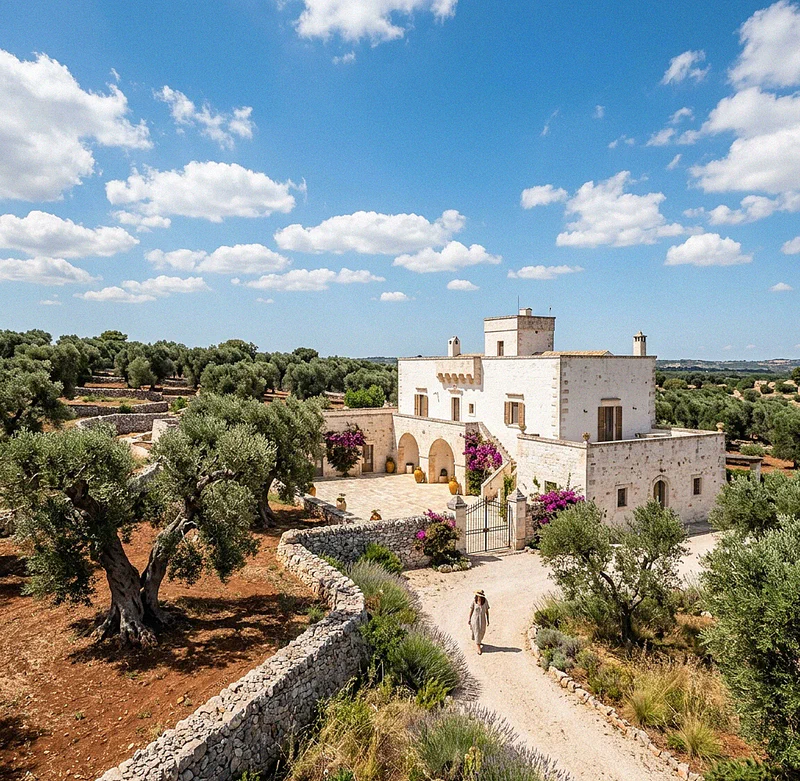
There is a particular scent that welcomes you when you arrive in the heart of Puglia: it is a mix of red earth warmed by the sun, brackish air, and the pungent and refreshing smell of olive leaves. In this landscape dominated by the silvery green of thousand-year-old trees and the blinding white of limestone, the masserias stand as sentinels of a peasant civilization that knew how to transform toil into beauty.
I am Elena, and today I want to take you with me, Lorenzo, Leonardo, and little Beatrice to discover Puglia’s masserias. For us, the masseria is not simply a place to sleep; it is a complete sensory experience that allows us to find that slow rhythm that city life often steals from us.
If besides rural life you want to discover the most authentic side of the region, I recommend reading my story on Bari Vecchia and its orecchiette. If instead you are looking for crystalline sea and pristine beaches, don’t miss my guide to exploring Salento. And if you love adventure, Martina will explain how to explore sea caves by kayak.
What Exactly is a Masseria?#
The masseria was the beating heart of Apulian agricultural life between the 16th and 18th centuries. They were large self-sufficient farms, often fortified with high walls and watchtowers to defend against attacks by Saracen pirates. Imagine the wonder in Leonardo’s eyes when I explained to him that we were sleeping in a kind of “castle for farmers”!
Today, these structures have been restored with incredible care, keeping intact the architectural features such as star vaults (which Beatrice always points to, calling them “stone flowers”) and dry-stone walls that delimit the properties.
Itria Valley vs Salento: Which to Choose?#
Puglia is long and varied, and the choice of masseria depends a lot on the type of holiday you are looking for:
The Itria Valley: Trulli and Oaks#
This is the area surrounding magical villages like Ostuni, Locorotondo, and Alberobello. Here the masserias are often immersed in oak forests and infinite olive groves.
- The Experience: We stayed in a masseria near Ceglie Messapica. While Lorenzo read in the shade of a carob tree, Leonardo participated in a local pottery workshop.
- For Whom it is Suitable: For those who love hilly landscapes, walks in white villages, and exceptional land-based cuisine.
Salento: Red Earth and Sea Steps Away#
Further south, between Otranto and Gallipoli, the landscape changes. The earth becomes an intense red and the masserias are often closer to the coast.
- The Experience: Here we lived the magic of the “controra,” the afternoon rest while the sun burns outside, only to run towards the wild beaches at sunset.
- For Whom it is Suitable: For families who want to combine rural peace with daily dives in transparent waters.
Masseria Life: Experiences for Little Explorers#
The true added value of a holiday here are the activities. Leonardo learned to make pasta with the “massaia” (farmwife) Maria: seeing him covered in flour while trying to shape an orecchietta was one of the most beautiful moments of the trip.
For Beatrice, the joy was meeting the masseria’s donkeys. Many structures today offer educational farm activities, where children can learn the olive oil cycle or how to care for the vegetable garden. It’s a wonderful way to teach them the value of the land and genuine food.
Logistic Tips for Families in Puglia#
Organizing a trip to Puglia requires some measures, especially if you are traveling with small children:
- A Car is Indispensable: Do not rely on public transport if you want to explore the masserias. Rent a spacious car. Be careful though: country roads are narrow and delimited by dry-stone walls. Lorenzo was a bit tense at the wheel at first, but you get used to it quickly (just drive slowly!).
- Strollers and Cobblestones: In white villages like Ostuni, a stroller can be a nightmare due to the climbs and stairs. An ergonomic baby carrier is the best choice for little ones like Beatrice.
- The Heat: In mid-summer, the Apulian sun can be implacable. Look for masserias with a pool and large shaded areas. Refreshment in the central hours of the day is essential to avoid tiredness-induced tantrums.
- Book in Advance: The most authentic masserias are small and have few rooms. If you travel in high season (July-August), book at least 6 months in advance.
The Food: The Heart of the Masseria#
Nothing beats breakfast in a masseria: homemade tarts with fig jam, sun-ripened tomatoes with a drizzle of freshly pressed oil, and still-warm “pasticciotti.” Choosing a masseria that offers dinner is a winning move for families: eliminating the stress of having to find a restaurant every evening allows you to enjoy the peace of sunset among the olive trees while the children play safely in the courtyard. If you’re lucky enough to visit in late summer, you might even witness the sacred ritual of making tomato passata, a tradition that defines the rhythm of our rural life.
The masseria is the soul of Puglia that resists. It is an invitation to put down your phone, breathe deeply the smell of the earth, and rediscover the joy of a holiday that feeds not only the eyes but also the heart.
A hug, Elena