
Palermo Street Food: A Nonna-Approved Guide to Panelle, Arancine & Beyond

·2425 words·12 mins

Ciao, amici! It’s Giulia, and today we’re embarking on a journey to a city that truly understands the language of flavor: Palermo. Oh, Palermo! To me, it’s not just the capital of Sicily; it’s a living, breathing cookbook, its streets seasoned with centuries of history and its air thick with the irresistible aromas of sizzling street food. You haven’t truly lived until you’ve tasted the vibrant, unpretentious soul of this city, one glorious bite at a time. Forget your fancy restaurants for a moment; the real heart of Sicilian cuisine beats loudest in its bustling markets and the hands of its passionate street vendors. But if you’re looking to experience the full beauty of Sicily, you might want to consider exploring beyond its capital. As my colleague Luca has a wonderful guide to the lesser-known islands of Sicily - Discover Sicily’s Hidden Gems - it’s a treasure trove of untouched landscapes and authentic local culture waiting to be discovered.
My nonna always told me, “Giulia, the best stories are told not with words, but with flavors, with the warmth of a freshly fried bite, and the laughter shared around a simple meal.” And in Palermo, every panelle, every arancina, every sfincione, tells a story of ingenuity, tradition, and pure, unadulterated passion. This isn’t just food; it’s a cultural experience, a sensory overload that will awaken every corner of your palate. So, tie on your imaginary apron, prepare your stomach for an adventure, and let’s dive into the glorious world of Palermo street food, like true locals.

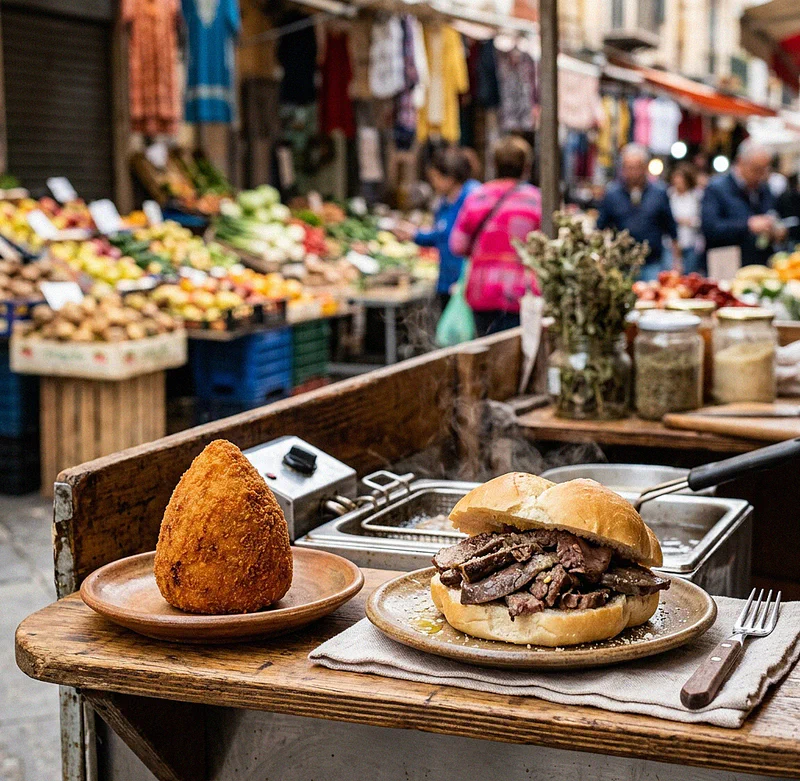
Authentic Palermo Street Food Arancina
Golden arancine and fresh street food in the heart of Palermo’s bustling Ballarò market.

The Beating Heart: Palermo’s Mercati Storici
#

To truly understand Palermo’s street food, you must first immerse yourself in its ancient markets. These aren’t just places to buy groceries; they are vibrant, chaotic theaters of daily life, where vendors’ melodic shouts (or “abbanniate” as we call them) fill the air, and the scent of fresh produce mingles with frying oil and fragrant spices. My nonna always said, “The secret is in the ingredients,” and in these markets, you’ll find the freshest, most vibrant produce Sicily has to offer.

Mercato di Ballarò: The Grand Dame of Chaos
#

Ah, Ballarò! This is the oldest and largest market in Palermo, a sprawling, vibrant spectacle that dates back to Arab times. It’s a place of pure, wonderful chaos, a festival of sights, sounds, and smells. You’ll find everything here, from towering piles of seasonal fruits and vegetables to fresh fish caught just hours before, and, of course, countless street food stalls. Wander through its narrow alleys, and let the energy carry you. It’s an authentic slice of Palermitan life, deeply rooted in its Arab history. Here, you’ll see locals queuing for their daily bread, haggling over prices, and sharing a quick bite with a friend. Don’t be shy; follow the locals, and you’ll find the best treasures. You might even spot Zio Ignazio’s Arancini, a famous arancini vendor within Ballarò Market known for a wide range of crispy arancini.

Mercato del Capo: A Sensory Labyrinth Behind Teatro Massimo
#

Just behind the magnificent Teatro Massimo, you’ll stumble into Mercato del Capo. This market, often called “Il Capo” by locals, is a historical maze, its narrow alleys bursting with colorful stalls. It’s a bit more intimate than Ballarò but no less lively, offering an incredible variety of Sicilian street food, especially fried delights. From fresh ricotta to aromatic basil and oregano, Capo is a feast for the senses. This is a prime spot to find vendors grilling stigghiola and frying panelle and crocchè. Look for the active grills and enticing aromas; that’s where the magic happens.

Mercato della Vucciria: Day Market, Nightlife Hub
#

Vucciria, once a bustling fish market, transforms as the day progresses. By day, it’s still home to old-school stalls and tiny fry shops serving traditional snacks. But as evening descends, Vucciria truly comes alive, becoming a hub for Palermo’s vibrant nightlife, with seafood restaurants and a nocturnal ambiance. It’s a unique duality, offering a different kind of energy and atmosphere compared to its daytime counterparts. You can find stigghiola and frittola here, among other treasures.

A Symphony of Savory Street Bites
#

Now, let’s talk about the stars of the show, the dishes that define Palermo’s street food scene. Each one is a testament to cucina povera, where simple, humble ingredients are transformed into something extraordinary.

Panelle e Crocchè: The Golden Crunch
#

You haven’t truly lived until you’ve tasted a freshly fried panelle. These crispy, golden chickpea fritters are a staple, a simple yet utterly addictive Sicilian snack. Made from chickpea flour, water, and a pinch of salt, then fried until golden, they are typically served in a soft, sesame-seeded bun, often alongside crocchè. Crocchè, or cazzilli as we sometimes call them, are fried potato croquettes, often with a hint of mint and lemon. The contrast of the crispy exterior and the soft, creamy interior is pure bliss. My nonna always told me, “The best panelle are light, flavorful, and fried to order.”

  • Giulia’s Picks for Panelle & Crocchè:
    • Panelle e Crocché – Street Food no Zu Totò on Via dei Candelai, 3/5: A tiny, hole-in-the-wall spot known for amazing potato croquettes with a herby kick.
    • Basile Focacceria del Massimo: They fry their panelle to order, ensuring a warm, crispy bite every time.
    • Nino ‘u Ballerino in Piazza Indipendenza: Famous for his energetic preparation style and excellent pane ca’ meusa, but his muffole with panelle and crocchè are equally divine.
    • Nni Franco U Vastiddaru on Via Vittorio Emanuele, 102: Renowned for perfectly golden panelle.

Arancine: Golden Orbs of Delight
#

Ah, arancine! These are the holy grail of Sicilian street food, golden-fried rice balls that are small in size but bursting with tantalizing flavors. Now, a little secret from a local: in Palermo, we say arancina (feminine, singular) and arancine (feminine, plural) because their round shape reminds us of little oranges. In other parts of Sicily, like Catania, they’re called arancini and are often more conical, like Mount Etna. But here, in Palermo, it’s arancina!

The classic fillings include a rich ragù (minced meat, peas, carrot, onion, and a touch of tomato) or al burro (with butter, stringy mozzarella, and prosciutto). But you can find creative variations too, like spinach and mozzarella, or even porcini mushroom. The secret is in the ingredients: perfectly cooked saffron rice, a generous, flavorful filling, and a crispy, golden breadcrumb crust. My nonna always insisted they be fried to order to ensure that burn-your-fingertips, crispy outer shell and soft, warm, gooey rice inside.

  • Giulia’s Picks for Arancine:
    • Ke Palle on Via Maqueda, 270: An iconic spot with an extensive and creative menu, offering classic, vegan, vegetarian, and even sweet arancine. Their arancina alla Norma with eggplant, tomato, and smoked ricotta is a personal favorite.
    • Antica Focacceria San Francesco on Via Alessandro Paternostro: A historic gem known for some of the most authentic arancine in Sicily.
    • Bar Touring on Via Lincoln 15: Legendary for its “arancina bomba” – a truly enormous arancina.
    • Donnafranca on Via Maqueda, 292: An elegant bar-pastry shop presenting arancine as a culinary experience, with sixteen artisanal flavors.

Pane ca’ Meusa: The Bold Choice
#

For the adventurous palate, Pane ca’ Meusa (bread with spleen) is a must-try. This iconic sandwich, dating back to medieval Jewish butchers in Palermo, is a true example of cucina povera. Thin slices of veal spleen (and sometimes lung and trachea) are boiled and then fried in lard, piled high into a soft, sesame-seeded roll. You can have it “schettu” (plain) or “maritatu” (married) with a squeeze of lemon and a sprinkle of caciocavallo cheese. My nonna always said, “Don’t judge a book by its cover, or a sandwich by its name!” It’s intense, historic, and surprisingly delicious.

  • Giulia’s Picks for Pane ca’ Meusa:
    • Look for skilled meusari (spleen sandwich vendors) in the Ballarò and Vucciria markets. Follow the locals, and if there’s a long line, join it!
    • Nino u’ Ballerino in Piazza Indipendenza: A legendary vendor famous for his pane ca’ meusa.
    • Nni Franco U Vastiddaru on Via Vittorio Emanuele, 102: Another reliable spot for this Palermitan delicacy.

Stigghiola: The Smoky Whisper
#

As you walk through the markets, you’ll inevitably be drawn by a giant, tempting cloud of smoke. That, my friends, is the stigghiola. This classic example of cucina povera consists of lamb or veal intestines, seasoned, wrapped around a spring onion, and grilled hard over coals. The aroma is utterly intoxicating – smoky, savory, and uniquely Sicilian. It’s best enjoyed hot off the grill, with a generous squeeze of lemon. It might sound daring, but trust me, it’s a delightful ritual.

  • Giulia’s Picks for Stigghiola:
    • Keep an eye out for stigghiularu (the vendors) in Mercato del Capo, Ballarò, and Vucciria. Follow the smoke and the enticing smell!
    • There’s a street food stall on the outskirts of the city center called Stigghiolaro that serves seriously good stigghiola.

Sfincione: The Sicilian Pizza
#

If you think you know pizza, think again when you come to Palermo. Sfincione is our traditional “Sicilian pizza,” but it’s more like a thick, spongy focaccia, topped with a rich tomato sauce, onions, caciocavallo cheese, and often anchovies and breadcrumbs. The name “Sfincione” comes from the Arabic “Isfinj,” meaning sponge, perfectly describing its soft, thick crust. You’ll find mobile vendors in their little three-wheel Ape Piaggio trucks driving around, shouting, announcing their arrival. My nonna always said, “It’s the perfect mid-morning snack, or even breakfast!”

  • Giulia’s Picks for Sfincione:
    • Panificio Graziano (near Statua della Libertà/Via del Granatiere): Churning out some of the best sfincione in Palermo since 1957.
    • Antica Focacceria San Francesco on Via Alessandro Paternostro: Another historical spot for delicious sfincione.
    • Antico Caffè Spinnato on Via Principe di Belmonte: Known for its excellent sfincione.
    • In the Ballarò Market, look for Pane e Sfincione di Marco.
    • Local’s Secret: While the classic Palermo “red” sfincione is amazing, try the “white” version from the nearby town of Bagheria (Baarìa). It’s just dough, white onions, anchovies, breadcrumbs, and tuma or ricotta cheese – no tomato! It’s incredible. Don’t tell anyone I told you!

Sweet Temptations: A Dolce Finale
#

No culinary journey in Sicily is complete without indulging in our glorious sweets. They are the perfect ending to a savory street food feast.

Cannoli: The King of Sicilian Pastries
#

The Cannolo Siciliano is the undisputed king of our pastries, a symbol of Palermo street food known worldwide. A crispy, fried tube-shaped shell, traditionally filled just before you eat it with creamy, sweet sheep’s milk ricotta, and often garnished with candied fruit, chocolate chips, or pistachios. My nonna always taught me, “A cannolo is an art. The shell must be crispy, and it must be filled at the last second, right before you eat it. Otherwise, the shell gets soggy, and that, Giulia, is a crime!” Avoid pre-filled ones you see sitting out, especially in summer, as ricotta is a fresh cheese and not a summer food.

  • Giulia’s Picks for Cannoli:
    • I Segreti del Chiostro in Piazza Bellini, 33: Tucked away in a convent, their cannoli are legendary and worth the search. They adhere to traditional recipes.
    • For an authentic experience, seek out proper pasticcerias (pastry shops) rather than street stalls that pre-fill their cannoli.
    • Dolci di Nonna Rosa in Ballarò Market: One of the market’s most popular vendors for cannoli, with shells filled to order.

Iris ca’ Ricotta: A Sweet Revelation
#

Less famous than the cannolo but equally delightful is the Iris ca’ ricotta. This sweet, fried brioche bun is stuffed with creamy ricotta, custard, or chocolate. It’s a sweet indulgence without being overly heavy, thanks to the creaminess of the ricotta. A perfect treat for any time of day!

Nonna’s Secret Notebook: Practical Tips for the Palermitano Palate
#

To truly experience Palermo’s street food like a local, you need a few insider tips, straight from my nonna’s wisdom.

  • When to Go: While street food is available throughout the day, and sfincione trucks drive around all day, some of the markets are best explored in the mid-morning for a leisurely experience. If you want to soak up the evening atmosphere, Palermo’s street food scene comes alive after dark, with many spots staying open late. My nonna always said, “Breakfast can be a pane ca’ meusa, lunch can be arancine, and dinner can be a street-side grilled stigghiola!”
  • Cash is King (Contanti è Re): Many street vendors operate on a cash-only basis. Bring plenty of small euro notes and coins to make your transactions smooth and easy.
  • Ordering Like a Local: Don’t be afraid to point, smile, and use a few Italian phrases if you know them. My nonna always said, “Let the vendor pick out your food; they know what’s freshest!” Don’t touch the food yourself; tell them what you want, and they will serve you.
  • Embrace the Chaos: Palermo’s markets are a sensory overload, with shouting, smoke, and vendors eager to offer their wares. This is part of its charm! Dive in, let your senses guide you, and don’t be afraid to be adventurous.
  • Consider a Food Tour: If you’re feeling a little overwhelmed, or want to truly understand the stories behind each dish, a local street food tour is an excellent idea. They guide you to the best spots, share cultural insights, and help you navigate the vibrant chaos.
  • “Arancina” in Palermo: Remember, in Palermo, it’s arancina (feminine) for the singular and arancine for the plural. You’ll make friends if you use the correct term!

My Beloved Haunts: Giulia’s Top Picks (Beyond the Markets)
#

While the markets are essential, Palermo has many fantastic individual spots worth seeking out:

  • Panelle e Crocché – Street Food no Zu Totò (Via dei Candelai, 3/5): For those perfect potato croquettes.
  • Ke Palle (Via Maqueda, 270): A modern take on arancine with endless creative fillings.
  • Nni Franco U Vastiddaru (Via Vittorio Emanuele, 102): Great for panelle, crocchè, and pane ca’ meusa.
  • Panificio Graziano (Via del Granatiere, near Statua della Libertà): My go-to for the best sfincione.
  • I Segreti del Chiostro (Piazza Bellini, 33): For a truly divine, freshly filled cannolo.

Palermo’s street food is more than just a meal; it’s a journey through history, a celebration of resilience, and a testament to the incredible flavors that blossom from simple, honest ingredients. It’s the true soul of Italy, served on a paper plate, seasoned with passion, and shared with a smile. So come, explore, taste, and let Palermo capture your heart, one delicious bite at a time. Buon appetito!