Ravenna: Unveiling the Byzantine Secrets Through Shimmering Mosaics

·2195 words·11 mins

Update: My colleague Luca recently published a guide to Italy’s forgotten ghost towns, which resonates with the themes I discussed earlier. His post, Exploring Italy’s Forgotten Ghost Towns: A Journey Through Craco and Beyond, delves into the remnants of a bygone era, echoing the whispers of the past that I mentioned earlier. These enigmatic places continue to captivate my imagination, and I highly recommend Luca’s insightful article for a deeper dive into the mysteries of Italy’s forgotten places.

Update: As my colleague Marco has recently expertly covered in his post Florence: Parking - Your Ultimate Road Trip Survival Guide: Don’t Get Fined, navigating Italy’s cities can be a challenge. However, Ravenna remains a hidden gem, waiting to be discovered by those who venture off the beaten path. With its unique charm and Byzantine secrets, Ravenna offers a glimpse into the authentic Italy, a journey into its soul and heritage that’s sure to leave a lasting impression.

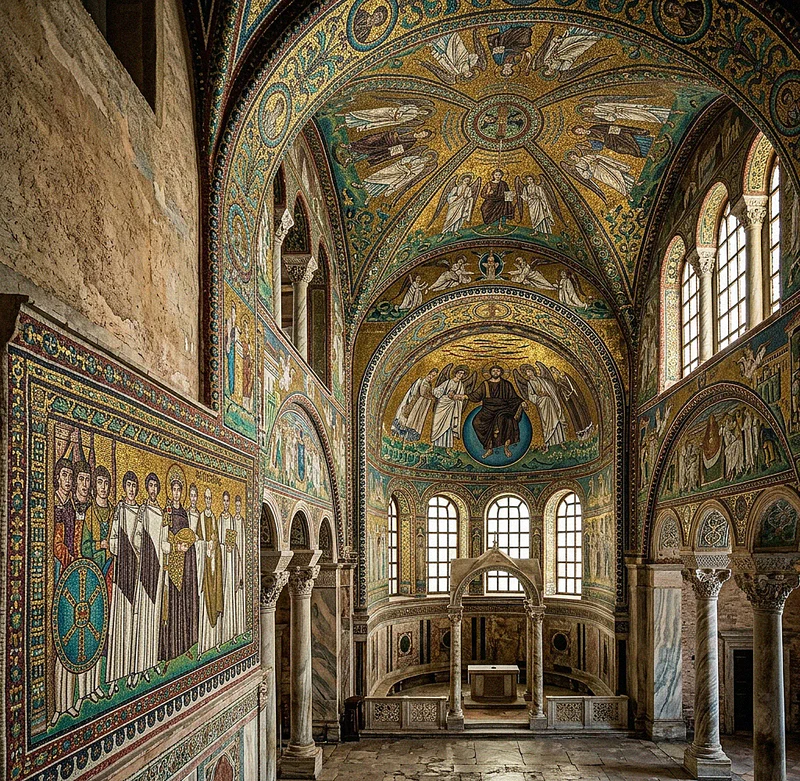
Byzantine Mosaics Basilica of San Vitale Ravenna Italy
The breathtaking mosaics of the Basilica of San Vitale explode with vibrant gold and jewel-toned hues, a testament to Byzantine artistic genius, reminiscent of another Italian jewel I’ve had the pleasure of writing about, where Renaissance architecture and art come together in perfect harmony.

A Glimmering Echo of Empires: Ravenna’s Storied Past
#

To truly appreciate the mosaics, one must first understand Ravenna’s extraordinary trajectory. Imagine a city that, for a brief but glorious period, stood at the very center of the Western world. Ravenna served as the capital of a powerful empire, in this case, the Western Roman Empire in the 5th century, then became the seat of the Ostrogothic Kingdom under Theodoric the Great, and finally, the most important Byzantine outpost in Italy, known as the Exarchate of Ravenna. Each successive power left its indelible mark, but it was the Byzantines who truly transformed Ravenna into a city of unparalleled artistic brilliance. Update: I’ve since written a guide to another city that’s undergoing its own cultural rebirth, and I couldn’t help but draw some parallels with Ravenna’s own storied past; if you’re interested in learning more about this exciting development, I recommend checking out my latest post: L’Aquila 2026: A Journey Through the Rebirth of Italy’s Next Capital of Culture.

As I wander through its quiet streets, particularly around the Zona del Silenzio near Dante’s Tomb, I often feel like I’m walking through the echoes of these grand eras. The city’s strategic location on the Adriatic coast, protected by marshes, made it a desirable prize, and its rulers adorned it with masterpieces, hoping to reflect their earthly power and divine right in shimmering stone and glass.

The Jewels of Ravenna: A Mosaic Masterclass
#

Ravenna boasts eight UNESCO World Heritage sites, all adorned with these magnificent mosaics. To fully immerse yourself, I highly recommend dedicating at least a full day, if not two, to explore them. The combined ticket is the most practical way to experience these wonders. Currently, a 5-monument pass is available, which grants you access to the Basilica di San Vitale, the Mausoleo di Galla Placidia, the Basilica di Sant’Apollinare Nuovo, the Battistero Neoniano, and the Archiepiscopal Museum with the Chapel of St. Andrew. Individual tickets are not available for these five main sites, so the combined ticket is essential.

Let me guide you through these breathtaking sites:

1. Basilica di San Vitale: A Byzantine Jewel Box
#

Stepping into the Basilica di San Vitale is like entering a kaleidoscope of ancient light and color. This octagonal 6th-century marvel is a testament to Byzantine architectural and artistic genius, combining Roman and Byzantine elements. As your eyes adjust to the dim light, the mosaics explode with vibrant hues, covering every available surface.

The most famous panels depict Emperor Justinian I and Empress Theodora, flanking the apse, offering gifts to Christ. Justinian, with his regal purple robe, is surrounded by his court, soldiers, and clergy. Across from him, the Empress Theodora, adorned in jewels, stands with her retinue, about to enter a church. These aren’t just portraits; they are powerful political and religious statements, showcasing the imperial authority and divine legitimacy of the Byzantine rulers. The intricate details, from the folds of their garments to the individual expressions, are astonishing. This place has witnessed centuries of devotion and power, all captured in tiny tesserae.

2. Mausoleo di Galla Placidia: A Starry Night Sky
#

Adjacent to San Vitale, you’ll find the smaller, yet utterly captivating, Mausoleo di Galla Placidia. Dating from the first half of the 5th century, it is believed to be the final resting place of the Roman Empress Galla Placidia, sister of Emperor Honorius. The exterior is unassuming, but once inside, prepare to be awestruck.

The dome above is a deep, celestial blue, studded with 800 golden stars, radiating outwards from a central cross. It feels as though you are gazing up at the heavens on a perfectly clear night. The mosaics here, depicting early Christian symbols like doves drinking from a fountain and the Good Shepherd, are among the oldest and most exquisite in Ravenna. There’s a profound sense of peace and wonder here, a truly spiritual experience. To visit the Mausoleum of Galla Placidia, it is mandatory to book an entry time, as its smaller size means limited visitor capacity.

3. Basilica di Sant’Apollinare Nuovo: Processions of Saints
#

Erected by the Ostrogothic king Theodoric the Great in the 6th century, the Basilica di Sant’Apollinare Nuovo offers a different, yet equally stunning, mosaic experience. Along the nave, two long, majestic processions unfold: on one side, a parade of 22 virgins, led by the Three Magi, approach the Madonna and Child; on the other, 26 martyrs, led by Saint Martin, move towards Christ enthroned. The figures are serene, almost ethereal, their golden halos glowing against vivid green and blue backgrounds.

What I find particularly fascinating here are the subtle changes made to the mosaics after the Byzantines took control. Theodoric’s palace, once depicted, was altered, with figures replaced by curtains, a silent testament to shifting political powers. Hidden behind these walls is a story of religious and political transformation, beautifully rendered in mosaic.

4. Battistero Neoniano (Orthodox Baptismal Hallery): The Baptism of Christ
#

The Battistero Neoniano, or Orthodox Baptistery, is another early 5th-century treasure, named after Bishop Neon who oversaw its decoration. Its octagonal interior culminates in a dome mosaic depicting the Baptism of Christ. John the Baptist, standing in the Jordan River, pours water over Christ’s head, while a personification of the Jordan River watches on. Below, the twelve apostles, draped in white robes, process towards an empty throne. The vibrant colors and intricate details, especially the flowing water and the expressions on the faces, are remarkable.

5. Battistero degli Ariani: A Different Theological Perspective
#

Just a short walk away, you’ll find the Battistero degli Ariani, or Arian Baptistery, built by Theodoric for his Arian followers. While smaller and less ornate than its Orthodox counterpart, its dome mosaic also depicts the Baptism of Christ, but with subtle theological differences reflecting Arian beliefs. The apostles here are also depicted, leading to a central throne. It’s a fascinating comparison, offering a glimpse into the religious divides of the early Byzantine era. Admission to the Arian Baptistery is typically a separate, small fee and has shorter opening hours, often just in the morning.

6. Archiepiscopal Chapel (Chapel of St. Andrew): A “Hidden Pearl”
#

Part of the Archiepiscopal Museum, the Chapel of St. Andrew is a small, cruciform chapel, often called the “hidden pearl” of the museum. It served as the private chapel for the bishops of Ravenna and features a unique mosaic of Christ as a warrior, trampling beasts representing evil. The vibrant colors and early Christian symbolism are deeply evocative.

7. Basilica di Sant’Apollinare in Classe: A Pastoral Vision
#

Located about 8 kilometers (5 miles) from the city center in the ancient port of Classe, the Basilica di Sant’Apollinare in Classe is a masterpiece of early Christian art. Getting here might require a short bus ride (line 4 or 44 from Ravenna’s train station) or a pleasant bike ride. The vast interior, with its single nave, leads to an apse decorated with a magnificent mosaic of Saint Apollinaris, the first bishop of Ravenna, standing amidst a lush, green pasture with sheep. Above him, Christ appears among the clouds, flanked by Moses and Elijah. The sense of peace and pastoral beauty is profound. It’s a different atmosphere than the city center sites, offering a moment of quiet reflection amidst the fields where ancient ships once docked. Admission to Sant’Apollinare in Classe is typically a separate ticket.

Practical Tips for the Modern Explorer
#

Now that your imagination is surely alight with visions of golden mosaics, let’s talk about the practicalities of making this journey.

How to Get There
#

Ravenna is remarkably accessible. The most convenient way to reach it is by train.

  • From Bologna: Regional trains run frequently, taking approximately 1 hour and 15 minutes. This is often considered the best way to get to Ravenna for convenience.
  • From Rimini: It’s about a 1-hour regional train journey.
  • From Florence: Expect a journey of 2.5 to 3 hours with one transfer, usually in Bologna or Faenza.
  • From Venice: You’ll typically need to take a train to Ferrara and transfer there to Ravenna. Ravenna’s train station is conveniently located just 200 meters from the historic center, making it easy to start exploring on foot immediately.

If you’re flying, Bologna Guglielmo Marconi Airport (BLQ) is the most popular and practical option, about 85 km away, with good train and shuttle connections to Ravenna.

Best Time to Visit
#

To truly savor Ravenna’s beauty without the summer crowds and heat, I strongly recommend visiting during the shoulder seasons: late spring (April to early June) or early autumn (September to October). The weather is pleasantly mild, perfect for walking between sites, and the light for photography is often superb. July and August can be quite hot, though the Ravenna Festival in June offers cultural events.

Getting Around Ravenna
#

Ravenna is a wonderfully walkable city. Most of the major mosaic sites in the city center are within a 15-minute stroll of each other. The city’s layout is compact, and signs are tourist-friendly, guiding you through its charming piazzas and ancient streets like Via Cavour and Via Diaz. For Sant’Apollinare in Classe, a local bus or a short taxi ride is necessary.

Tickets and Booking Secrets
#

As mentioned, the combined ticket (Ravenna Mosaici Pass) is essential for visiting the main sites. You can purchase it at the ticket offices located at the Archiepiscopal Museum or the Basilica of Sant’Apollinare Nuovo.

Insider Tip: For the Mausoleo di Galla Placidia and the Battistero Neoniano, it is mandatory to book an entry time. These smaller, precious sites have limited capacity, and booking in advance, especially online, can save you precious time and ensure your visit. Check the official Ravenna Mosaici website for current prices and booking options. The pass is typically valid for 7 days, giving you flexibility.

Where to Eat: Savoring Romagnolo Flavors
#

After a day of mosaic marvels, your palate will surely crave some authentic Romagnolo cuisine. Ravenna is a culinary delight!

  • Piadina: This rustic flatbread is the soul of Romagna. Enjoy it stuffed with local cheeses like squacquerone and prosciutto crudo (cured ham) and arugula. You’ll find piadinerie all over the city.
  • Cappelletti al Ragù: These “little hats” of fresh pasta, typically filled with ricotta and Parmigiano Reggiano, are often served with a rich meat sauce. It’s pure comfort food.
  • Passatelli in Brodo: A unique pasta made from breadcrumbs, Parmigiano, and eggs, served in a flavorful broth. Perfect for a cooler day.

For a truly authentic experience, I recommend:

  • Trattoria La Rustica: Located in the heart of Ravenna on Via Massimo d’Azeglio, 28, this family-run trattoria offers genuine Romagnolo tradition with homemade pasta, local ingredients, and a warm atmosphere. They are closed on Tuesdays.
  • Ristorante Cappello: Situated on Via IV Novembre 41, this restaurant offers a refined yet charming ambiance with traditional dishes, including both meat and fish options. It’s a lovely spot for a relaxed lunch or an elegant dinner.

Beyond the Mosaics: Dante’s Eternal Rest
#

While the mosaics are Ravenna’s shining stars, don’t miss paying homage to Italy’s greatest poet. Dante Alighieri, exiled from Florence, spent his final years here and is buried in Ravenna. His tomb, a neoclassical monument built in 1781, is located next to the Basilica of San Francesco, within the “Zona del Silenzio” (Zone of Silence) on Via Dante Alighieri. It’s a peaceful spot, and a small oil lamp, filled annually with oil from Florence, burns perpetually in his honor.

Concluding Thoughts
#

Ravenna is more than just a collection of ancient buildings; it is a profound journey into the heart of Italian history and artistic genius. Each mosaic tells a story, each golden tessera whispers of empires long past. As I leave Ravenna, I always feel a renewed sense of wonder at the enduring power of art and the incredible layers of history that Italy holds. So pack your bags, prepare your senses, and let Ravenna unveil its glittering Byzantine secrets to you. Buon viaggio!