
Dawn in Gaiole in Chianti hits you with the scent of damp earth and chain lube. Cold October mists lift from the vineyards as hundreds of cyclists converge on the central piazza. Under the early lights, meticulously restored old steel frames and raw wool jerseys gleam. The only sounds are the metallic tick of freewheels and the low hum of anticipation. The journey back in time begins.
Eroica was born in October 1997, the brainchild of Giancarlo Brocci. The inaugural edition saw just ninety-two pioneers set out, determined to defend the ‘strade bianche’ from encroaching asphalt. Today, this iconic event takes place every first Sunday of October, drawing over nine thousand cyclists globally. Such phenomenal growth proves how authentic passion can rescue history from the oblivion of modern progress. Tradition triumphs over haste.
The start is in absolute darkness. At five in the morning, long-route cyclists tackle the first icy descents, relying on vintage lamps or creaking dynamos. Faint light casts long shadows across the dry-stone walls of the surrounding vineyards. Bodies shiver in the morning chill but quickly warm on the first gravel climb. The atmosphere feels almost mystical.
The climb to Castello di Brolio lights the way. The cypress avenue is illuminated by torch flames flickering alongside the gravel roadbed. The relentless gradient demands an immediate, steady pedaling rhythm, avoiding any wasted bursts of energy. The crunch of tires on earth blends with the labored breaths in the dark. The medieval fortress watches silently.
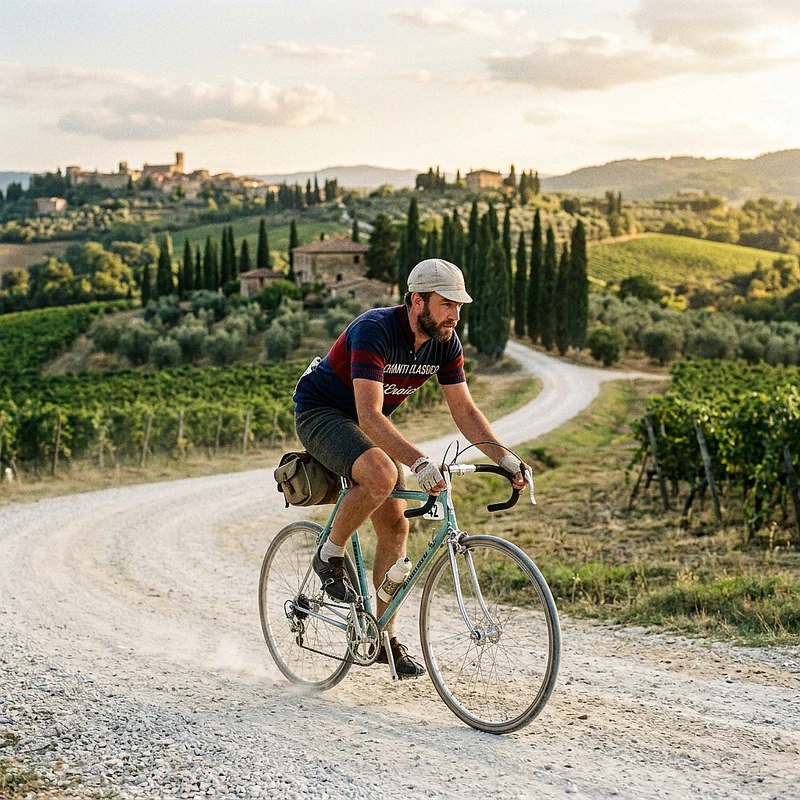
The technical regulations are uncompromising. To participate, you must ride a bicycle built before 1987, featuring a steel frame and external brake cables. Gear shifters must be mounted on the down tube, and pedals require the old-style toe clips with leather straps. This technological rigidity transforms every gradient into a direct muscular challenge against gravity. Forget modern gearing.
Vintage gearing intimidates even strong riders. Old chainsets typically feature 52 and 42-tooth front rings, paired with very stiff rear cogs. Tackling gravel walls with such high minimum ratios demands legs of steel and fierce determination. Without specific training on steep climbs, you’ll be forced to dismount and push. Endurance isn’t built at the dinner table.
Tuscan terrain offers no compromises. The Chianti and Val d’Orcia hills provide expansive views but conceal brutal gradients that severely test your calves. Eroica is not for casual cyclists: gradients up to 15% on gravel force many to push heavy steel frames on foot. If you prefer exploring these Tuscan hills by car, Marco’s guide on Tuscany scenic road trips is a solid resource. Always respect this land.
The Monte Sante Marie sector marks the physical limit of the long route. This eleven-kilometer gravel stretch is officially dedicated to Swiss champion Fabian Cancellara. Its steep ramps feature a broken surface of unstable gravel, causing the rear wheel to constantly slip. Maintaining balance demands locked arms and absolute concentration on a clean line. This is where the true challenge is decided.
Your route choice defines the experience. The organizers offer five distinct courses, ranging from a 46-kilometer leisure ride to the epic 209-kilometer ‘heroic’ challenge. Every cyclist must rigorously assess their athletic preparation before committing to a demanding distance. The Castello di Brolio climb, for instance, will test even those on intermediate routes. Choose with extreme wisdom.
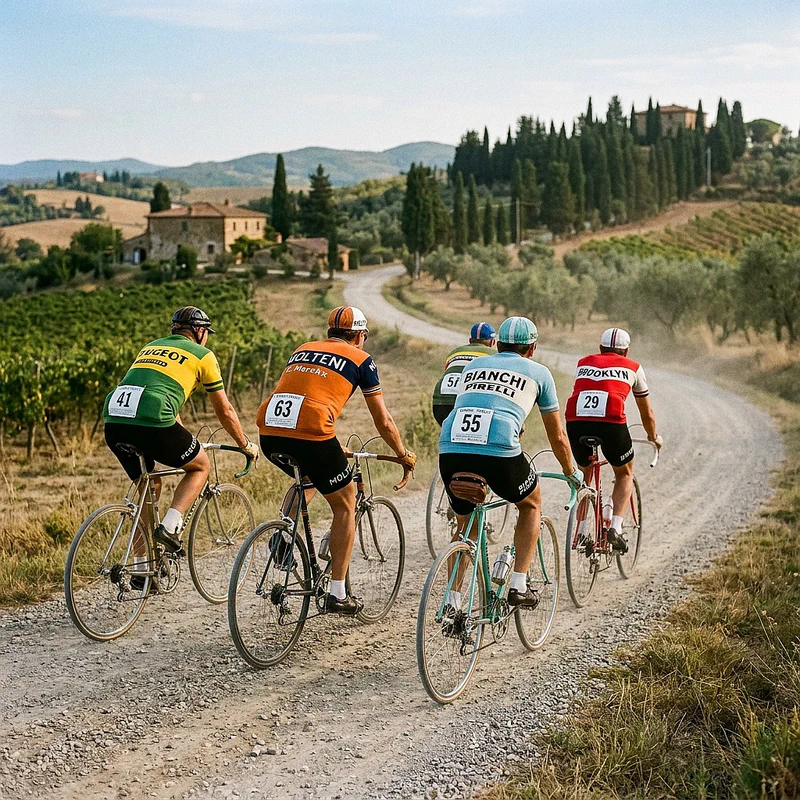
The official refreshment stops redefine sports nutrition. Here, the only ‘doping’ tolerated and playfully encouraged is red wine poured into glass cups. Volunteers offer thick slices of Tuscan bread with olive oil and hot soup, a welcome change from chemical gels. Modern chemistry gladly yields to the authentic, savory flavors of the Tuscan land. Camaraderie replaces performance obsession.
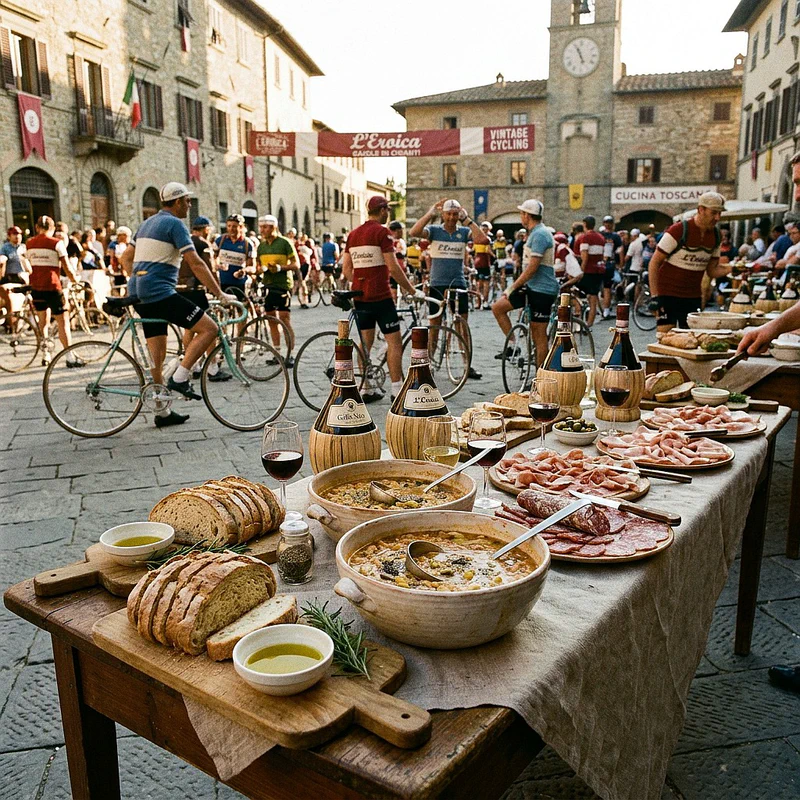
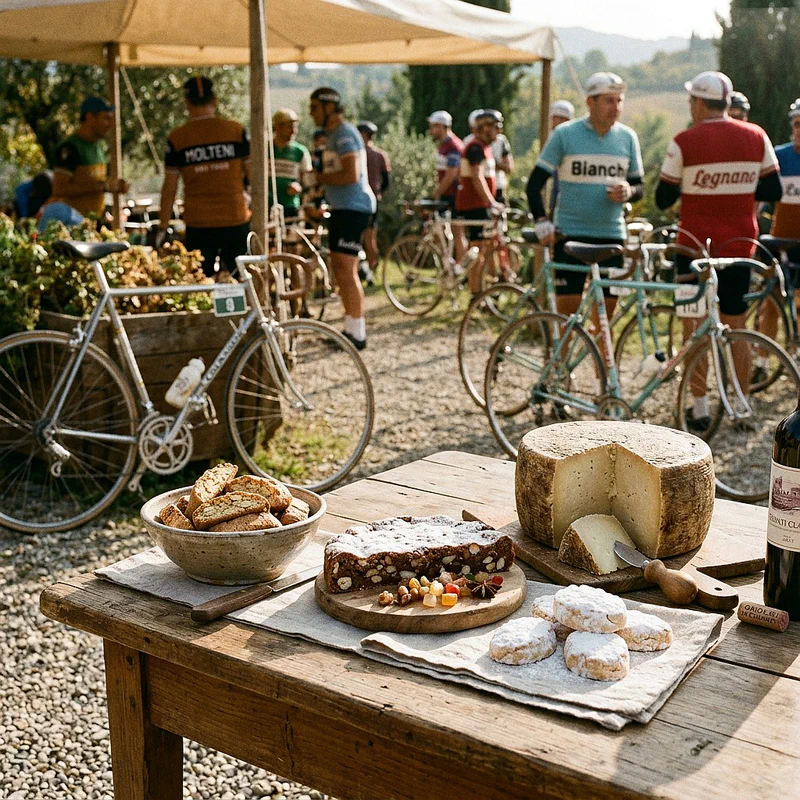
The stop in Buonconvento fills your stomach with warm, hearty dishes. This historic checkpoint offers steaming bowls of ribollita and savory slices of roast pork loin. Further along, you’ll find local pecorino cheese paired with traditional sweets like cantucci and panforte. At the Montalcino refreshment point, fatigue melts away with generous sips of Brunello poured directly from the bottles. Every taste celebrates the rustic culinary culture.
Medieval villages welcome your passage. The gravel roads wind through fortified hamlets and untouched hills, revealing historical glimpses of the Tuscan landscape. If you appreciate atmospheres enclosed by ancient walls, Elena’s guide on beyond San Gimignano’s neighbors is a must-read. Chianti’s vineyards give way to arid badlands and fortresses dominating the Crete Senesi from above. Every kilometer tells a story of effort.
The moon descends over the Crete Senesi. The landscape transforms into a clay desert of wind-smoothed humps, broken only by sparse cypress groves. The warm October sun illuminates the bare ridges and heats the dust settled on cyclists’ jerseys. Riding in this surreal silence offers a profound sense of isolation that erases accumulated fatigue. Nature fills your vision.
Planning requires significant advance preparation. Accommodations in Gaiole in Chianti and surrounding towns sell out months before the autumn event. Lodging prices often triple, forcing many cyclists to camp in sports fields or stay miles away. Furthermore, car traffic on connecting roads in the days leading up to the event can become frustratingly dense. Be ready to manage the logistics.
Bike inspection is absolutely vital. Before setting out, you must check the condition of your brake pads and the seating of your tubular tires on the wheel. Use tires with a minimum width of 25 or 28 millimeters to better absorb vibrations from the uneven surface. Always carry two spare inner tubes and a workshop pump to handle inevitable punctures. Respect your physical limits.
Tire pressure makes a critical difference. Over-inflating tires increases the risk of slipping on loose stones and makes vibrations unbearable for your wrists. Many riders use a double layer of handlebar tape to protect their hands from the constant jarring of the gravel. Chain lubrication also requires specific care due to the fine dust that compromises gears. Avoid any technical oversight.
The finish line erases all muscle pain. By afternoon, Gaiole transforms into a festive square where participants toast their completed effort. You won’t find podiums or gold medals awarded to the first finisher of any route. The true prize is the final stamp on your travel sheet, certifying the goal achieved. You are finally a true heroic rider.
The natural environment demands absolute respect. Cyclists must avoid leaving any waste or packaging along the gravel roads and in the Chianti woods. This fragile land retains its pristine beauty only if we learn to protect it with sustainable practices. Eroica celebrates clean cycling, aiming to leave a deep mark only in the hearts of its participants. Cherish this incredible adventure.