
Introduction#
Are you ready to test your lungs, quads, and brakes? The Vesuvio Mountainbike Race is not just a Sunday ride; it’s a demanding expedition that will challenge you to conquer the world’s most famous “sleeping giant.”
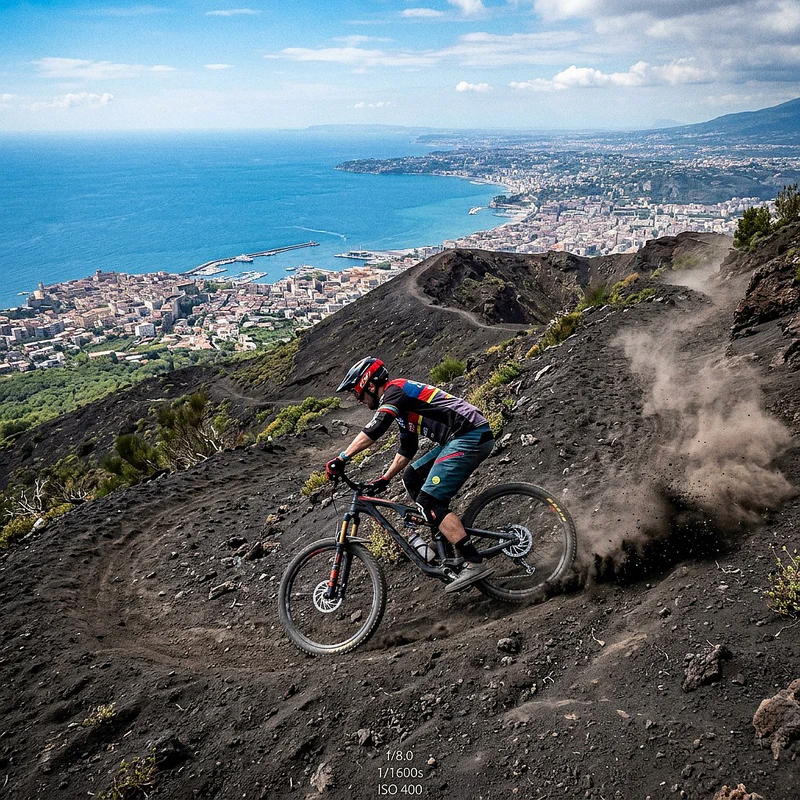
When I first lined up at the start, I’ll admit I was a bit arrogant. “It’s just a mountain a little over 1,200 meters high; how tough could it be compared to the Alps?” I thought. Well, I was sorely mistaken. The Vesuvio does not forgive. Its terrain is not solid but made up of unstable volcanic ash, lapilli, and sharp rocks that test your balance and can shred tires. But once you emerge from the dense pine forest and gaze out over the Gulf of Naples, shimmering in the sun, every curse uttered on the ascent is forgotten.
Update: Unfortunately, the 2025 edition (scheduled for October 5, 2025) has been canceled due to devastating wildfires that have damaged over 70% of the course. However, the organizing team is already working to restore the trails for a comeback in 2026. This gives you a whole year to train: you’ll need it.
Logistics and Getting to the Volcano#
The logistical base for the event usually spans between Ercolano and Torre del Greco, near Naples. Getting here is straightforward (the Circumvesuviana train from Naples Centrale is a convenient option for travelers without a car), but managing your bike requires some planning.
If you’re coming from outside the region with your mountain bike, I strongly advise against relying solely on taxis or last-minute EAV shuttle buses to ascend: there’s no room for bulky gear. It’s much better to rent a van shared with other athletes or warm up by starting directly from sea level. The sulfurous smell and dense air of the South will greet you as you begin your ascent toward the National Park.
Course and Difficulty: Dust and Lapilli#
The Vesuvio Mountainbike Race course is both brutal and captivating. We’re talking about a circuit that spans nearly 45 km with concentrated and lethal elevation changes. The technical difficulty is high, easily classified as S3-S4 on the Singletrack scale (OC/EC for CAI) in the most challenging sections.
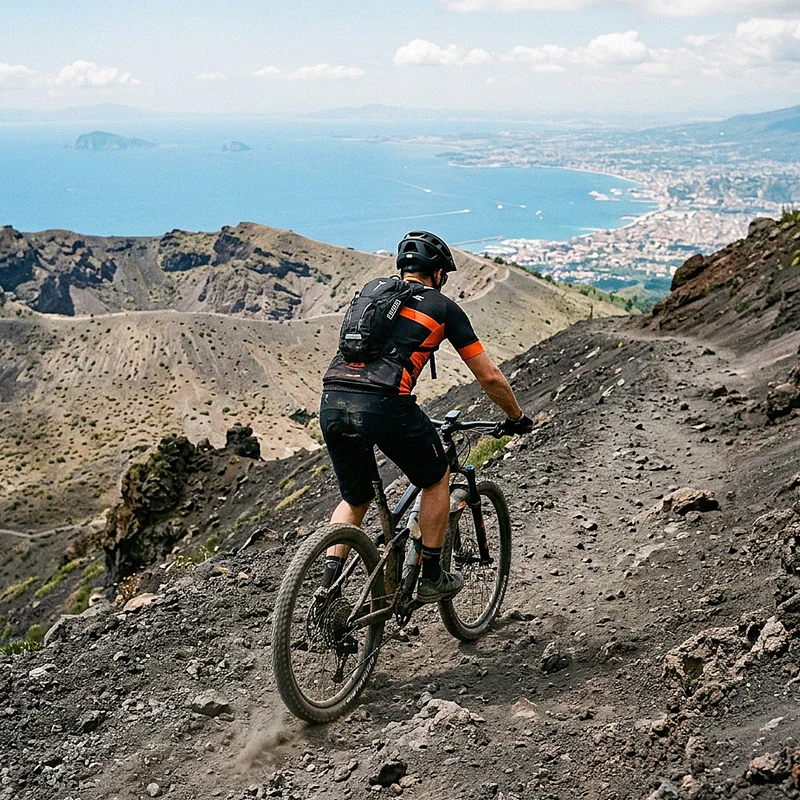
The real challenge isn’t just the incline; it’s the terrain. Riding on volcanic ash feels like pedaling uphill on beach sand: the rear wheel slips, wasting precious watts. Descending complicates matters further. Rainwater-carved channels in the lava rock create natural “half-pipes.” It’s crucial to keep your weight back, avoid over-braking the front, and let the bike “float.” I’ve seen seasoned downhill riders end up face-first in the black dust for not respecting the unstable nature of this volcano.
Tips and Technical Setup#
To survive and enjoy the race, your bike setup is vital:
- Tires: Forget about pure cross-country tires. You need tires with aggressive side knobs to grip the loose terrain and reinforced casings. The lava rocks are razor-sharp. And of course, tubeless is a must, with plenty of sealant.
- Bike: A full-suspension bike with 100-120mm of travel is your ultimate weapon. The “broken” terrain will destroy your back if you use a hardtail (front).
- Hydration and Dust: The Vesuvio in summer and early autumn is dry and hot. Dust kicked up by riders will stick to your throat. Bring at least two water bottles and, if you’re sensitive, snug-fitting goggles.
- Zero Distractions: No music in your ears. You need to hear the grip of your tires and the warnings (or curses) from those passing you.
Where to Refuel on Carbs#
After a race like this, your body will be desperately craving calories. And you’re in Campania, the paradise of post-race comfort food.
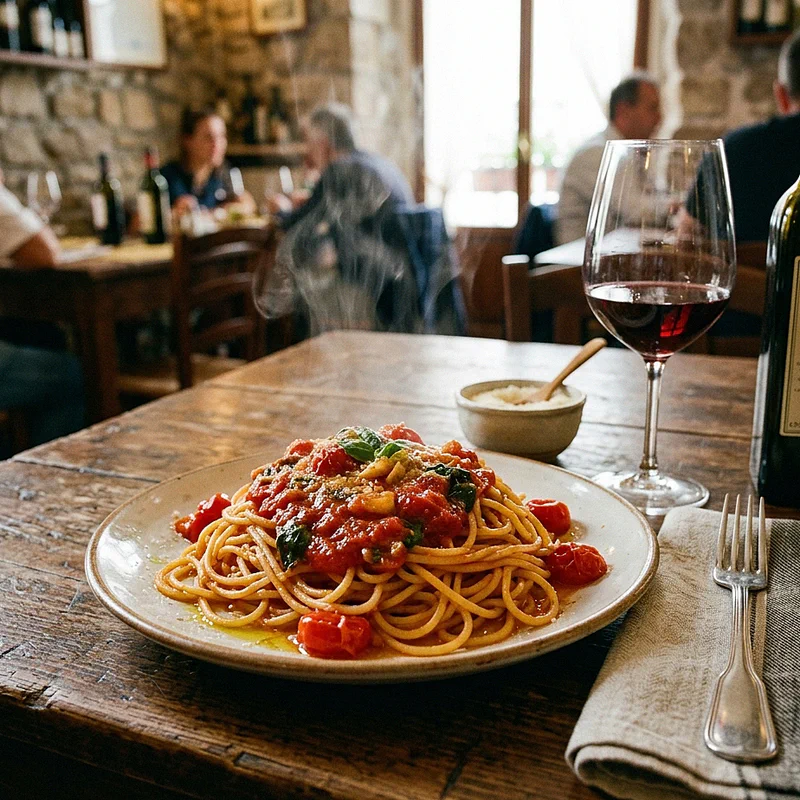
Avoid the tourist traps right by the crater. Head down toward Ercolano or Somma Vesuviana and look for authentic trattorias frequented by locals. Walk in and confidently ask for a steaming eggplant parmesan and a mixed Neapolitan fry to replenish lost salts. Many agriturismos on the slopes of the mountain also offer the classic Piennoli, cherry tomatoes grown directly on the lava, with an incredibly sweet and mineral flavor, perfect on al dente spaghetti.
Conclusion#
The Vesuvio Mountainbike Race is a mystical experience. Riding on an active volcano, feeling the unstable ground beneath your wheels, and admiring the deep blue of the Tyrrhenian Sea on the horizon reconciles you with pure effort. Always remember: the mountain doesn’t care about your followers. It demands respect, skill, and humility.
If this volcanic race has ignited your passion and you’re already thinking about your next true challenge on two wheels, I invite you to check out my guide on surviving the toughest sections of the Modenese Apennines. Discover all the secrets of the grueling Appenninica MTB Stage Race, another great off-road adventure in Italy.