
Hey there, adventurers! The Rome Marathon 2025 is fast approaching, and if you think it’s just another race, you’re seriously mistaken. This epic journey plunges you deep into history, demanding steel legs and an unyielding spirit. Prepare for a challenge that will test your limits and reward your perseverance.
On March 16, 2025, the Eternal City transforms into your ultimate playground. This epic 42.195 km course will leave you breathless, not just from the exertion, but from the sheer beauty surrounding you. This isn’t a stroll; it’s a full-on challenge.
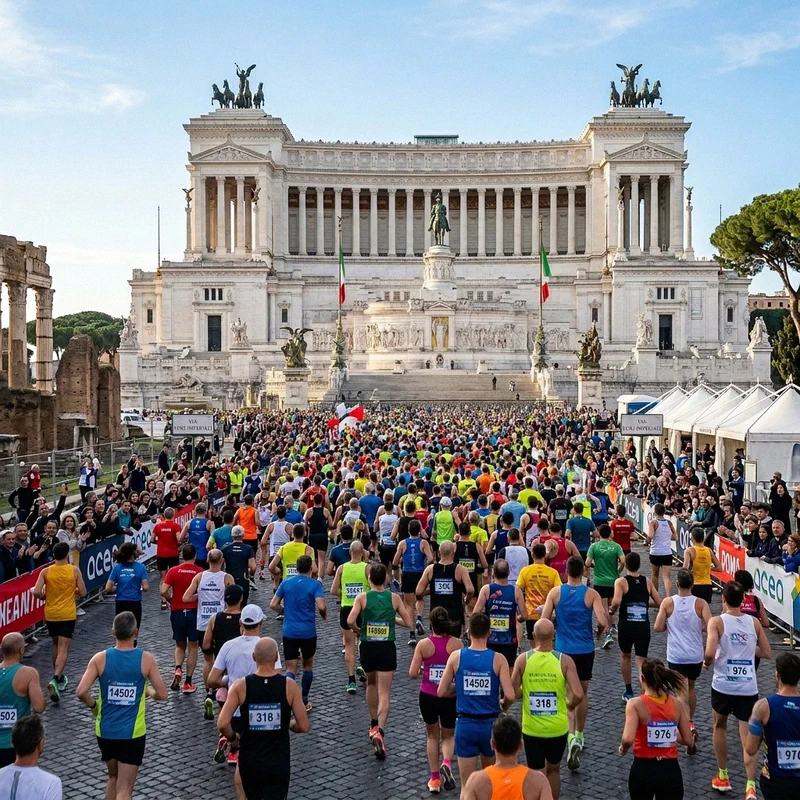
This race isn’t just about crossing the finish line; it’s about absorbing every single stride amidst millennia-old monuments. Every drop of sweat will be worth it, I guarantee you. Push your limits and claim that reward.
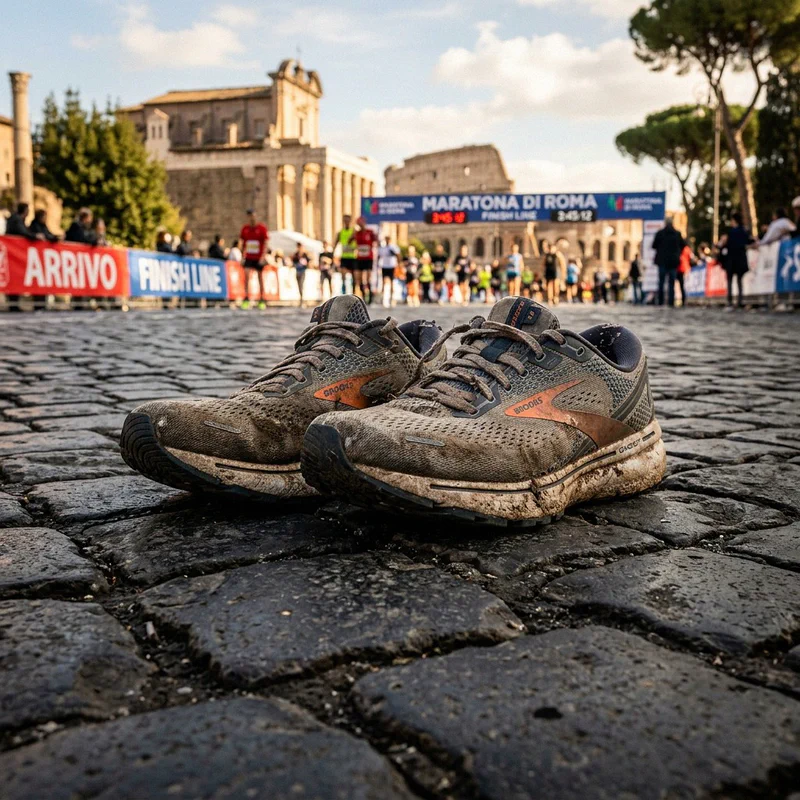
I still vividly recall my first marathon here: at the 38-kilometer mark, legs like lead and the wet cobblestones relentless, I almost gave up. Then, turning the corner towards the Fori, the sight of the Colosseum and the overwhelming roar of the crowd literally lifted me off the ground. That surge of energy is what this race is all about.
The Course: A Journey Through Eternity#
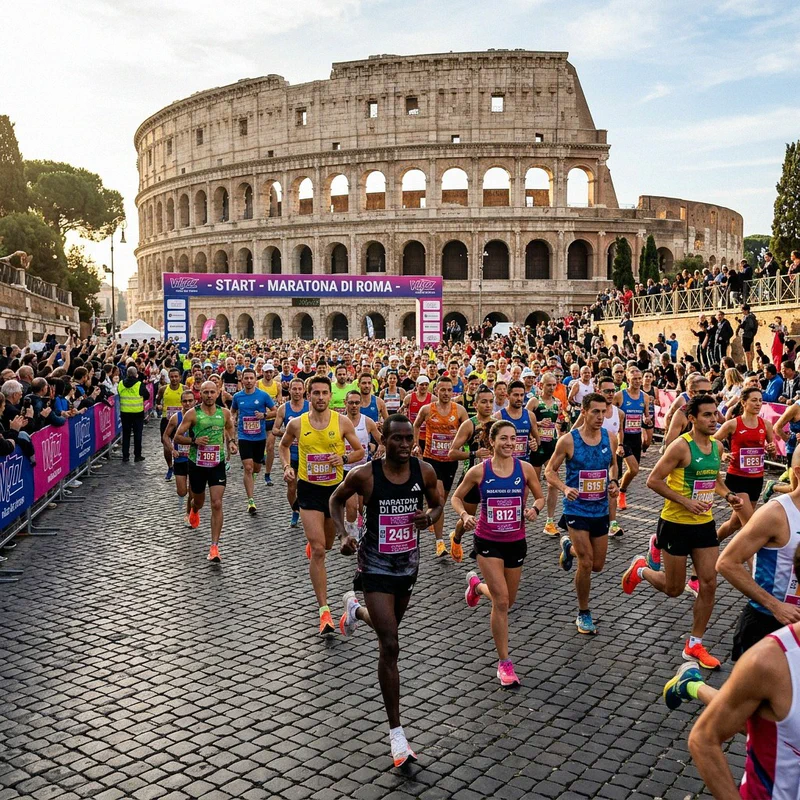
Imagine running where emperors once marched, tracing their ancient footsteps. The marathon kicks off on Via dei Fori Imperiali, right in the shadow of the majestic Colosseum (runners start with the Colosseum at their backs, heading straight toward the Altare della Patria in Piazza Venezia). The final finish line, however, awaits you in the magnificent arena of the Circus Maximus. This epic start and finish will pump you full of pure adrenaline!
The course itself is an open-air museum, touching over 30 iconic landmarks. You’ll feel like you’re literally running through time. Every turn reveals another piece of history.
Course Highlights:
- Roman Forum and Circus Maximus
- Arch of Constantine
- St. Peter’s Basilica and Castel Sant’Angelo
- Piazza Navona, Spanish Steps (Piazza di Spagna)
- Trevi Fountain and Pantheon
- Piazza del Popolo, Piazza Venezia and the Vittoriano
You’ll cross the Tiber River multiple times, admiring historic bridges along the way. While Rome is famous for its ‘seven hills,’ the marathon course is predominantly flat, making it excellent for personal bests. However, be warned: 3.7 miles of unforgiving cobblestones (sampietrini) will test your ankles and resolve.
For those wanting to soak up the atmosphere without the full distance, the 5 km Fun Run starts and finishes inside the Circus Maximus. It’s a fantastic option to experience the energy of race day.
The Expo Village: Your Starting Point#
For the 2025 edition, the Expo Village moves to the Circus Maximus. This is where you’ll collect your race bib and runner’s packet. Don’t leave it until the last minute; the day before the race, your focus should be solely on strategy.
[!TIP] Martina’s Tip: Get there as early as possible to avoid queues and unnecessary stress. Take your time to explore the stands and soak in the pre-race atmosphere. Proper preparation starts here.
Pre-Race Logistics: Arriving in Rome Ready to Run#
Getting to Rome might seem like a feat, but with proper planning, it’ll be a breeze (or a swift run!).
Airports:#
- Leonardo da Vinci–Fiumicino (FCO): This is Rome’s main international airport, located approximately 30 km from the city center. Plan your arrival carefully to minimize travel stress. Efficiency is key.
- To Roma Termini: The Leonardo Express is your top choice for speed and reliability. It’s a 32-minute non-stop journey, departing every 15-30 minutes for about €14. Regional FL1 trains also connect Fiumicino to Roma Tiburtina in 48 minutes, offering another option.
- Shuttle Buses: Services like TERRAVISION offer a more budget-friendly option, reaching Termini in 45-60 minutes for around €6. While cheaper, be prepared for potential traffic delays. Time is precious before a race.
- Official Taxis: For direct convenience, official taxis have a fixed rate of €50 to central Rome. Confirm the fixed fare before you depart to avoid any surprises. Stick to official white taxis only.
- Ciampino (CIA): This smaller airport primarily serves low-cost airlines, situated 18 km southeast of the city. It’s a viable option if you’re flying with budget carriers. Be aware of its more limited transport links.
- To Roma Termini: Direct shuttle buses (TERRAVISION, SITBus, Rome Airport Bus, Atral) are your only direct option from Ciampino. The journey takes approximately 40 minutes and costs €6-8. Plan for potential traffic, especially during peak hours.
- WARNING: Ciampino Airport DOES NOT have a direct train station. Do not be misled by anyone claiming otherwise. Stick to the bus shuttles for reliable transport.
Roma Termini: Your Central Hub#
Roma Termini Station is the absolute nerve center of Roman transportation. It hosts national and international trains, both Metro lines (A and B), and a vast bus station in Piazza dei Cinquecento. This hub connects you everywhere.
Useful Services: You’ll find paid luggage storage, ATMs, ticket offices, shops, restaurants, and free Wi-Fi here. Strategize your movements from this central point. Stay organized and efficient.
Getting Around Rome: Your Strategy#
Rome boasts an extensive ATAC public transport network, including Metro, buses, and trams. Mastering it is crucial for efficient navigation. Plan your routes in advance.
- Metro: Lines A and B are the most useful for visitors, connecting you to key sites like the Colosseum, Vatican, and Spanish Steps. Operating hours are 5:30-23:30, extending to 1:30 AM on Fridays and Saturdays. It’s often the fastest way to get around.
- Buses and Trams: These offer extensive coverage but can be slow and prone to delays. Be aware that “scioperi” (strikes) are always a possibility, though the Leonardo Express is rarely affected. Factor in extra travel time for these options.
- Tickets: The BIT (Biglietto Integrato a Tempo) is valid for 100 minutes across all transport. Passes are also available for 24, 48, or 72 hours, offering flexibility. Purchase tickets at “Tabaccherie” (marked with a ‘T’) or use contactless cards (Tap&Go) directly on board. Metro machines can be finicky, sometimes not accepting credit cards or giving limited change, so always carry some cash.
My Warning: Let the sounds of Rome be your soundtrack, not your blaring music. We must respect the environment and the tranquility of others. Be present, be mindful.
Preparation and Gear: Leave Nothing to Chance#
Preparation is absolutely everything, especially when tackling such a unique course. The road doesn’t care about your followers; respect it, and the marathon course won’t care about your personal best if you haven’t prepared properly. Discipline is paramount for success.
- Footwear: Your running shoes must be well broken-in and suitable for cobblestones. Never underestimate the importance of proper footwear; running in inadequate shoes is one of my biggest pet peeves—this isn’t a flip-flop stroll. Invest in your feet.
- Apparel: Rome’s weather in March can be notoriously unpredictable. Dress in layers, ready for sun, wind, or even light rain. Breathable, moisture-wicking materials are non-negotiable for comfort and performance.
- Hydration and Nutrition: Plan your race-day strategy meticulously. Aid stations will be available, but always carry gels or bars you’ve tested during training. Don’t experiment on race day.
- Mindset: The marathon is as much a mental challenge as it is physical. Visualize the course, be ready to push through fatigue, and savor every single meter. Your mental fortitude will carry you through.
Running in Rome: Beyond the Marathon#
If your legs allow, or if you’re in Rome before or after the race, explore the city on a run. It’s an unparalleled way to experience its grandeur. Push your boundaries further.
My Favorite Running Spots in Rome:
- Circus Maximus: A perfect loop for speed work or quick laps. It’s an ancient arena for modern strides.
- Stadio dei Marmi (at Foro Italico): This historic track truly breathes athletics. Feel the legacy of champions with every step.
- Villa Ada: An enormous park offering varied terrain with climbs and descents, excellent for urban trail running. Challenge yourself on its natural paths.
- Tiber River Cycling Path: A longer, flatter route, ideal for your recovery runs or extended distances. Enjoy the riverside views.
Always remember the principles of “Leave No Trace”: carry out all your waste, including water bottles and gel wrappers. Rome’s streets are a heritage site, not a landfill. Seeing discarded trash genuinely raises my hackles; let’s preserve this incredible city.
Martina’s Extra Tips: Experience Rome Like a True Local#
After the effort, comes the reward: the real Rome.
Authentic Food: Forget the tourist traps and seek out genuine Roman flavors. Fuel your body with real, local cuisine.
Try Trattoria Da Enzo al 29 in Trastevere for truly authentic Roman dishes. It’s a must-visit for a post-race feast.
For a traditional lunch near the Pantheon, make reservations at Armando al Pantheon; they are iconic and utterly delicious. Book ahead, it’s worth it.
Explore on Foot: After the marathon, keep walking! Lose yourself among the narrow alleys of Trastevere or the Jewish Ghetto. That’s where you’ll truly discover Rome’s authentic soul. Embrace the exploration.
Be Aware: Whether you’re on foot or bike (perhaps on shared cycle paths where cyclists sometimes don’t yield to pedestrians—another pet peeve of mine!), always respect others and the environment. Focus on the path ahead, zero distractions, and zero conflicts. Maintain discipline and courtesy.
The Rome Marathon is far more than just a sporting event; it’s a total immersion into Italian history and culture. Prepare meticulously, respect the course and the city, and I guarantee it will be an experience you’ll carry with you forever. Conquer Rome, conquer yourself.
See you at the finish line, with tired legs but a revitalized spirit! Push your limits.