
Ciao, adventurers! Are you ready to trade the crowded piazzas for panoramic peaks? To truly experience the ‘wild’ Italy, you need to lace up your boots and commit to the long haul. And there’s no longer haul than the Sentiero Italia, our Grand Italian Trail.
This isn’t your average stroll; it’s an epic journey spanning approximately 7,949 kilometers, broken into 527 stages. It carves its path across the entire Alpine Arc, weaves through the Apennine mountain chain, and even reaches the islands of Sicily and Sardinia. Connecting every Italian region, it passes through six UNESCO Heritage Sites and 15 national parks. Worth every drop of sweat, I promise you.
As I mentioned in my guide to hiking Mount Etna, Sicily offers some of the most technical and rewarding sections of this trail.
Forget those glossy postcards; this is the real Italy, earned with effort and respect. The mountain doesn’t care about your followers, respect it.
The Sentiero Italia: Your Call to Adventure#
The Sentiero Italia is a mosaic of trails, a testament to Italy’s diverse landscapes. From the northern trailhead in Muggia, near Trieste in Friuli Venezia Giulia, to the southern tip in Santa Teresa Gallura in Sardinia, this route demands preparation and grit.
It’s not a “finished” trail in the commercial sense. It’s wild, it’s authentic, and it requires you to be self-reliant. That’s why we’re talking gear, safety, and grit today.
Essential Gear: What to Pack for the Long Haul#
This is where I get serious. I’ve seen people attempting serious hikes in city shoes – my biggest pet peeve! For the Sentiero Italia, proper gear is non-negotiable.
Footwear: Your Foundation#
- Sturdy Hiking Boots: High-cut, waterproof, and well broken-in. Think Vibram soles for superior grip on varied terrain. Leave those fashion sneakers at home.
- Trekking Poles: Essential for stability, especially on steep ascents, descents, and river crossings. They save your knees, trust me.
Layering System: Be Prepared for Anything#
- Base Layer: Moisture-wicking material (merino wool or synthetic).
- Mid-Layer: Fleece or lightweight puffy jacket for insulation.
- Outer Shell: Waterproof and windproof jacket and pants. Even in summer, mountain weather can turn in an instant.
Navigation & Safety: Your Lifelines#
- Topographic Maps & Compass: Learn to use them. Your phone battery won’t last forever.
- GPS Device/App: A reliable GPS app on your phone (download offline maps!) is a great backup, but never your only tool.
- First-Aid Kit: Comprehensive, including blister treatment, pain relievers, antiseptic wipes, and any personal medications.
- Headlamp: With spare batteries. Essential for early starts or unexpected delays.
- Whistle: For emergencies.
- Power Bank: To keep your essential electronics charged.
Hydration & Nutrition: Fuel Your Journey#
- Water Reservoir/Bottles: Minimum 2-3 liters capacity. Water sources can be scarce in some sections, especially in the Apennines or Sicily.
- Water Filter/Purifier: Don’t rely solely on natural springs; purify everything.
- High-Energy Snacks: Nuts, dried fruit, energy bars. Pack more than you think you’ll need.
- Cooking System: A lightweight stove, fuel, and cookware if you plan to camp.
Shelter & Comfort: Your Home on the Trail#
- Lightweight Tent: Crucial, as many shelters may be unmanaged, especially in Sicily.
- Sleeping Bag: Rated for the lowest temperatures you might encounter.
- Sleeping Pad: For insulation and comfort.
- Backpack: Appropriately sized (50-70 liters) and comfortable for multi-day treks.
Safety on the Trail: Respect the Mountains#
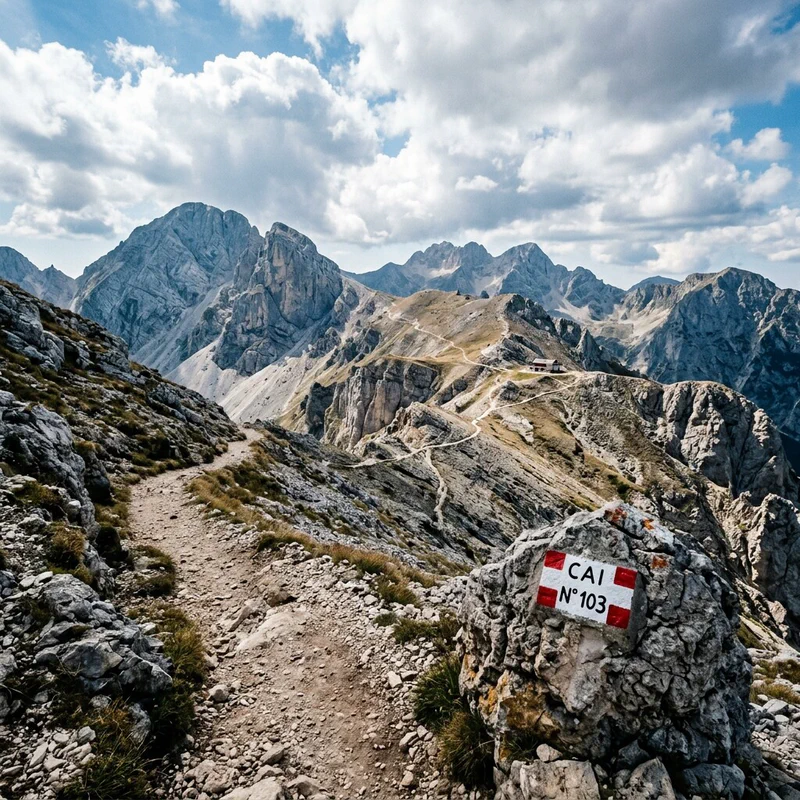
The Sentiero Italia is marked with red-white-red blazes and the acronym “SI”. However, its condition varies wildly. Some sections are well-maintained, others are overgrown or even non-existent. This means strong navigation skills are paramount.
- Know Your Limits: Don’t push yourself beyond your physical capabilities.
- Check Weather Forecasts: Before and during your hike. Mountain weather is notoriously unpredictable.
- Inform Someone: Always let someone know your itinerary and estimated return time.
- Wildlife: While wolves and bears are shy, keep an eye out for dogs protecting herds, especially in rural Apennine areas. Give them a wide berth.
- Leave No Trace: This is my core principle. Pack out everything you pack in. Discarded plastic bottles or snack wrappers on trails are a huge pet peeve of mine. Let’s keep Italy pristine.
Navigating the Traverse: Key Sections & Access#
Getting to the Sentiero Italia often means utilizing existing trails and local transport.
Sicily: Island Grit#
The Sicilian section spans 29 stages, from Trapani to Messina.
- Highlights: Explore Erice and its Castle of Venus, the historic salt pans of Marsala and Mozia, the stunning Zingaro Nature Reserve near San Vito Lo Capo, and the ancient Archaeological Park of Segesta. The trail also crosses the wild Madonie Park.
- Access: Fly into Trapani via low-cost carriers from major Italian cities. To return from Messina, you can take a train and then a ferry to the mainland.
Apennine Heart: Mountains and History#
The trail carves through the Apennines, offering rugged beauty.
- Tuscany: Enter via the Lunigiana territory and Passo dei Due Santi.
- Abruzzo: Pass through the majestic Majella National Park and Gran Sasso e Monti della Laga National Park. Towns like Rivisondoli and Amatrice are along the route. For a deeper dive into the silence of these peaks, you can also follow my multi-day itinerary through Abruzzo National Park.
- Access: Rivisondoli can be reached on foot or by private transfer from Roccaraso, which has bus connections to Pescara Airport. From Amatrice, you can connect to L’Aquila.
- Scenic Route: The historic “Ferrovia dei Parchi” (Sulmona-Isernia railway) is a fantastic way to see the Majella and Abruzzo, Lazio and Molise National Parks, with stops in towns like Campo di Giove, Palena, Roccaraso, Castel di Sangro, and Rivisondoli-Pescocostanzo.
- Lazio: Experience 20 stages through the Ernici, Simbruini, Carseolani, and Cicolano Mountains, reaching cities like Leonessa and Amatrice.
The Sentiero Italia route traverses through the mountainous regions of the Italian Peninsula. In Piedmont, the trail follows the renowned Grande Traversata delle Alpi (GTA) route, with 69 stages and 11 variants. Meanwhile, the Dolomites, spanning across Friuli Venezia Giulia, VenetoExploring the lesser-known regions of Veneto, including its hidden lagoons, South Tyrol, and Trentino, host several challenging stages amidst their iconic mountains.
Accommodation & Sustenance: Planning Your Stops#
While the CAI (Club Alpino Italiano) is developing an official reception network with over 260 points (refuges, hostels, agritourism), remember that some shelters, especially in Sicily, might be closed or unmanaged. Be prepared for camping!
Booking accommodation in advance is highly recommended where it exists. The CAI website (in Italian) is your primary resource for cultural and enogastronomic information along the route.
My Insider Warnings & Responsible Trekking#
- No Loud Music: My absolute pet peeve. Drowning out the sounds of nature with your playlist is a disservice to yourself and others. Embrace the silence.
- Cyclists and Hikers: If you’re on two wheels, remember: two wheels, one trail, zero distractions. Yield to hikers on narrow paths. It’s about shared respect, not speed records.
- Plastic is a Problem: Seriously, if you carry it in, carry it out. Every wrapper, every bottle. Italy’s wild places are not your personal trash can.
The Sentiero Italia is an undertaking that will test your limits and reward you with unparalleled experiences. It’s not about luxury; it’s about authenticity, challenge, and the profound beauty of Italy’s untouched landscapes. So, pack smart, train hard, and get ready to earn those views. The trail is waiting.