
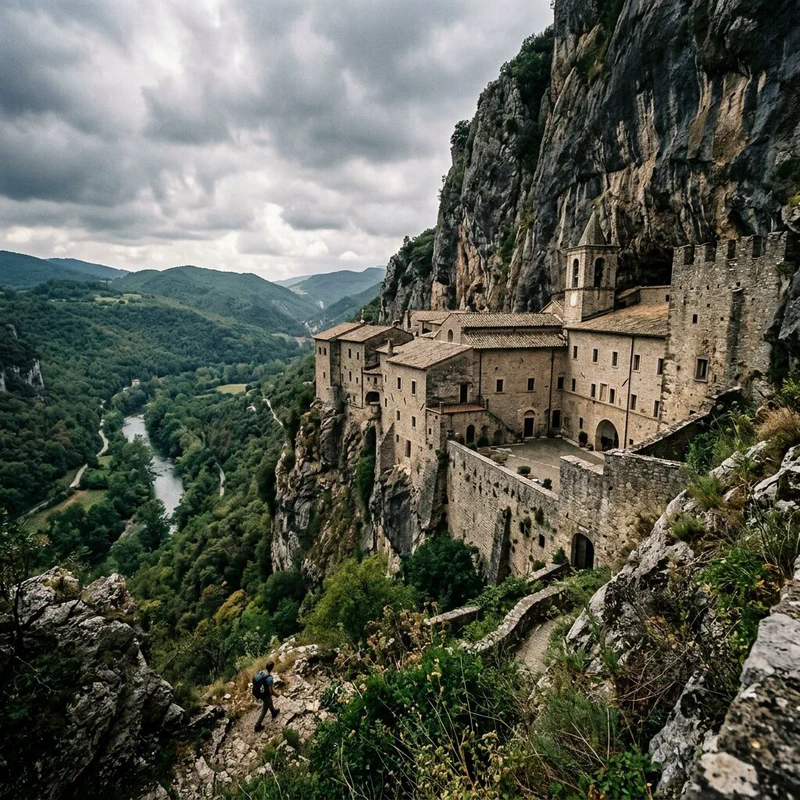
There’s a precise moment you understand why St. Benedict chose this exact spot. He fled Rome’s chaos and corruption in the 5th century, seeking solace just a few kilometers away. You’ll grasp it standing before Monte Taleo’s sheer rock face, seeing the Sacro Speco Monastery clinging to the stone, suspended over the void like a stone nest. Up here, the air carries the scent of damp moss and wild mint, a natural perfume. The only sound breaking the profound silence is the wind’s whisper, sweeping down the Aniene River’s deep gorge. This place demands reverence.
Most tourists packing Rome’s piazzas have never even heard of this place. They’re too busy with the Colosseum and Trevi Fountain, missing out on something truly special. For us, the ones who crave Italy’s authentic, road-less-traveled experiences, Subiaco is an essential stop. It’s a sanctuary where rock and spirituality have merged for over fifteen centuries. This is our kind of discovery.
The Sacro Speco: Where It All Began#
The Monastery of St. Benedict, the Sacro Speco, defies gravity. It’s literally fused with the rock face behind it, supported by nine spectacular stone arches. Step inside, and you’re in a labyrinth of chapels, spread across different levels. They’re all covered in 14th-century Sienese and Roman school frescoes, shimmering under the dim lamp light. Pure architectural magic.
Benedict’s original cave is the complex’s beating pulse. He lived here as a hermit for three years, finding profound solitude. The silence inside is almost tangible, broken only by the occasional drip of moisture filtering from the bare stone walls. You breathe in an ancient scent of worn beeswax and millennia-old rock, an atmosphere that truly invites deep contemplation. It’s a powerful experience.
Don’t miss the Chapel of St. Gregory. It holds the world’s only existing portrait of St. Francis of Assisi, painted while he was still alive. Notice, he’s without a halo or the stigmata, a rare and authentic depiction. This is a fragment of history that, by itself, makes the entire journey worthwhile. A truly unique piece of art.
I still remember my first visit up here. It was a cold Tuesday morning in November, wrapped in a thick fog rising slowly from the Aniene gorge. In the twilight of the Sacro Speco, the only sound was the soft murmur of an elderly monk’s prayers. Sitting on the stone steps smoothed by centuries of footsteps, I watched a single shaft of light pierce the gloom to illuminate the medieval frescoes. The peace was absolute.
Santa Scolastica: Italy’s Oldest Monastery#
Just a short walk down the main road, you’ll find Santa Scolastica Monastery. Unlike the Sacro Speco, this complex unfolds around three extraordinary cloisters, each telling a different architectural story. There’s the Renaissance cloister, the Gothic one, and the spectacular 13th-century Cosmatesque cloister. Its mosaic-decorated columns truly shine under the sunlight, a sight to behold. A fascinating architectural journey.
Santa Scolastica is more than just a place of worship. It was actually the birthplace of printing in Italy, a pivotal historical site. In 1465, two German printers, Gutenberg’s students, set up the country’s first printing press right here. They printed the very first books on Italian soil, changing the course of knowledge forever. A true cradle of innovation.
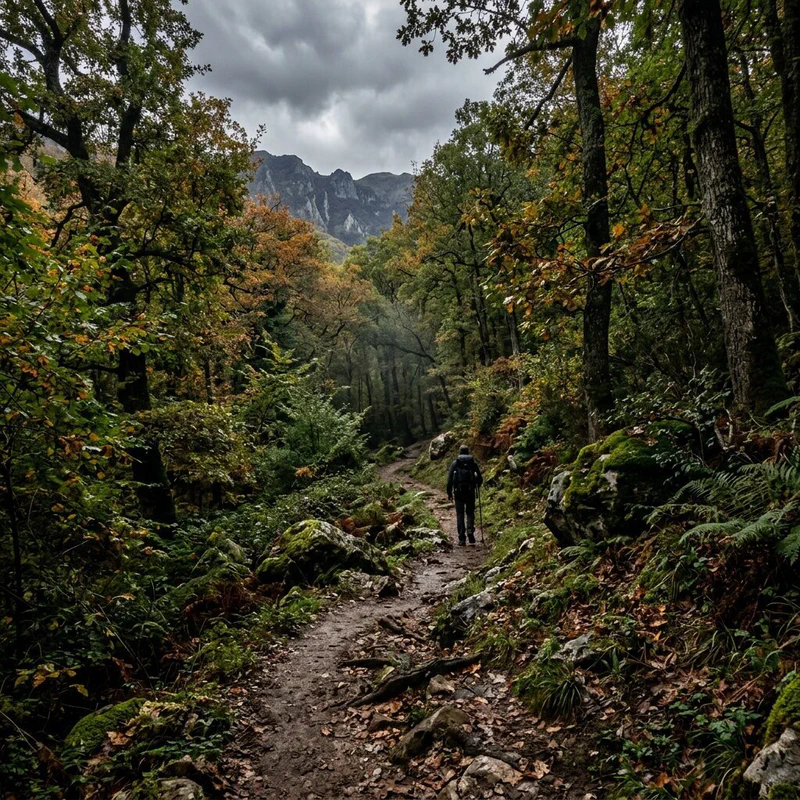
After the monasteries, hit the trails. I highly recommend walking one of the paths in the Aniene Valley, a perfect way to stretch your legs. Start from the ruins of Nero’s Villa – its dam once created the three artificial lakes that gave the town its name, Sublaqueum. This path lets you wander through untouched nature, among ancient holm oaks and crystal-clear streams. Pure, wild beauty awaits.
For lunch, skip the tourist traps right outside the monastery gates. Instead, head down into Subiaco’s medieval village. Seek out the trattorias serving strozzapreti alla sublacense, a handmade pasta. It’s tossed in a rich sauce of porcini mushrooms foraged from the Simbruini Mountains and local pecorino cheese. Trust me on this one.
Practical Guide for Your Visit#
To plan your Subiaco day perfectly, here are some key details. These insights will help you avoid any unwelcome surprises, making your trip smoother. I’ve gathered the essential information you need for a hassle-free exploration. Consider this your local’s cheat sheet for a great time. Get ready for an adventure.
- How to Get There: From Rome, take the A24 motorway and exit at Vicovaro-Mandela, then follow the SS5 Tiburtina and SS411 Sublacense. If you’re using public transport, daily COTRAL buses depart from Rome’s Ponte Mammolo metro station.
- Opening Hours: Both monasteries are open daily from 9:00 AM to 12:30 PM and from 3:00 PM to 6:00 PM. Admission is free, but donations for the site’s upkeep are greatly appreciated.
- Recommended Attire: As these are active places of worship run by Benedictine monks, modest dress is required (shoulders and knees covered). Wear comfortable shoes with good grip, as the stone steps inside the Speco can be slippery.
A friendly tip: don’t try driving up here on spring Sundays or in peak autumn without a backup plan. The few parking spots near the Sacro Speco entrance fill up by nine in the morning, guaranteed. Local police hand out fines mercilessly to anyone with wheels outside the white lines, so be warned. It’s much smarter to park lower down at Santa Scolastica and enjoy the scenic walk up the panoramic staircase. Save yourself the headache.
If you love the suspended atmosphere of places carved into rock, I recommend a visit to Lazio’s Hidden Vineyard Treasures, a more recent addition to Lazio’s scenic landscapes. Like Subiaco’s monastic peace, this destination offers a surreal charm that will captivate you.