
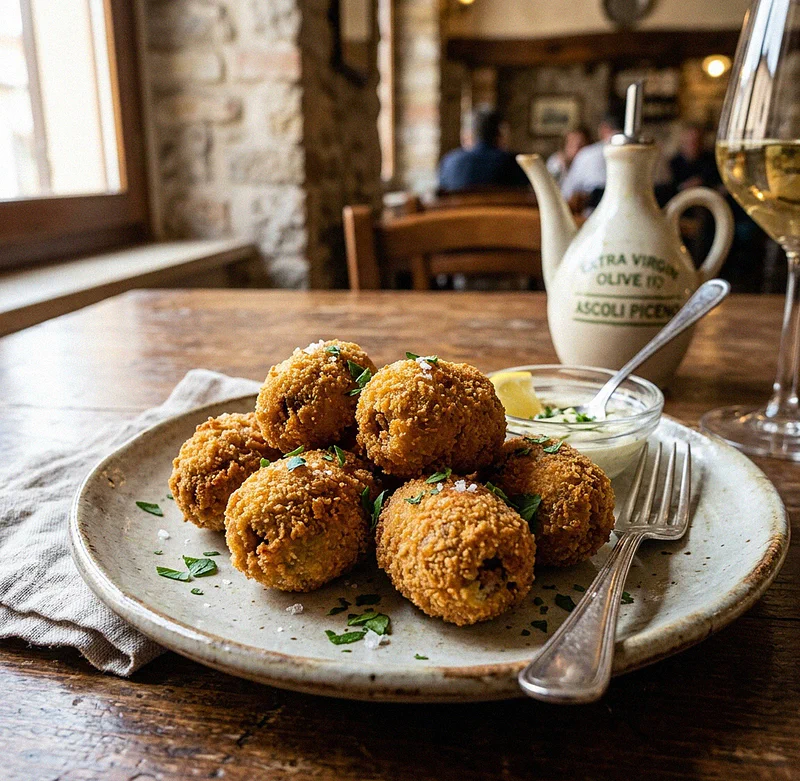
The air in Ascoli Piceno doesn’t smell of exhaust or tourist menus; it smells of toasted breadcrumbs, lemon zest, and a slow-simmered soffritto. As I wander through its squares built of glowing travertine, I am reminded that this city is a treasure trove of secrets, and its masterpiece is a small, golden treasure: the Olive all’Ascolana.
This is the king of Italian street foods, a dish born from the cleverness of 19th-century noble cooks who needed a way to use up surplus meat. Today, it is the soul of the Marche region.
If you appreciate cities where the stones themselves seem to glow with history, you must read my colleague Alessandro’s guide to Ascoli Piceno’s travertine dream, which explores the architectural wonders of this “City of a Hundred Towers.”
The Secret is in the Ingredients: The Ascolana Tenera#
The secret starts with the Ascolana Tenera—a large, fleshy green olive that is native only to this soil. These aren’t your typical salty jarred olives. They are buttery, delicate, and slightly tart. In the kitchens of the local trattorie, you won’t find machines. You find hands—expert, weathered hands—pitting these olives in a spiral fashion, like peeling an orange, to make room for the ripieno (filling).
And let me tell you, you can taste the difference between a hand-pitted olive and one that has been mangled by a machine. My pet peeve is finding those frozen, mass-produced olives in a supermarket. They are a pale shadow of the real thing! Real ascolane should have a meat filling made of a slow-braised trio: beef, pork, and a little chicken, seasoned with nutmeg and lemon zest.
If you enjoy traditions where the filling is the star of the show, you’ll love my guide to Bologna’s secret pasta passages, where the tortellini filling is guarded like a state secret.
The Ritual of the Fritto Misto#
In Ascoli, the olive never travels alone. It is part of the Fritto Misto all’Ascolana, a glorious fried platter that includes lamb chops and—the real surprise—cremini. These are cubes of firm, fried custard. The combination of the savory meat-stuffed olive and the sweet, velvety custard is, quite simply, a revelation.
Where to find the ‘Real’ Crunch (Giulia’s Pick): Caffè Meletti Located right on the stunning Piazza del Popolo, this historic cafe is where time stands still. Order an Anisetta Meletti with a “fly” (a coffee bean) and a plate of their warm olives.
Giulia’s Nonna-Approved Tip: You haven’t truly lived until you’ve tasted an olive while it is still painfully hot, served in a paper cone (scartoccio) as you stroll through the evening passeggiata. The first bite should be a crunch that you can hear, followed by the soft, savory embrace of the meat.
If you find yourself traveling north along the coast after your feast, my colleague Elena has a wonderful guide on why Senigallia is the perfect seaside stop for families.
Giulia’s Insider Tips for Ascoli Piceno#
- Look for the ‘DOP’ Label: Ensure the olives are Oliva Ascolana del Piceno DOP. This guarantees they were grown and prepared according to traditional methods.
- The Breadcrumb Rule: The breading should be thin and crisp, never thick or doughy. It’s there to protect the olive, not to hide it.
- When to Visit: Come in August for the Ascoliva Festival, where the entire city celebrates the olive. But honestly, a crisp October afternoon here is just as magical.
Ascoli Piceno reminds us that the best travel experiences aren’t found on a “Top 10” list, but in the steam rising from a local plate and the warm smile of a cook who treats you like family.
Buon appetito, and look for the golden crunch!
With love, Giulia