
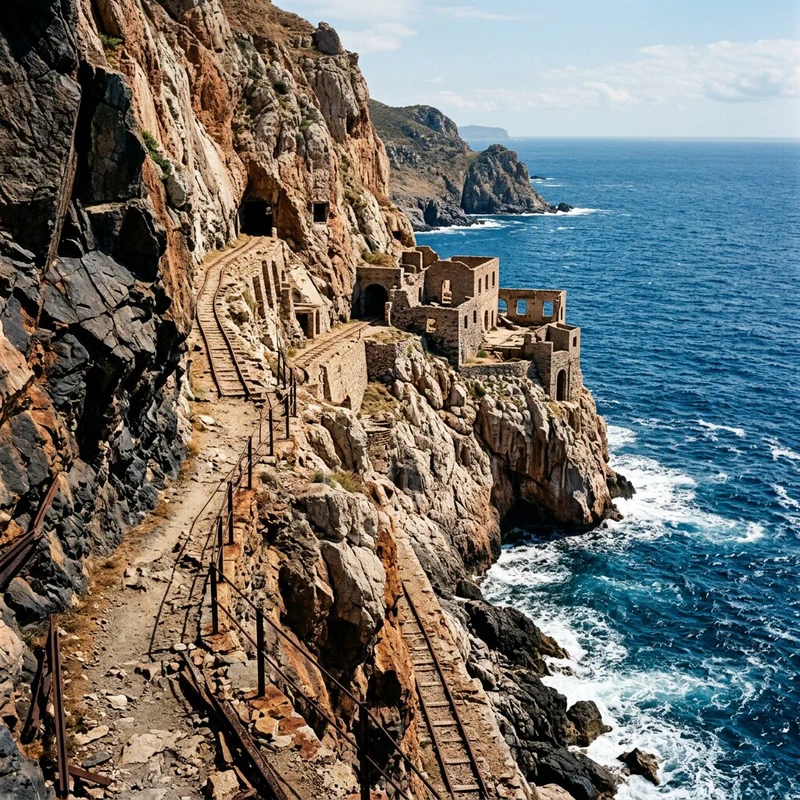
The Iglesiente region in southwestern Sardinia is a wild jewel where human history merges with a brutal and beautiful geology. Walking along the ancient mining paths, often called “The Iron Road,” is not just a hike: it’s a journey through time among ghost towns, tunnels overlooking the sea, and a nature that is reclaiming its space.
Here the ground is harsh, rocky, and often exposed to the sun and the mistral wind. As I always say, the mountain doesn’t care about your followers, respect it. If you are ready to sweat between the blue of the Mediterranean and the red of the mineral earth, this adventure will change you.
The Paths of Iron and Sea#
As my colleague Luca pointed out when talking about Selvaggio Blu, Sardinia is not just crystalline sea, but a harsh land of rock and toil that requires legs and respect. Here are the most iconic routes of the Iglesiente:
1. The Path of the Five Chimneys (Masua Mines)#
- Difficulty: E / EE (Hiker / Experts). Exposed sections on the cliffside.
- Highlights: This route takes you high above Pan di Zucchero, the highest sea stack in the Mediterranean. You will see the remains of the mining structures that seem suspended in the void.
- Speciality: The incredible view of the entrance to Porto Flavia, a masterpiece of mining engineering carved directly into the rock.
2. From Buggerru to Cala Domestica#
- Difficulty: E (Hiker).
- Highlights: A coastal path that connects the ancient mining village of Buggerru to one of the most beautiful coves in Sardinia, passing by the tunnels of the Henry mine (visitable with a guide).
3. San Giovanni Cave (Domusnovas)#
- Difficulty: T (Touristic).
- Highlights: For a unique experience, walk through this natural cave—one of the very few in the world that was once drivable by car. It is a cyclopean tunnel that cuts through the mountain from side to side.
Logistics and Technical Preparation#
What to Pack#
The Iglesiente is an arid environment. Resource management is fundamental:
- Footwear: Trekking boots with lugged soles. Sardinian rock is sharp and slippery.
- Water: Minimum 3 liters. Finding water sources along the mining trails is almost impossible.
- Sun Protection: Even in spring, the glare from the sea and the limestone rock is extremely strong.
- Headlamp: Essential if you decide to explore (safely and where permitted) the remains of the surface tunnels.
How to Get There#
- By car: From Cagliari, take the SS130 towards Iglesias and then continue towards Fluminimaggiore or Masua (about 1 hour and 15 minutes).
- By bus: ARST connections available from Iglesias, but a car remains the best way to reach the starting points of the most remote trails.
Local Flavors: The Hiker’s Reward#
After breathing the dust of the mines and the salt of the sea, Sardinian cuisine is the best medicine:
- Fluminimaggiore: Stop at Trattoria Sa Cardiga to taste local lamb or malloreddus alla campidanese.
- Iglesias: Don’t miss a dinner in the historic center to enjoy Carloforte tuna or the area’s goat cheeses.
Walking in the Iglesiente means honoring the toil of the miners who for centuries traced these paths. It is a hard, dusty, and incredibly rewarding adventure. Update: If after the trek you are looking for a solitary and wild dip in the sea, my colleague Luca has explored the hidden beaches of Costa Verde, located right next to these ancient mining paths. Respect the silence of the ghost towns, follow the traces of history, and let Sardinia show you its most authentic face.
Two boots, one trail, zero distractions. See you in Sardinia!