
Hello, authentic explorer! Do you know there’s a corner of Tuscany where the magic of Christmas doesn’t end on December 25th? I’ll take you to a place where traditions are alive, pulsating, and sometimes… a bit misinterpreted.
Today, I’ll reveal a secret of the Garfagnana, a lush region hidden between the Apuan Alps and the Apennines, far from the crowds of fleeting tourists. Here, they celebrate the Befana, a figure often misunderstood, and I’ll tell you why right away.
Have you heard of the “Befano,” maybe as a rare male tradition? Well, let me set the record straight, because it’s precisely here that the real charm lies. In the past, only men dressed up to play the Befana (since women weren’t allowed to go out at night making a racket), but today, the Garfagnana celebrates the traditional Befana, loved by the entire community.
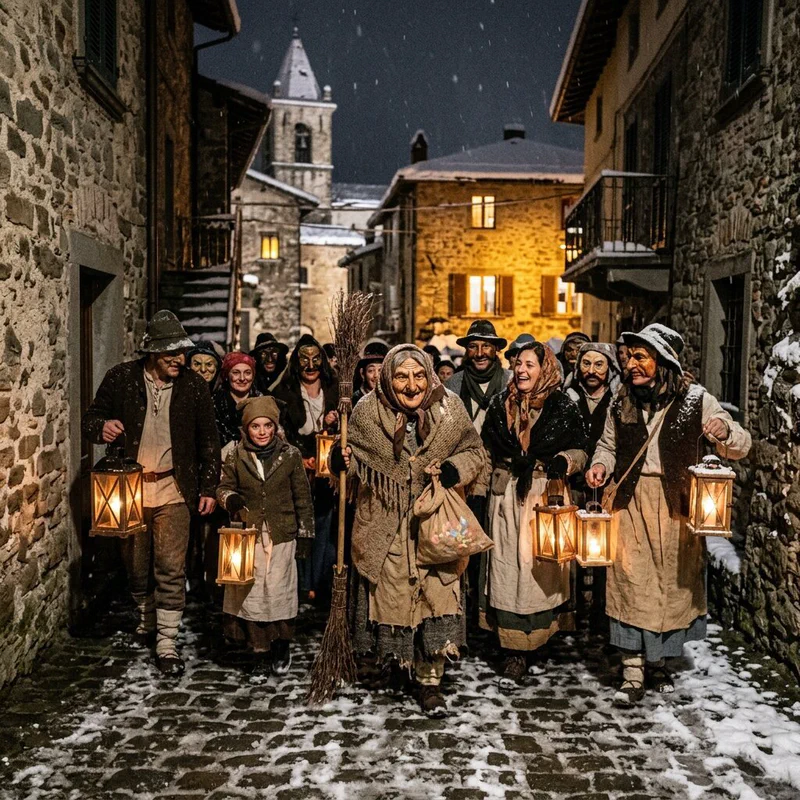
It’s not just for men, but a heartfelt celebration for everyone: children and adults, men and women, who bring joy from house to house together. It’s an incredible experience that renews the bonds of a valley that knows how to be both tough and welcoming.
The begging songs: a leap back to 1414#
Imagine the night between January 5th and 6th. The air is crisp, the stars shine bright, and a suspended atmosphere envelops towns like Barga. It’s the night of the Befana!
The heart of this tradition are the begging songs. Groups of people, often in masks, go from door to door accompanied by accordions and guitars. They sing ancient melodies asking for gifts in exchange for good luck for the new year.
Don’t believe it’s a modern invention to attract tourists. Think that the tradition in Barga has been documented for centuries: there’s a reference in the “liber maleficiorum” (the book of malefics) of 1414, where those who sang “dissonant” words during the night of the Befana against those who refused the offering were fined. Even the great poet Giovanni Pascoli, who lived in Barga for a long time, was enchanted by these songs and the local folklore.
The flavors of Garfagnana: from farro to Befanini#
In this land, food is not taken lightly. Forget about tourist menus with photos of dishes; here, you eat what the land offers, with poor but incredibly flavorful recipes.
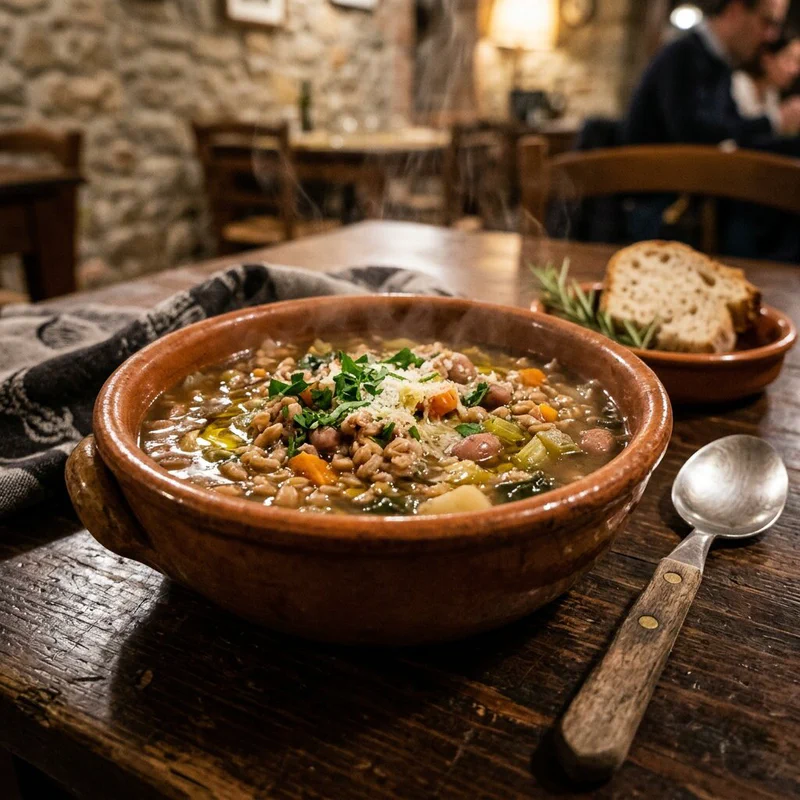
If you come in winter for the Befana, you absolutely must warm up with the queen of local soups: Garfagnana farro soup. The local farro is a rustic, inimitable product, cooked slowly with borlotti beans, winter vegetables, and a generous drizzle of good extra-virgin olive oil. After hours of listening to the begging songs, this soup will put you back in the world.
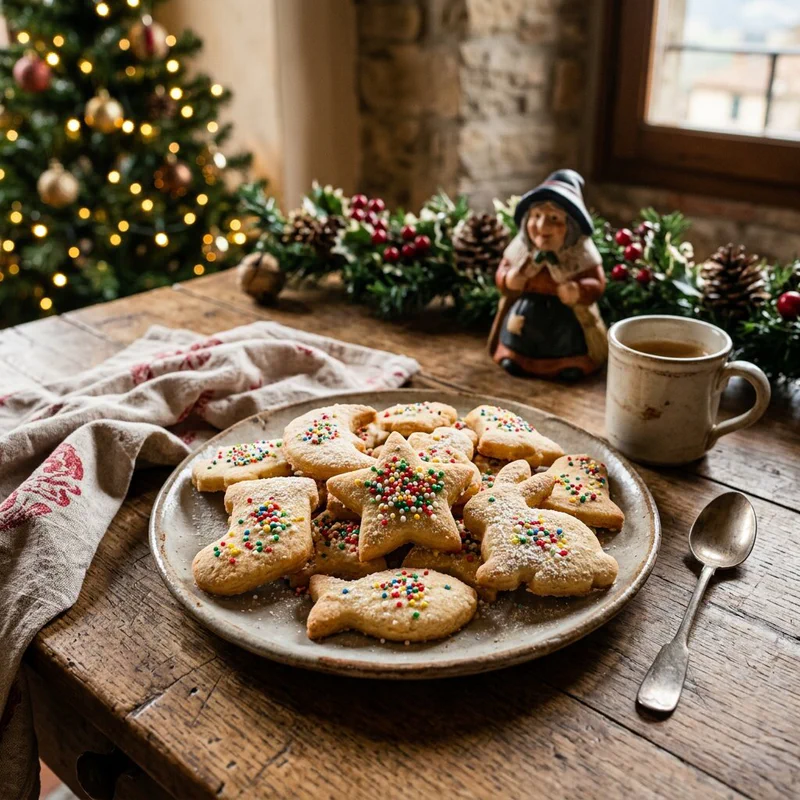
And to finish on a sweet note? There’s no Befana without Befanini. They’re the traditional biscuits made during this period, made with simple shortcrust pastry but cut into fantastical shapes (stars, animals, crescent moons) and decorated with colored sugar. They were traditionally exchanged as gifts during visits to homes.
How to get there and final tips#
Getting here is part of the adventure. Forget about tourist buses that block the scenic roads; here, you travel at your own pace.
- By car: Driving is the best way to discover the region (exit Capannori or Lucca east on the A11, then head up the valley).
- By train: The Lucca-Aulla railway line is a real panoramic spectacle that stops both at Barga-Gallicano and Castelnuovo di Garfagnana.
- By bus: The Vai Bus company offers connections to Barga and Castelnuovo, mainly departing from Lucca. Be sure to check the company’s official website before your trip to avoid any unpleasant surprises.
If you love exploring Tuscany at the slow pace of the road, it is highly recommended to continue your journey along the routes described in the guide to scenic road trips in Tuscany, perfect for discovering hidden villages far from the beaten path.
Since my last post, I’ve had many requests for insider tips on navigating the crowds at Vinitaly. Update: My colleague Giulia recently published a guide to Vinitaly for foodies, sharing the best authentic osterie in Verona to escape the crowds and indulge in divine local cuisine. If you want something truly different from the usual circuits, come to Garfagnana. Let yourself be enchanted by the history, the rustic flavor of farro, and the warmth of a community that still knows how to celebrate its ancient roots. I’ll be waiting for you!