Ciao. I’m Giulia. To me, Italy is a map drawn in flavors, from the salty focaccia of Liguria to the rich ragù of Bologna. I spend my life chasing the perfect bite—not in fancy Michelin-starred restaurants, but in the noisy, warm kitchens of family-run trattorias. Join me as I share the ‘Nonna-approved’ secrets of Italian cuisine and help you find the true soul of Italy, one plate at a time.
The Scent of Gold: An Authentic Truffle Hunt in Umbria’s Verdant Heart#
As I wandered through the rolling hills of Umbria, I couldn’t help but feel a deep connection to this enchanting region, with its rich history and breathtaking landscapes. My colleague Alessandro has a wonderful guide to uncovering the medieval secrets of Umbria, and I highly recommend it to anyone looking to delve deeper into the region’s fascinating past. For now, though, let’s focus on the allure of Umbria’s truffles, and the authentic hunt that awaits in this verdant heart of Italy.
Since writing this, my colleague Alessandro explored the hidden gems of Italy, and I’m excited to share that he recently published a guide to one of these secrets: medieval villages, which has further deepened my appreciation for the country’s diverse regions. However, there’s still one place that holds a special spot in my heart: Umbria, Italy’s Green Heart, a land of rolling hills, ancient olive groves, and medieval villages clinging to sun-drenched peaks, a charm that I’ve always cherished. But for a passionate foodie like me, Umbria holds an even deeper, more intoxicating secret: the elusive, aromatic, utterly divine truffle. You haven’t truly lived until you’ve tasted the earthy magic of a fresh Umbrian tartufo!

Since writing this, my colleague Marco explored the southern regions of Italy and recently published a thrilling road trip guide that I think you’ll love: a thrilling road trip through Italy’s Lucanian Dolomites. While Marco’s journey takes you through the untamed south, I’d like to draw your attention to a truly quintessential Umbrian experience that connects you to the very soul of Italian culinary tradition: a truffle hunt. It’s a journey into the wild heart of the land, guided by instinct, tradition, and the incredible noses of our four-legged friends. This isn’t just about finding a delicacy; it’s about embracing a way of life, a heritage so profound it was recognized as a UNESCO Intangible Cultural Heritage of Humanity in 2021.
Why Umbria is the True Home of the Truffle#
While Piedmont might boast the famed Alba white truffle, Umbria, my dears, is a truffle paradise year-round. It’s a region blessed with the perfect soil—rich in clay and nestled amongst diverse trees like oaks, poplars, and hazels—creating an ideal habitat for tuber fungi to flourish. Here, the truffle isn’t just a luxury; it’s a staple, a beloved ingredient woven into the fabric of daily cooking, from humble family meals to the finest trattoria fare.
My nonna always told me, “Giulia, the secret is in the ingredients, and the best ingredients come from the land you know and love.” In Umbria, this connection to the land, to the cycles of nature, is palpable. The trifolai – our dedicated truffle hunters – are not just foragers; they are custodians of the forest, intimately familiar with every rustle of leaves, every scent carried on the breeze.
The Thrill of the Hunt: A Day with the Tartufaio#
Imagine this: the crisp morning air, still cool with dew, carrying the scent of damp earth and ancient trees. You’re deep in the Umbrian woods, perhaps near the historic towns of Norcia or Spoleto, or the enchanting hills around Gubbio. Your guide is a local tartufaio, a man or woman whose family has likely hunted truffles for generations, their knowledge passed down like a precious recipe. They walk with a quiet confidence, their eyes scanning the forest floor, but their true partners are the dogs.
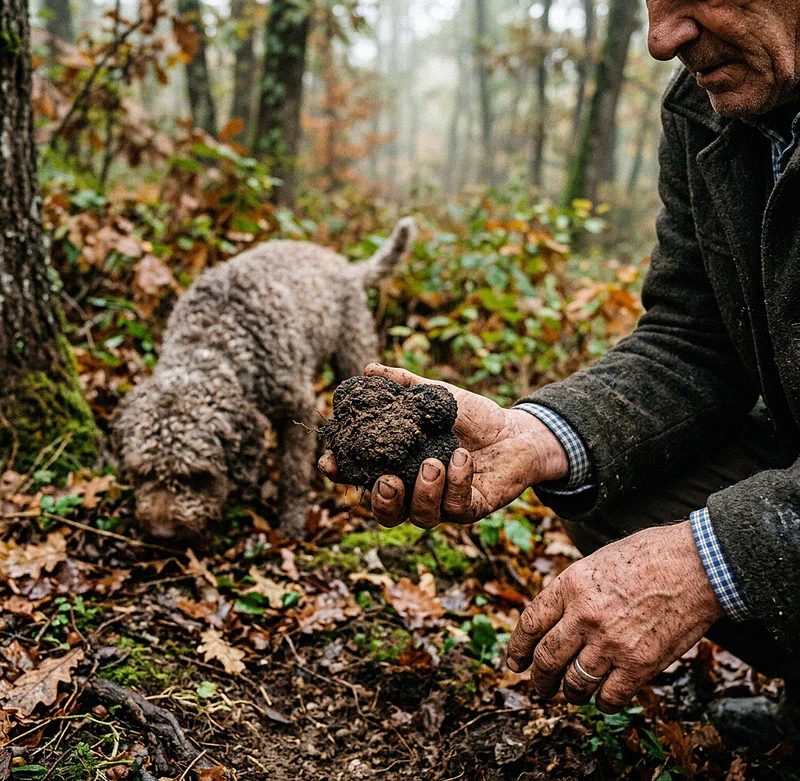
Ah, the dogs! These aren’t just pets; they are highly trained athletes, usually Lagotto Romagnolo, with an incredible sense of smell and an unbridled enthusiasm for their job. Unlike pigs, who have a regrettable tendency to eat the prized fungi they unearth, dogs are rewarded with a treat for each find, making them joyful and efficient partners.
I remember my first hunt with an old tartufaio named Franco, just outside Campello sul Clitunno. His dog, a scruffy but elegant Lagotto named Luna, was a whirlwind of excitement. Her nose was glued to the ground, her tail wagging furiously. Suddenly, she started digging with a frantic intensity, a low whine rumbling in her chest. Franco, with a gentle command, encouraged her, then carefully intervened with his vanghetto (a small spade), meticulously unearthing a dark, irregular lump of earth. The moment it emerged, the air filled with that unmistakable, intoxicating aroma – a deep, musky, earthy perfume that promises pure culinary bliss. It was a tartufo nero pregiato, a prized black winter truffle, and it felt like finding a hidden treasure. The sheer joy, the connection to nature, the ancient tradition unfolding before your eyes – it’s truly unforgettable.
The Truffle Calendar: When to Hunt for Your Treasure#
The beauty of Umbria is that it offers truffle hunting experiences almost year-round, each season bringing its own unique variety and flavor. Knowing the seasons is key to planning your perfect culinary adventure:
- Black Winter Truffle (Tuber melanosporum): Known as the “black diamond,” this is arguably the most famous Umbrian truffle, with an intense, earthy aroma. It’s harvested from November to March. This is the truffle you’ll often find shaved generously over pasta or eggs.
- White Truffle (Tuber magnatum pico): The most prized and aromatic of all, with a pungent, garlicky aroma. In Umbria, it’s primarily found in the Upper Tiber Valley, Eugubino Gualdese, and Orvieto areas, harvested from October to December, sometimes extending into January. My nonna always said, “The white truffle is too precious for cooking; shave it raw, let its perfume enchant you.”
- Summer Truffle (Tuber aestivum, or scorzone): Milder in flavor, but still wonderfully aromatic, the summer truffle is more versatile and affordable. You can hunt for these from May to August. Perfect for infusing oils or making sauces.
- Bianchetto Truffle (Tuber borchii vittadini): Also known as the Spring truffle, it resembles the white truffle but has a more intense, garlicky scent as it matures. Harvested from January to April.
So, whether you dream of the pungent white gold or the robust black diamond, there’s always a season to chase truffles in Umbria.
Where to Experience the Authentic Truffle Hunt#
To truly embrace this tradition, you need to seek out authentic experiences, often with family-run operations who have been stewards of the land for generations. Here are some of my ‘Nonna-approved’ tips and specific places:
- Pettino (Campello sul Clitunno): The ancestral village of Pettino is a truffle haven. Wild Foods Italy offers unforgettable full-day truffle hunting experiences with their family of trifolai and highly trained dogs. They’ve been custodians of their land since 1486! Their hunts start from their mountain village and often include a delicious Umbrian lunch with freshly found truffles. You can even stay at their Black Truffle Lodge for a full immersion.
- Norcia: Famous for its black truffles, Norcia is a must-visit. While the town is still recovering from earthquakes, the spirit of its people and its culinary traditions remain strong. Palazzo Seneca, a beautiful Relais & Chateaux, offers a “Truffle Experience” that includes a hunt with a local tartufaio and dog, followed by dinner at their Michelin-starred Vespasia Restaurant.
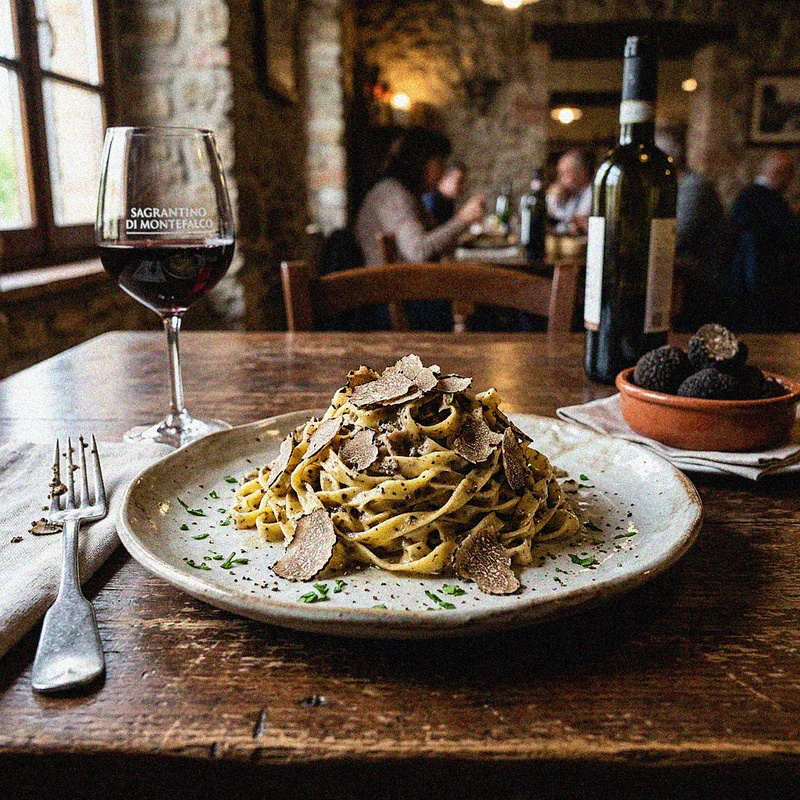
- Monteleone d’Orvieto: For a more intimate experience, Andrea and Michele, owners of Seven Restaurant Café in Monteleone d’Orvieto, organize genuine truffle hunts with their beloved dogs, Argo, Livio, and Bella. It’s a fantastic half-day activity that often concludes with a well-deserved plate of tagliatelle topped with your freshly found treasures.
- Gubbio: This enchanting medieval hill town is renowned for both black and white truffles. Many local farms in the surrounding hills offer guided hunts. While specific names for small operations can be fluid, asking at local agriturismi or the tourist information office in Piazza Grande can lead you to a family-run hunt.
Hidden Booking Secrets from Giulia’s Notebook#
- Go Local, Go Small: The best experiences are often not the ones advertised on huge platforms. Look for smaller, family-run agriturismi or direct contact with trifolai. Many prefer to work through word-of-mouth.
- Book in Advance, Especially for White Truffle Season: White truffles (October-December) are the most sought-after, and tours fill up quickly.
- Ask for a Cooking Component: Many authentic experiences include a meal where you enjoy your findings. This is where the magic truly happens!
- Flexibility is Key: Truffle hunting is an art, not a science. The success of a hunt depends on weather, soil conditions, and the mood of the dogs! Embrace the unpredictability.
Beyond the Hunt: Savoring Umbria’s Truffle Delights#
After the exhilarating hunt, the true reward awaits: tasting the fruits of your labor! Umbrian cuisine celebrates the truffle with elegant simplicity, allowing its unique aroma and flavor to shine.
- Cooking Classes: Many truffle hunting experiences, like those offered by Wild Foods Italy or through Palazzo Seneca, culminate in a cooking class where you learn to transform your truffles into exquisite dishes. My nonna always said, “The freshest ingredients need the simplest preparations.”
- Family-Run Trattorias: This is where the heart of Umbrian truffle cooking truly beats.
- In Gubbio: You absolutely must visit Trattoria Da Baffone (Frazione Santa Maria di Burano). Tucked away in the hills, this rustic gem has been serving incredible truffle menus for over 40 years. Their truffle menu is legendary, with bruschetta, frittata, and generous plates of tagliatelle al tartufo all blanketed in freshly shaved black truffles. Another excellent choice in the historic center is Taverna del Lupo on Via Repubblica, known for its elegant ambiance and high-quality local ingredients, including truffles. And don’t miss Papa Tartufi di Gubbio near Piazza 40 Martiri for an incredible selection of truffle products and their famous white truffle sauce.
- In Spoleto: Ristorante Il Tartufo on Piazza Giuseppe Garibaldi is a classic, offering a genuine taste of Umbrian cuisine with a clear focus on truffles. Their Strangozzi al Tartufo and Spaghetti al Tartufo are simply divine. For a truly traditional experience, venture a few kilometers outside the built-up area to Il Capanno, a trattoria with a 50-year legacy, famous for its truffle fritattina (runny scrambled eggs with truffle) and homemade strangozzi.
- In Norcia: Even after the challenges, places like Il Tartufo (now in a pre-fab structure near the farmacia) continue to serve wonderful truffle dishes, like homemade tagliatelle al tartufo nero. The Bianconi family’s Salsiccia Bar Bistrot also offers excellent truffle bruschetta and tagliolini.
- In Città di Castello: Try Il Fiorentino on Via San Florido, 55, for an “all-truffle” meal, or Trattoria Lea on Corso Cavour, 8F, where the Cuccarini brothers uphold Umbrian tradition with prized truffles.
Signature Truffle Dishes to Savor#
- Tagliatelle al Tartufo: Simple, fresh egg pasta tossed with butter or a light cream sauce, then generously adorned with freshly shaved truffles. The warmth of the pasta releases the truffle’s intoxicating aroma.
- Uova al Tartufo: Scrambled eggs or a delicate frittata with truffles. The richness of the egg complements the earthy notes perfectly. My nonna always said, “A good egg and a fresh truffle, what more do you need?”
- Bruschetta al Tartufo: Toasted bread, drizzled with Umbrian olive oil, and topped with truffle paste or thin slices of fresh truffle. A perfect antipasto.
- Frascarelli al Tartufo: An old-fashioned Umbrian pasta, almost like dumplings or a rustic risotto, often made with simple flour and water, then served with butter, Parmigiano, and, of course, truffles.
Practical Tips for Your Umbrian Truffle Adventure#
- Getting There:
- By Car: This is truly the best way to explore Umbria’s rolling hills and reach the smaller, more authentic villages where truffle hunts take place. The A1 highway is your main artery, with exits for Arezzo (for northern Umbria like Città di Castello) or Orte/Orvieto (for southern Umbria).
- By Train: You can take a train from major Italian cities like Rome or Florence to Umbrian hubs like Perugia, Assisi, Spoleto, or Foligno. From there, renting a car or arranging a transfer is usually necessary to reach the more secluded truffle-rich areas. Direct trains from Rome’s Termini station go to Spoleto.
- Best Time to Visit: While truffles can be found year-round, the most exciting times are:
- Autumn (October-December): For the highly prized white truffle.
- Winter (November-March): For the robust black winter truffle.
- Spring (January-April): For bianchetto truffles.
- Summer (May-August): For the milder scorzone (summer truffle).
- What to Wear: Comfortable, sturdy closed-toe shoes are a must for walking through uneven forest terrain. Dress in layers, as mornings can be cool, and afternoons warm up. A light waterproof jacket (K-way) is always a good idea, just in case.
- Language: While many tour operators speak English, knowing a few basic Italian phrases (grazie, per favore, buongiorno) will always be appreciated by the locals and enhance your experience.
- Storing Your Treasure: If you buy fresh truffles, store them in the refrigerator wrapped in paper towels (changed daily) and placed in an airtight container with a few eggs or some rice. The truffle’s aroma will subtly infuse its companions!
Giulia’s Final Nonna-Approved Wisdom#
The secret is in the ingredients, yes, but also in the experience. A truffle hunt in Umbria is more than just a culinary quest; it’s an immersion into a timeless way of life, a sensory journey that awakens your palate and your spirit. From the earthy scent of the forest to the joyful barks of the truffle dog, every moment is a connection to Italy’s rich heritage. So pack your bags, lace up your comfortable shoes, and prepare to discover the true “black gold” of Umbria. My nonna always told me, “Food tastes best when shared with love,” and there’s no better way to share the love of Italy than through its incredible flavors, unearthed straight from the heart of the land.
Buon viaggio e buon appetito!