
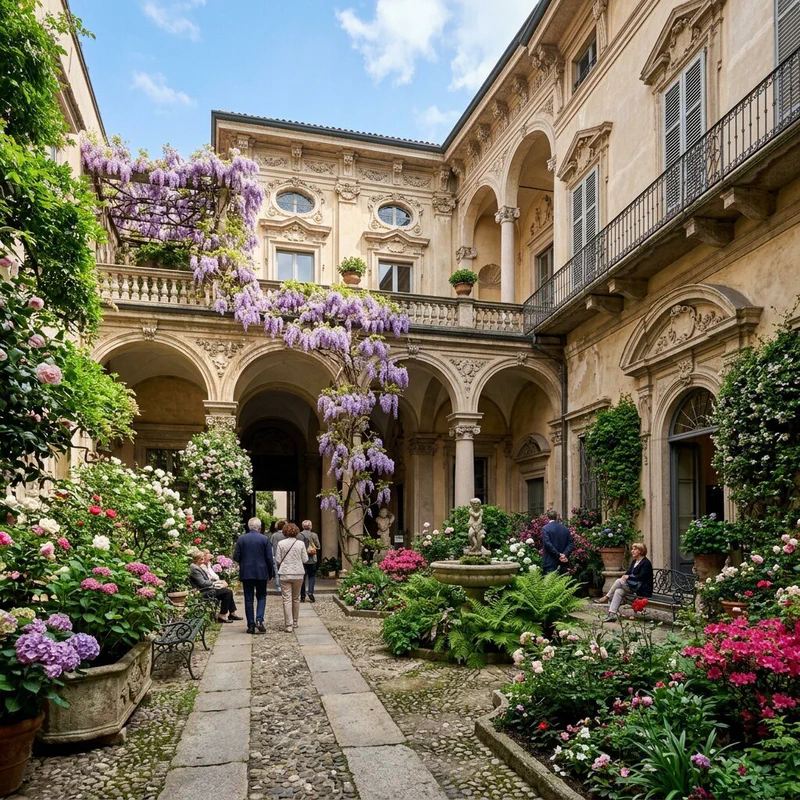
Milan hides incredible secrets. Behind the polished, hectic, and seemingly detached facade of the business world, this metropolis jealously guards Renaissance and Baroque courtyards of indescribable magnificence. Walking along the busy, grey streets of the center, the harsh smell of exhaust fumes is suddenly replaced by the sweet, intoxicating scent of wild wisteria in bloom. The rapid clicking of heels on the asphalt instantly fades into the muffled silence of centuries-old cloisters hidden behind imposing doorways. Believe me, you will fall in love with it in a heartbeat.
Exploring this city requires an insatiable historical curiosity. This metropolis has witnessed centuries of fascinating history, from the Viscontei dukes to Spanish rule, waiting to be revealed behind monumental doorways usually barred to the public. During the Spring FAI Days, the barriers are broken down and wonderful secrets kept for centuries are revealed. FAI volunteers share their contagious passion to make you feel like a true urban archaeologist discovering a buried civilization. It is a rare opportunity that reconciles you with pure beauty.
The Silent Charm of Spring FAI Days#
The FAI Days are a true gift for anyone who loves culture. The FAI (Fondo Ambiente Italiano) is a non-profit foundation founded in 1975, modeled on the British National Trust, with the mission of preserving, restoring, and opening Italy’s immense historical, artistic, and natural heritage to the public. Every year in late March, this extraordinary foundation organizes a special weekend dedicated to promoting our shared beauty. On these special dates, passionate and highly prepared young guides take you by the hand, leading you to discover historic palaces that usually remain jealously guarded by aristocratic Milanese families. You will be able to walk on inlaid floors of precious wood and look up at frescoed ceilings that have seen centuries of European history unfold. This is a living piece of our cultural identity.
Noble Courtyards You Cannot Miss#
Milanese noble courtyards are legendary for their understated elegance. Often hidden behind austere portals in lava stone or granite, these inner spaces represent the true aristocratic soul of Milan, where wealth is not flaunted on the street but kept inside. Here are four absolute gems to keep in mind for your spring itinerary:
- Palazzo Turati (Via Meravigli 7): A Neo-Renaissance masterpiece with an intimate internal courtyard and gilded stucco ceilings of rare beauty.
- Palazzo Litta (Corso Magenta 24): One of the greatest examples of Milanese Late Baroque, famous for its imposing courtyard of honor where the rustle of wisteria petals falling on the granite mixes with the sweet scent of spring flowers.
- Villa Necchi Campiglio (Via Mozart 14): A rationalist icon of the 1930s where the silence of the private garden, complete with magnolias and a historic swimming pool, makes you forget the bustle of the nearby metropolis.
- Palazzo Beltrami (Piazza della Scala): An architectural masterpiece guarding the banking, artistic, and political history of the city behind an imposing facade.
Silence is a rare and precious gem. If you love the regal quiet of these hidden gardens, you will surely appreciate the next guide I wrote about Mantua. It is a princely city surrounded by water where the history of the Gonzaga family can be breathed in every silent square. You can wander through frescoed rooms and courtyards that seem to emerge from a medieval dream. You will feel as if you are traveling back in time.
The Milanese Ritual of Breakfast at Caffè Cova#
Exploring Milanese culture at high intensity inevitably builds up an appetite. My sacred and indispensable stop to recharge my batteries is the historic Caffè Cova. Founded in 1817 just steps from the Teatro alla Scala (where Giuseppe Verdi and the patriots of the Risorgimento gathered to discuss music and politics) and later relocated in 1950 to the prestigious Via Monte Napoleone 8, this literary café guards the city’s most aristocratic soul. As soon as you cross the threshold, the intoxicating aroma of freshly ground Arabica coffee beans and candied orange peel wraps around you like a warm embrace. The light clinking of decorated porcelain cups on the mahogany counter creates a relaxing and reassuring domestic symphony. I always order their legendary caramelized puff pastry brioche, filled with a silky, vanilla-scented pastry cream, accompanied by a perfect espresso. It is my personal sensory paradise.
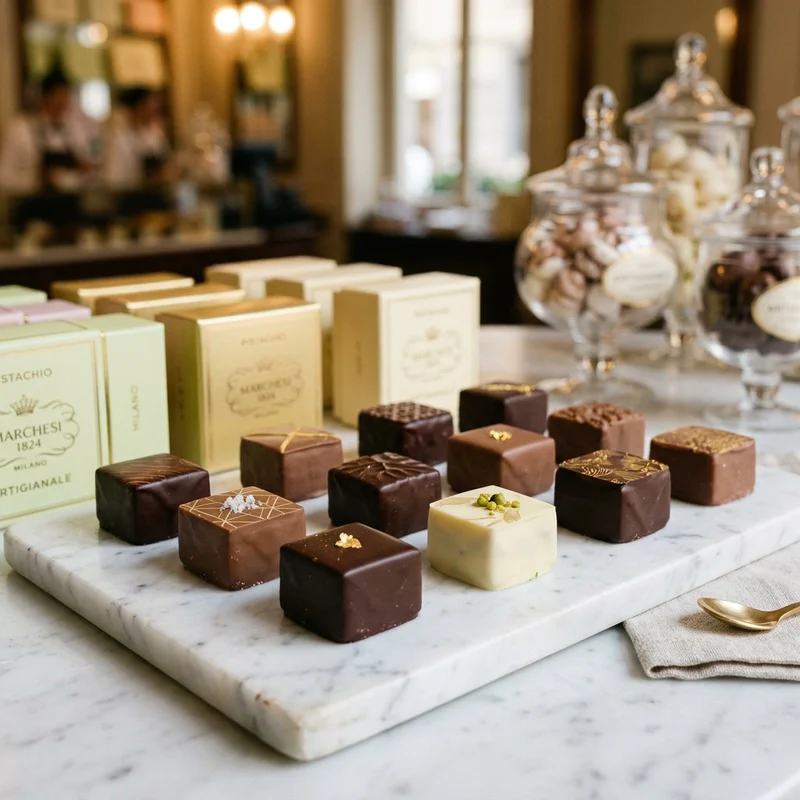
If, on the other hand, you are looking for an atmosphere suspended in time and a touch of geometric elegance, simply cross the street and step inside Pasticceria Marchesi 1824 at number 9. Instantly recognizable by its pastel-green interiors and soft velvet sofas, this historic gem—owned by the Prada Group—is world-famous for its spectacular high-end confectionery creations. I love to stop and contemplate their windows, ordering the iconic chocolate cubes, tiny masterpieces of culinary geometry decorated with delicate gold leaf, which look almost too precious to eat.
A Perfectly Crafted Risotto alla Milanese#
For lunch, I highly recommend avoiding the cheap, standardized tourist menus that besiege the Duomo. Walk over to the cobbled alleys of the Brera district and seek out the historic Trattoria Torre di Pisa in Via Fiori Chiari 21. Serving Milanese locals since 1959, this place preserves a beautiful retro atmosphere with its dark wood furniture and vintage photos on the walls.
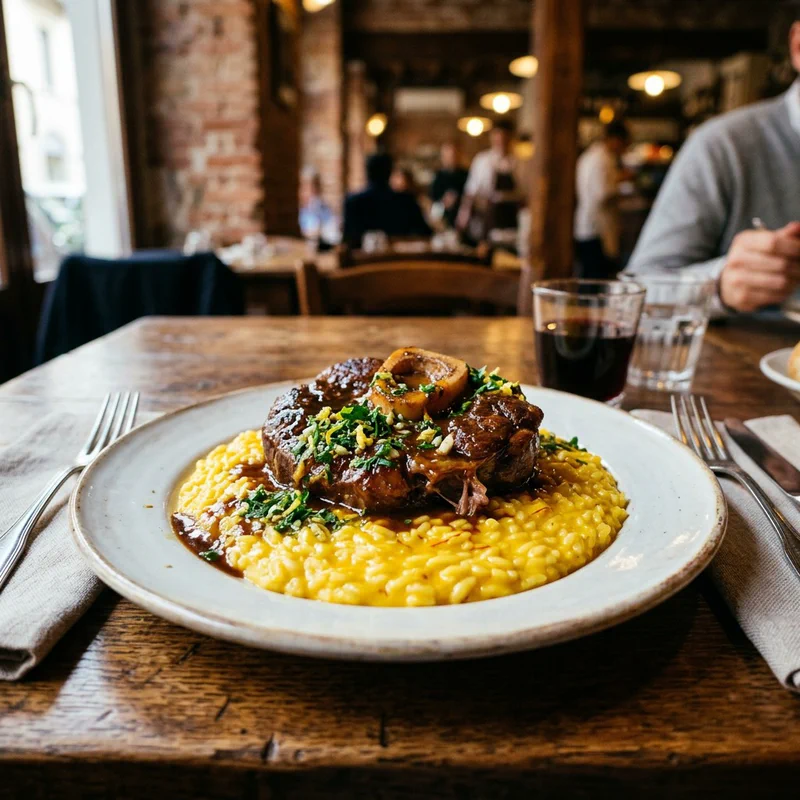
The last time I sat at one of their time-worn wooden tables, the air was thick with the rich aroma of simmering broth and nutty browned butter. When the waiter served me the true risotto alla milanese, the bright yellow color of the pure saffron threads glowed beautifully under the warm lights. The texture was impeccable, strictly all’onda (wavy), with each grain of Carnaroli rice perfectly bound by a creamy mantecatura of parmesan and rich bone marrow. Resting on top was a monumental ossobuco, slow-cooked over gentle heat for hours until the meat fell away from the bone at the mere touch of a fork, releasing a dark, velvety reduction. Spooning out that buttery marrow from the hollow bone is a sacred ritual—a true triumph of authentic Lombard culinary tradition that touches your very soul.
If you’re looking for a deeper dive into the region’s authentic culture, my colleague Sofia has a wonderful guide to exploring the ancient carnivals of Lombardy, where you can experience the magic of Bagolino and Schignano’s festivals firsthand. Exploring the Vibrant Festivals of Lombardy
The Little Hardships of a Traveler#
Now, allow me a small rant from a passionate historian. Sometimes, it deeply irritates me to find wonderful monuments covered in heavy advertising scaffolding with no warning on the official website, completely ruining the harmony of the photos I wanted to take. It is equally annoying to see little shops selling “typical” souvenirs that are clearly low-quality plastic replicas made abroad. Another great pet peeve of mine is state-run museums that close for a afternoon “riposo” right during the peak hours of foreign visitors. Fortunately, the FAI organization completely avoids these inconveniences, offering a smooth and respectful experience. They truly deserve all our concrete support.
Practical Tips for Your Visit#
The FAI represents a unique opportunity to rediscover our past. Prepare your most comfortable walking shoes for the historic stone floors, book your tickets well in advance on the official website to secure entry to the limited-capacity palaces, and avoid the central hours of the day to bypass grueling queues under the spring sun. I assure you that peeking behind those secret doorways will make you see the Lombard metropolis with completely new eyes, revealing a romantic, silent city filled with timeless elegance. Let yourself be guided by the passion of the young volunteers and explore every hidden corner with the due calm. It will be an extraordinary cultural adventure.