Ciao a tutti, I’m Luca. While the crowds pack into the famous piazzas, I’m usually wandering down a quiet backstreet or exploring an overlooked coastal village. I live for the thrill of the undiscovered. Follow along as I reveal Italy’s best-kept secrets, untamed nature, and authentic spots that most tourists never even realize exist.
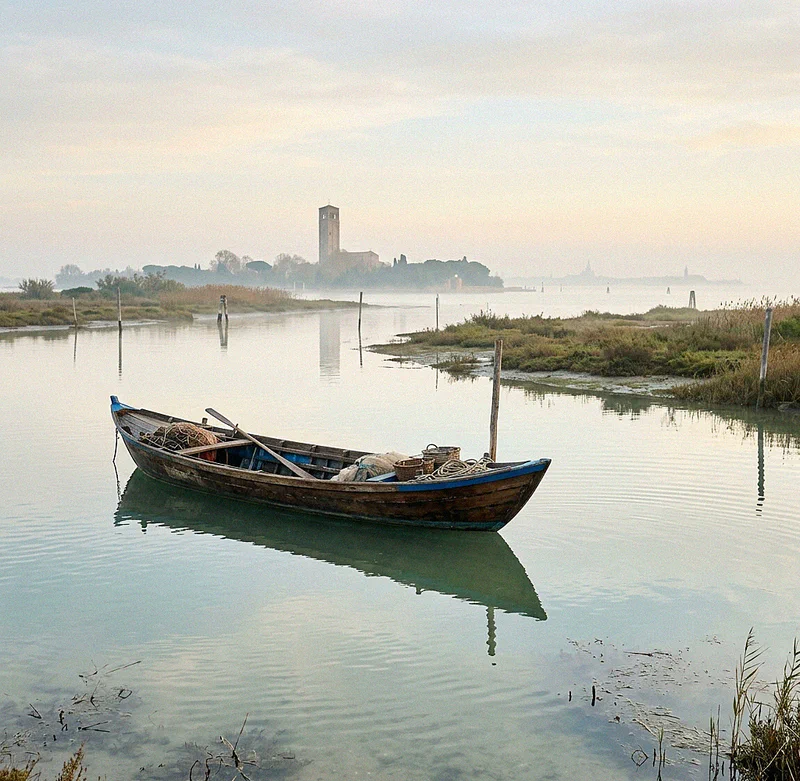
The Venetian Lagoon. Ah, the very name conjures images of gondolas, grand palaces, and St. Mark’s Square teeming with visitors. And while Venice itself is undeniably magnificent, I’m here to tell you a secret, a whispered truth that few outsiders ever uncover: the real magic of the Veneto lies beyond the well-trodden paths, in its hidden lagoons and the islands tourists forget. My colleague Marco has a wonderful guide to exploring the region’s lesser-known islands and islands beyond Venice, including a fascinating road trip itinerary for the Carnevale di Venezia (Road Tripping the Carnival: A 2025 Guide to the Best of Veneto’s Hidden Islands). Most tourists never find this spot… They rush through Murano and Burano, perhaps a quick stop at Torcello, and then it’s back to the main island, never realizing the vast, vibrant, and utterly authentic world they’ve left behind. This isn’t just a trip; it’s an immersion into the soul of the lagoon, a journey to places where time slows down, and the rhythm of local life dictates your day.

Forget the guidebook clichés. If you want something different…, something truly Italian, then join me as we explore the silent shores, the working islands, and the culinary havens that are the true hidden gems of the Venetian Lagoon.
Sant’Erasmo: Venice’s Green Heartbeat#
Our first stop, Sant’Erasmo, is often lovingly called “the vegetable garden of Venice.” And for good reason! This large, fertile island is where much of the fresh produce for Venice’s Rialto market comes from. Stepping off the vaporetto at Capannone, the air immediately feels cleaner, infused with the scent of rich earth and salt. The island is flat, perfect for exploring by bicycle, which you can often rent near the ferry stops or through your accommodation. I remember one crisp autumn morning, cycling past fields heavy with the famous violet artichokes, or castraure, a local delicacy so prized it fetches top prices.
Life here is slow, dictated by the seasons and the tides. You won’t find souvenir shops; instead, you’ll find farm stands selling freshly picked vegetables, honey (sometimes even artichoke honey!), and local wines. My secret tip is… to seek out Ai Tedeschi near Torre Massimiliana. It’s a humble bar-trattoria offering honest, simple Italian cuisine at prices that will make you smile, a stark contrast to the city. Imagine sitting by the lagoon, a plate of bigoli in salsa or baccalà mantecato in front of you, watching the boats glide by. It’s an experience that feels like a warm hug from nonna. You can even swim from the small beach in front of Ai Tedeschi on a warm day.
Another gem on Sant’Erasmo is the Osti in Orto project, where several Venetian restaurateurs have collaborated to grow their own produce directly on the island, ensuring the freshest ingredients for their city restaurants. It’s a testament to the island’s agricultural importance and a beautiful example of farm-to-table dining in action. If you’re lucky, you might even find one of these restaurants hosting an event on the island itself!
Mazzorbo: The Golden Grape and Quiet Charm#
Connected to the more famous (and colorful) Burano by a wooden footbridge, Mazzorbo remains a tranquil escape, often overlooked by those rushing to see the rainbow houses. And that, my friends, is precisely its charm. Mazzorbo is primarily known for its vineyards, particularly the revival of the ancient Dorona di Venezia grape, a golden-skinned varietal that was nearly lost to history.
Here, you’ll find the renowned Venissa estate, a Michelin-starred restaurant and a more casual osteria set within a walled vineyard. Dining here is an experience, a celebration of lagoon flavors with a focus on fresh seafood and vegetables grown in their own garden. I once spent an entire afternoon wandering their vineyard, tasting their unique white wine, and then indulging in a meal that perfectly captured the essence of the lagoon. It’s a place where every dish tells a story of the land and sea.
Beyond Venissa, take a stroll through the quiet lanes, admire the Church of Santa Caterina with its 14th-century bell tower, one of the oldest in the lagoon, and simply soak in the peaceful atmosphere. It’s the perfect antidote to the bustle of Burano, offering wide-open views and a deep sense of place.
Torcello: The Cradle of Venice#
If Venice has a beginning, it’s Torcello. This sparsely populated island, now home to only a handful of residents, was once a thriving settlement, predating Venice itself. As you walk along the long, unpaved path from the vaporetto stop, you’ll feel the weight of history in the air.
The star attraction is undoubtedly the Cathedral of Santa Maria Assunta, founded in 639 AD. Its Byzantine mosaics, especially the breathtaking “Last Judgment” on the west wall, are among the finest in Italy and rival those of St. Mark’s Basilica. Next to it stands the Church of Santa Fosca, a beautiful example of Byzantine architecture, and the small but informative Torcello Museum.
And then there’s Locanda Cipriani. This legendary inn, opened in 1934 by Giuseppe Cipriani (the founder of Harry’s Bar), has hosted everyone from Ernest Hemingway (who famously wrote parts of “Across the River and into the Trees” here) to royalty and Hollywood stars. My secret tip is… to stop for a coffee or a meal, even if just a light one, in their enchanting garden. The tranquility, the history, the impeccable service – it’s an experience that transcends mere dining. I remember a lunch there where the risotto Torcellana, a vegetable risotto with zucchini, peppers, artichokes, and asparagus, was simply divine. It’s a place where you can almost feel the whispers of past luminaries in the breeze.
Lazzaretto Nuovo: A Glimpse into Venice’s Past Resilience#
For a truly off-the-beaten-path experience, venture to Lazzaretto Nuovo. This island served as Venice’s main quarantine station from the 15th century onwards, protecting the city from plague and other diseases. It’s a fascinating, if sometimes somber, testament to Venice’s forward-thinking approach to public health.
Today, Lazzaretto Nuovo is an eco-museum, brought back to life by a grassroots non-profit. You can take a guided tour to explore the Tezon Grande, a massive 16th-century warehouse where goods were disinfected, and see ancient graffiti left by merchants and guards. There are also archaeological digs revealing remnants of the original monastery. My secret tip is… to check their official website for guided tour schedules, as visits are often by appointment or on specific days. It’s usually open from March to November. You can even find nature walks through the saltmarshes, perfect for birdwatching. It’s a stark reminder of the challenges Venice faced and overcame, a story rarely told in the bustling heart of the city.
Pellestrina: The Fishermen’s Embrace#
Stretching for 10 kilometers, Pellestrina is a long, narrow strip of land that acts as a natural barrier between the Adriatic Sea and the Venetian Lagoon, connecting Lido to Chioggia. This island is a world away from Venice, a place where life revolves around fishing, and colorful houses line the waterfront.
What I love about Pellestrina are the murazzi, the massive 18th-century Istrian stone sea walls built by the Venetian Republic to protect the lagoon from the fury of the sea. You can cycle or walk along these impressive fortifications, with the open sea on one side and the calm lagoon on the other. It’s an incredible feeling, walking literally in the middle of the water.
The island is dotted with charming fishing villages like San Pietro in Volta, Porto Secco, and Pellestrina itself. Stop at a local trattoria for the freshest seafood imaginable. Da Celeste in Pellestrina is a local institution, known for its exquisite fish dishes and a terrace overlooking the lagoon, perfect for a sunset dinner. I once had the most incredible moecche fritte (fried soft-shell crabs) there during the season – an absolute must-try! If you want something different… consider staying overnight in one of the small guesthouses on Pellestrina. You’ll wake up to the sounds of the lagoon and experience the island as a local.
Chioggia: Little Venice with a Big Heart#
Further south, at the very end of the lagoon, lies Chioggia, often called “Little Venice.” And indeed, its charming canals, bridges, and colorful buildings bear a striking resemblance to its famous cousin, but with a distinctly more authentic, working-class feel. Chioggia has a strong and ancient fishing tradition, boasting one of Italy’s largest fishing fleets.
The heart of Chioggia is its bustling fish market, the Mercato Ittico, located behind Palazzo Granaio, between Corso del Popolo and Canal Vena. If you’re an early riser, you might even witness the fishing boats returning at dawn to unload their catches. It’s a vibrant, noisy, and wonderfully authentic experience, where mògnoli (local fishmongers) proudly display the day’s bounty: sea bream, sole, scallops, cuttlefish, shrimp, and the famous moleche (green crabs). My secret tip is… to visit on a Thursday morning when the main Corso del Popolo also hosts a sprawling general market, adding to the lively atmosphere.
Stroll along the Canal Vena, admire the fishing boats with their unique colors, and explore the narrow calli. Don’t miss the Duomo di Chioggia and the Torre dell’Orologio, one of the oldest clock towers in the world. For an authentic meal, find a bacaro (a traditional Venetian wine bar) or a trattoria along the canals and indulge in a plate of sardee in saor (marinated sardines) or a fresh seafood risotto. It’s Venice, but without the polished veneer, raw and real.
Practical Tips for Your Lagoon Adventure#
Ready to ditch the crowds and embrace the real Veneto? Here’s how to make your hidden lagoon exploration unforgettable:
How to Get There#
- Vaporetto is Your Best Friend: The ACTV public transport system operates reliable vaporetti (water buses) throughout the lagoon.
- Sant’Erasmo & Lazzaretto Nuovo: Take Line 13 from Fondamente Nove. Sant’Erasmo has three stops (Capannone, Chiesa, Punta Vela). For Lazzaretto Nuovo, it’s an on-request stop, so inform the driver.
- Mazzorbo, Burano & Torcello: Line 12 from Fondamente Nove is your direct route. Mazzorbo is usually the stop just before Burano. Torcello is a short hop from Burano on Line 9.
- Pellestrina & Chioggia: This is a bit more of an adventure! From Lido (reached by vaporetto from Venice), you take bus Line 11 across the Lido, then a ferry for a short hop to Pellestrina, and then another bus along Pellestrina, which eventually connects to Chioggia. It’s a scenic journey, but plan for time.
- Private Boat/Water Taxi: For ultimate flexibility and to reach even more secluded spots, consider hiring a private boat or water taxi for a day. This is especially good if you’re traveling with a small group.
Best Time to Visit#
- Shoulder Seasons (April-May & September-October): This is my absolute favorite time. The weather is mild and pleasant, the crowds are significantly thinner than in summer, and the light over the lagoon is simply magical for photography. You’ll avoid the summer heat and humidity.
- Late Spring (April/May): The fields of Sant’Erasmo are bursting with fresh produce, especially the famous artichokes.
- Autumn (September/October): Enjoy the harvest season and fewer visitors.
- Winter (November-March): While colder, winter offers a truly unique, misty, and intimate experience of the lagoon. You’ll have many places almost to yourself, and accommodation prices can be lower.
Hidden Booking Secrets#
- Agriturismos on Sant’Erasmo: Look for small farm stays or agriturismos if you want to immerse yourself fully in the island’s rural life. They often offer incredible homemade meals.
- Small Guesthouses: On islands like Pellestrina, opting for a local guesthouse rather than a hotel provides a more authentic experience and direct interaction with the islanders.
- Book Ahead for Venissa/Locanda Cipriani: These renowned restaurants, especially Venissa, book up far in advance, particularly for dinner. Make reservations well ahead of your trip.
What to Pack#
- Comfortable Walking Shoes: You’ll be doing a lot of exploring on foot and by bike.
- Layers: The lagoon weather can change quickly, so layers are key.
- Camera: The light and landscapes are simply breathtaking.
- A Reusable Water Bottle: Stay hydrated!
- An Open Mind and a Sense of Adventure: These islands reward curiosity and a willingness to step outside your comfort zone.
Local Etiquette#
- Respect Local Life: Remember, these are living, working communities, not just tourist attractions. Be mindful of noise, especially in residential areas.
- Support Local Businesses: Buy produce from farm stands, dine at family-run trattorias, and appreciate the crafts of local artisans.
- Learn a Few Italian Phrases: Even a simple “Buongiorno” or “Grazie” goes a long way.
So, there you have it, my fellow explorers. The Venetian Lagoon is so much more than what meets the eye from Piazza San Marco. It’s a tapestry of vibrant life, ancient history, and untouched nature, waiting for those adventurous enough to seek it out. These hidden lagoons of the Veneto are where you’ll find the true heart of Italy, a place that will stay with you long after you’ve returned home. Go on, get lost, and discover your own secret Italy. Buon viaggio!