
Ciao, amici! Pull up a chair and let me pour you a glass of robust Gattinara. While most travelers rush toward the shimmering lights of Milan or the elegant porticoes of Turin, there is a quiet, mist-shrouded landscape lying right between them that holds the true heart of Northern Italian soul food.
I’m talking about Vercelli, the undisputed capital of European rice. To many, it’s just a stop on a train line, but to those of us who live for the scent of a slow-simmering pot, it is a pilgrimage site. Here, the landscape is a patchwork of risaie (rice paddies) that in spring reflect the sky like mirrors, creating what we call the “checkerboard sea.”
If you appreciate the quiet, understated elegance of places like Vercelli, you might also enjoy my guide to Mantua, another hidden gem where history and water create a magical atmosphere.
The Heartbeat of the Risaia: Panissa Vercellese#
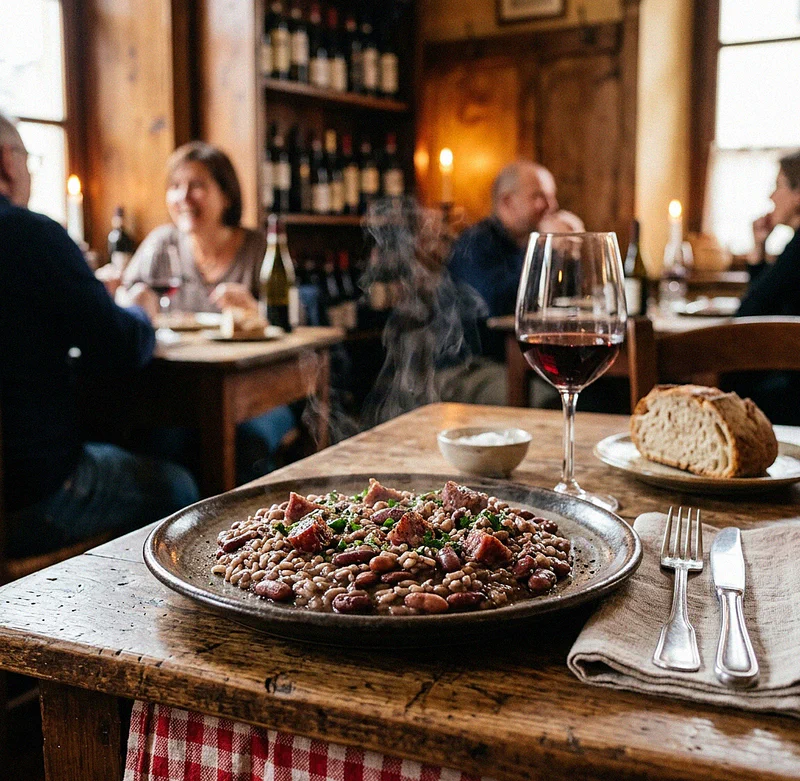
Unlike the delicate, saffron-stained risotto of Milan, Panissa is a rustic, powerful embrace. It is a dish born from the earth and the back-breaking work of the mondine—the women who spent their days weeding the rice fields under the hot sun. They needed a meal that was as strong as they were.
The secret is in the ingredients, and for a true Panissa, there are three non-negotiables:
- The Rice: We only use Maratelli, Arborio, or Baldo. My pet peeve is seeing people use that “parboiled” industrial rice that never loses its shape. Real rice should have a pearly heart and a soul that knows how to release its starch to create a natural creaminess.
- The Beans: Only the Fagioli di Saluggia or Villata. These tiny, marbled beans are soaked overnight and then simmered until they almost melt into a velvety base.
- The ‘Salam d’la Duja’: This is the magic. It’s a local pork salami preserved in jars (duja) filled with lard. It stays soft, spicy, and when it hits the hot rice, it dissolves into a pool of pure flavor.
If you love these kinds of deep, regional flavors that define a culture, you must read my guide to Apulia on a plate, where the orecchiette tell a similar story of tradition and grit.
A Symphony of Scent and Sound#
Walking into a family-run trattoria in the Vercelli countryside, like Trattoria Paolino, is a sensory experience. You are first hit by the soffritto—the sound of onions and local lard dancing in the pan. Then comes the wine. A true Panissa is toasted with a splash of local red wine—a Barbera or a Gattinara—turning the grains a deep, earthy purple.
My nonna always told me, “Giulia, never rush the mantecatura.” This is the final step where the rice is beaten with a bit of butter and plenty of aged Grana Padano to create that signature “wave” (all’onda) consistency. If the risotto is too dry or, heaven forbid, “soupy,” then it isn’t a Panissa. It must be creamy, but each grain must still speak for itself.
If you enjoy discovering these travertine-toned cities and their hidden kitchens, as my colleague Alessandro explored in Ascoli Piceno, you will find Vercelli to be a revelation.
Practical Tips for the Culinary Traveler#
- When to Go: Autumn is the golden season. The rice has been harvested, the air is crisp, and the heavy, warming flavors of Panissa feel like a warm blanket.
- The Perfect Pairing: You need the tannins of a Gattinara to cut through the richness of the salami and beans. It is a match made in Piedmontese heaven.
- Beyond the Plate: Take a moment to visit the Abbazia di Sant’Andrea. It is one of the most beautiful examples of Romanesque-Gothic architecture in Italy.
Vercelli reminds us that the best travel experiences aren’t found in a flashy guidebook, but in the bottom of a bowl shared with friends. It’s about the steam rising from the plate and the pride of a chef who is cooking a recipe that belongs to the land.
Buon appetito, and look for the shimmer of the risaie!
With love, Giulia