Hello everyone, I’m Luca. While most travelers are crowding through the usual popular destinations for a grainy postcard photo, I’ve found something that looks like it came out of a fever dream from centuries ago. Imagine a village where water doesn’t just flow in a canal, but breathes, pulses, and literally dances between the doors of the houses. Welcome to Rasiglia, a place that embodies the very essence of discovery off the beaten path.
Rasiglia, hidden among the rugged folds of the Menotre Valley, is a miracle of medieval hydraulic engineering and spontaneous beauty. If you seek the silence broken only by the rushing of streams, you must come here.
The Beating Heart: The Capovena Spring#
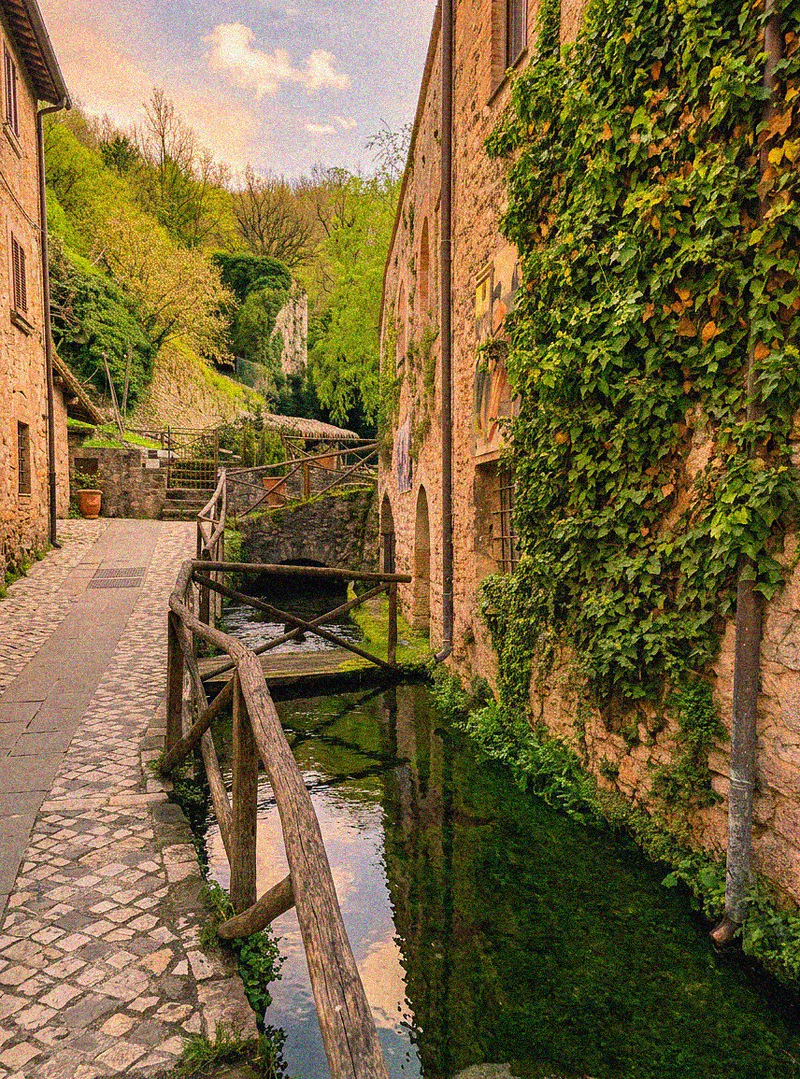
Rasiglia isn’t your typical Umbrian hilltop village perched on a peak for defense. It is a village that arises from the rock, literally. Everything revolves around the Capovena Spring, which gushes with incredible force right in the upper part of the town. The water, which maintains a constant temperature of about 10-12 degrees Celsius all year round, is channeled into a system of locks, basins, and small waterfalls that cross every corner of the village.
Walking through Rasiglia means being accompanied by a constant symphony. The sound of water is everywhere: under the small wooden bridges, next to the moss-covered stone walls, inside the ancient washhouses. It is a primordial energy that once powered mills, workshops, and woolen mills. This passion for places where nature and human ingenuity merge is what drives me to look for gems like these, capable of offering the same quiet wonder of the travertine dream of Ascoli Piceno.
The Legacy of Weavers: The Tonti Woolen Mill#
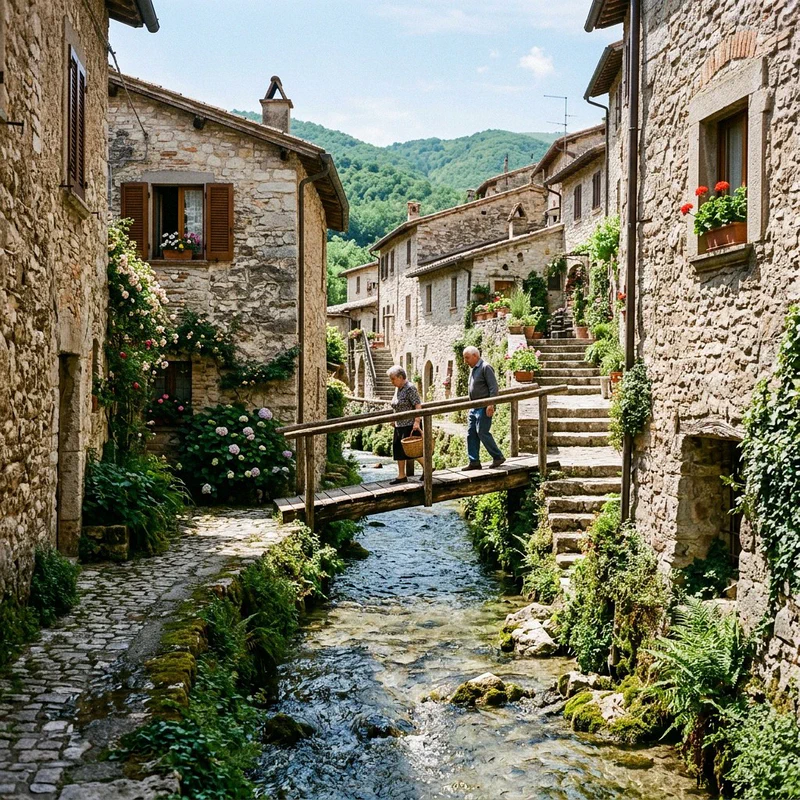
What makes Rasiglia so fascinating is not just its fairytale aesthetic, but its raw industrial history. In the 14th century, under the rule of the Trinci (the lords of Foligno), the village became a nerve center for wool processing. The power of the water was not used just for beauty, but to turn the looms and mills.
Even today, one can admire the remains of the Tonti Woolen Mill, where wool was washed, woven, and dyed. It is a testimony to an industrious Italy that knew how to exploit the territory’s resources without destroying it. Seeing those ancient machines immersed in greenery, with canals flowing under the floors, is a reminder of how advanced we were centuries ago.
The Trinci Castle: The View from Above#
My secret tip is not to limit yourself to walking near the water. Look for the steep and somewhat hidden path that climbs towards the ruins of the Trinci Castle. Almost nobody takes the trouble to climb up there, but it’s worth it.
From the walls of the castle, which once guarded the “via della spina” (fundamental for trade between the Adriatic and Tyrrhenian), you will have the perfect map of the village below you. You will be able to understand exactly how the water is distributed and enjoy a moment of absolute silence, far from the chatter of tourists crowding the main bridges. If you want to reach this elevated viewpoint, walk up the dirt path: from up there, the view is worth every step. Bring an empty water bottle: the Capovena spring water gushing here is drinkable, ice-cold, and has that authentic mineral taste of real mountains.
Luca’s Pet Peeves: Don’t Call It “Little Venice”#
I must confess one of my biggest pet peeves: the obsession with comparing every place with a trickle of water to Venice. Rasiglia is not Venice. It is not a photo set for influencers in search of easy likes. It is a mountain village, rough, made of stone and toil.
I detest seeing people blocking the narrow wooden walkways for twenty minutes just to find the perfect angle for a TikTok, completely ignoring the signs explaining the history of the mills. If you come here, do it to listen to the water, not to cover it with your music. Respect the silence of those who still live in this village.
Flavors of the Sibillini Mountains: The Roveja#
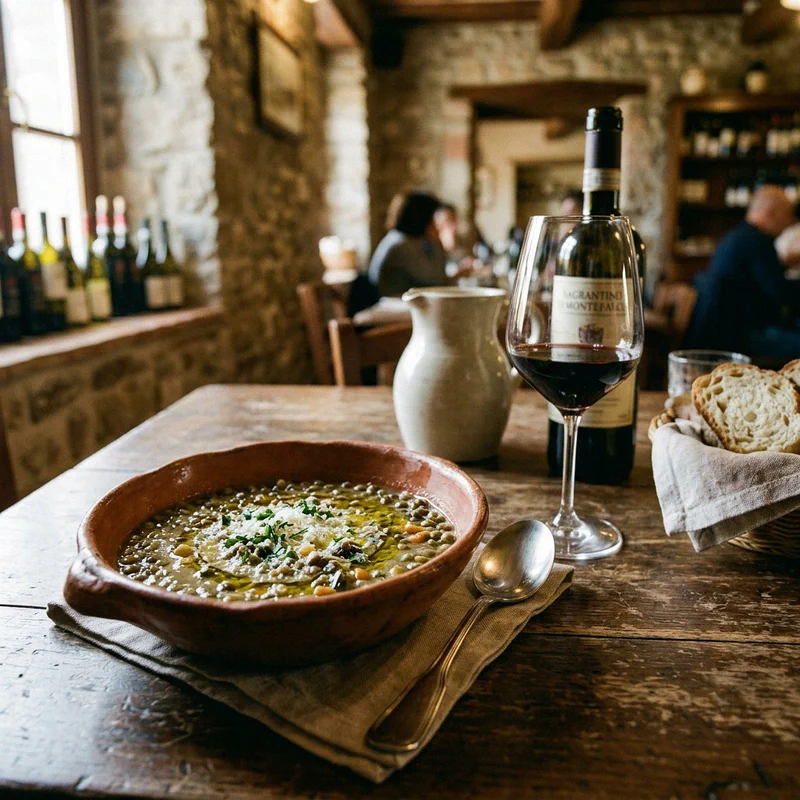
If after all that walking hunger sets in, Rasiglia offers a gastronomic treasure that you won’t find almost anywhere else: the Roveja. It is a small wild pea, similar to a dark peppercorn, that grows only on the high-altitude pastures of the Sibillini Mountains.
It has an earthy, intense flavor, vaguely reminiscent of broad beans and black chickpeas. Look for a small local tavern and ask for Roveja soup or “farecchiata” (a kind of polenta made with the flour of this legume). Accompany it with a glass of Sagrantino di Montefalco and you will understand why Umbria is considered the mystical heart of Italy. If you appreciate these strong flavors and want to delve deeper into the connection between local cuisine and the land, you might also enjoy exploring the tradition of black truffle hunting in the Umbrian woods. For those looking for more physical challenges, like the famous Selvaggio Blu trail in Sardinia, know that Umbria offers equally wild trekking among the Menotre gorges.
Outside it was raining and the October dampness was penetrating my bones. I found refuge in a tiny tavern with only three wooden tables and a fireplace smelling of oak wood. The elderly cook, seeing me cold, brought me a steaming bowl of roveja soup seasoned only with a drizzle of raw extra virgin olive oil. The warmth of the thick broth and the rustic flavor of the wild legume seemed to encapsulate the whole history of these mountains. It was a moment of pure peace.
Practical Tips for the Curious Explorer#
- Smart Arrival: Come early in the morning, around 8:30. The fog rising from the Capovena spring creates an atmosphere like a Tarkovsky film, and you’ll have the village all to yourself.
- Clothing: Shoes with serious rubber soles! The stones near the canals are constantly damp and covered with a thin layer of moss. Slipping is easy.
- Logistics: Parking is limited. If you come on the weekend, you risk spending more time in the car than in the village. Monday or Tuesday are the perfect days to savor the real Rasiglia.
Secret Italy is not found following the masses, but following the sound of water flowing where it shouldn’t. Rasiglia is there waiting for you, with its wild ferns and its mills that have never stopped dreaming.
Stay rebellious and keep searching for the truth beyond the surface.
See you soon, Luca