
Introduction#
Pollino National Park grabs your attention right away and doesn’t let go. It’s the largest mountain range in Italy, a vast, rugged wilderness where nature reigns supreme and challenges you to respect it. The first time I stepped into this park, I was greeted by the intense scent of the ancient Loricate pines and wet earth after a brief but fierce summer storm. I paused at the forest’s edge, simply breathing in the moment. This park rewards you with stunning Dolomite-like views but demands a level of physical and mental preparation worthy of high altitudes.
What captivates me about Pollino is its fierce authenticity. This isn’t a postcard-perfect destination; there are no wooden walkways for social media photos or cable cars whisking you to the summit. It’s a raw, challenging landscape that reminds you of nature’s power. Its unspoken motto rings true: “No matter how many followers you have, the mountain won’t bend.” If you’re ready to sweat, sink your boots into the mud, and embrace this wild philosophy, Pollino will change you.
Getting to the Adventure#
Reaching the heart of Pollino National Park, straddling Calabria and Basilicata, already filters out the casual tourists. On my first trip, I skipped the train (the Castrovillari station has been closed for decades) and opted for a direct bus from Naples. Watching the landscape transform from a busy highway to the serene limestone cliffs was the perfect prelude.
From the bus station, I caught a local bus connection to the main entrances, like those in Morano Calabro and Rotonda. Brace yourself: even the bus ride is an experience. The narrow curves and sudden drops beside the road made it clear that this is no joke. If you decide to rent a car (highly recommended for true freedom), ensure your brakes are in top condition and prepare to navigate mountain roads that often don’t appear on Google Maps.
Trails and Difficulty: The CAI Scale in Pollino#
Pollino is a paradise for pure hiking, but be warned: the high-altitude trails are long, with leg-crushing elevation gains and often poorly marked due to winter snowfalls that obliterate trail signs.
To help you choose the right hike, here are the main routes in the park along with their official classifications:
Sorgente del Mercure
- Trail Marker: Minor trails
- CAI Difficulty: T (Tourist) - a short, flat route suitable for everyone, perfect for stretching your legs.
- Distance/Time: About 1.5 km (round trip) | 45 minutes.
Santuario Madonna del Pollino
- Trail Marker: CAI 920
- CAI Difficulty: E (Hiking - suitable for hikers with some experience) - requires boots and training, mixed forest/rock terrain.
- Distance/Time: About 4 km (round trip) | 2 hours.
Grande Porta del Pollino and Serra Dolcedorme
- Trail Marker: CAI 921 and 923
- CAI Difficulty: EE (Experienced Hikers) - significant elevation gain, unstable rock passages, often difficult to navigate.
- Distance/Time: About 14 km (full loop) | 7-8 hours.
Gole del Raganello
- Trail Marker: River route
- CAI Difficulty: EEA (Experienced Hikers with Equipment) - requires harness, helmet, and a certified mountain guide. Absolutely no DIY.
- Distance/Time: Variable (typically 3-4 km in the canyon) | 3-5 hours (guided tour).
The Struggle of the Ascent: My Experience#
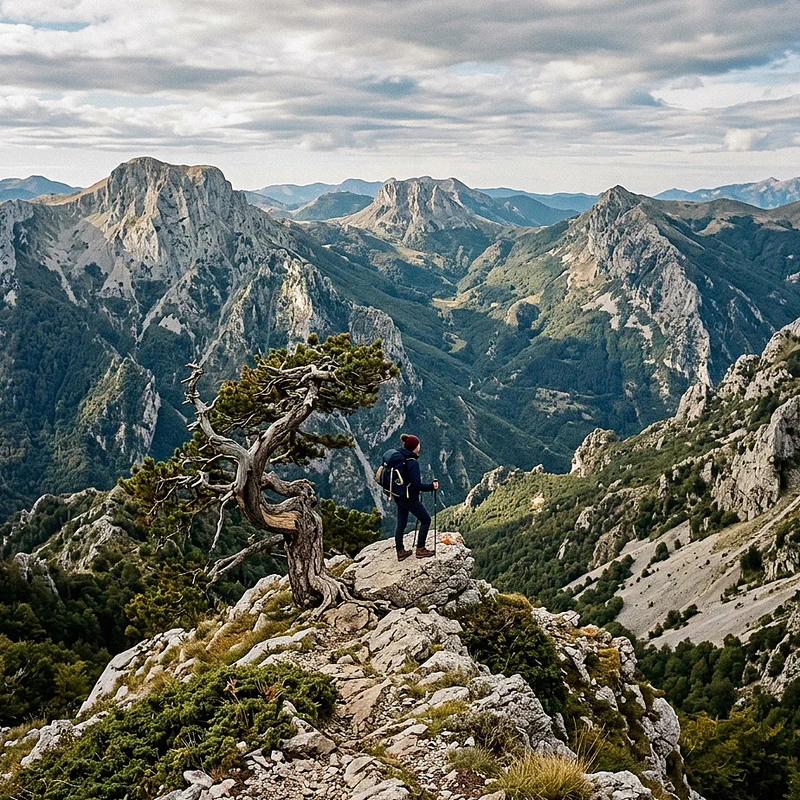
The ascent to Serra Dolcedorme (2,267 meters, the highest peak in Southern Italy) is an epic undertaking. I still remember my last attempt at the end of October. I set off from Colle dell’Impiso at dawn, with the cold biting at my face. After three hours of relentless climbing through the beech forest, the vegetation suddenly thinned, revealing a sea of sharp gray rocks.
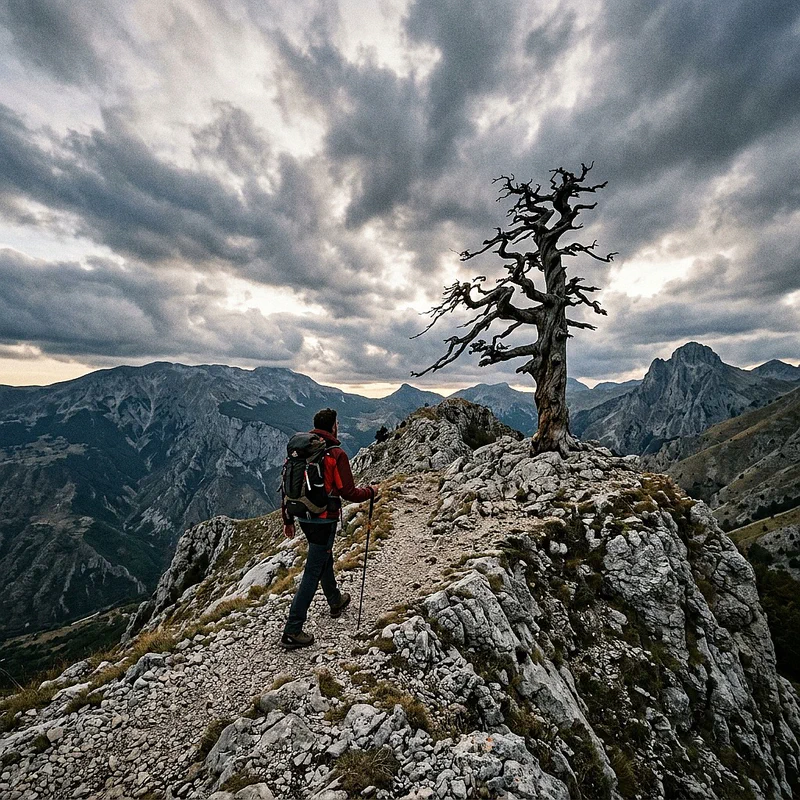
There, clinging to a sheer rock face, stood an ancient Loricate Pine, its scaly bark resembling a dragon’s armor. I paused to admire it, my lungs burning from exertion and my legs heavy as lead. When I finally reached the ridge, doubled over by the icy wind, the view stretched from the Tyrrhenian Sea to the Ionian. In that moment, lost in the void and surrounded only by the deafening silence of the mountain, I felt both tiny and invincible. It’s moments like this that make the struggle worthwhile.
Remember: this is not a park for sneakers. Tackling Pollino’s limestone scree in city shoes is a guaranteed recipe for an ankle sprain (at best).
Recovery Cuisine: Energy and Tradition#
Pollino’s cuisine is pure energy, designed for those burning thousands of calories on the trails. After nine hours of trekking, nothing beats sitting at a rustic wooden table in a local trattoria or pastoral agriturismo and refueling.
My favorite muscle-recovery dish? Hand-rolled fresh pasta served with a hearty meat sauce, followed by a platter of local cheeses and the ever-present peperone crusco fried, adding that irresistible crunchy, sweet-bitter note. Wash it all down with a generous glass of local red wine, and you’ll understand why people walk so well in these lands.
Practical Tips and Serious Warnings#
Pollino does not forgive improvisation. In summer, the sun on the scree is relentless, while in winter and mid-season, snowstorms can arrive in minutes.
- Technical Gear: High hiking boots in Goretex, a windproof shell always in your backpack, and telescopic poles to ease your knees on the descent.
- Navigation: GPS signals on phones constantly drop in the ravines. Bring a paper map of the park (Igm or Edizioni Il Lupo) and a compass, and know how to use them.
- Water: High-altitude springs can run dry in August. Always start with at least 3 liters of water per person.
- Trust the Locals: If the park’s official guides advise against going due to weather, listen to them. Don’t play the hero.
Conclusion#
Pollino National Park is the stone heart of Southern Italy. It’s a place that physically empties you but fills your soul, forcing you to focus on every single step, your breath, and the rock beneath your feet. Remember the first golden rule of a true hiker: take only photographs (and your trash) and leave only the footprints of your boots behind. And if, after all that effort, you’re eager to explore another rugged wonder of Southern Italy by heading down to the sea, I suggest checking out the cliffside trails of the Conero Riviera, another treasure for those who love to walk.