
Anyone used to ordinary yellow or white storage onions (the kind that sting your eyes the moment the knife touches the cutting board) is always caught off guard by a real Cipolla Rossa di Tropea Calabria PGI. Sliced half a centimetre thick and dressed with nothing more than extra-virgin olive oil and a pinch of sea salt, it crunches like an autumn apple and leaves a clean, natural sweetness on the palate without the harsh sulfur burn that usually takes over a dish.
That mildness doesn’t come from a miracle seed you can plant just anywhere, but from a narrow ribbon of sandy, silt-rich coastal soil wedged between the Tyrrhenian Sea and the Calabrian hills. Certified PGI fields run along the shoreline from Campora San Giovanni (a seaside district of Amantea in the province of Cosenza) down through Briatico, Tropea, Ricadi, Capo Vaticano, and Nicotera in the province of Vibo Valentia: here the sea prevents sharp winter temperature drops, allowing the bulb to build up glucose, fructose, and sucrose rather than pungent sulfur compounds.
The Three PGI Harvests and the Craft of Braiding Reste#
When you shop at Calabrian markets or pull over at farm stands along the coast, the first thing to understand is that the Tropea red onion changes character with the calendar. The PGI production rules recognise three distinct seasonal cuts, each meant for a different job in the kitchen.
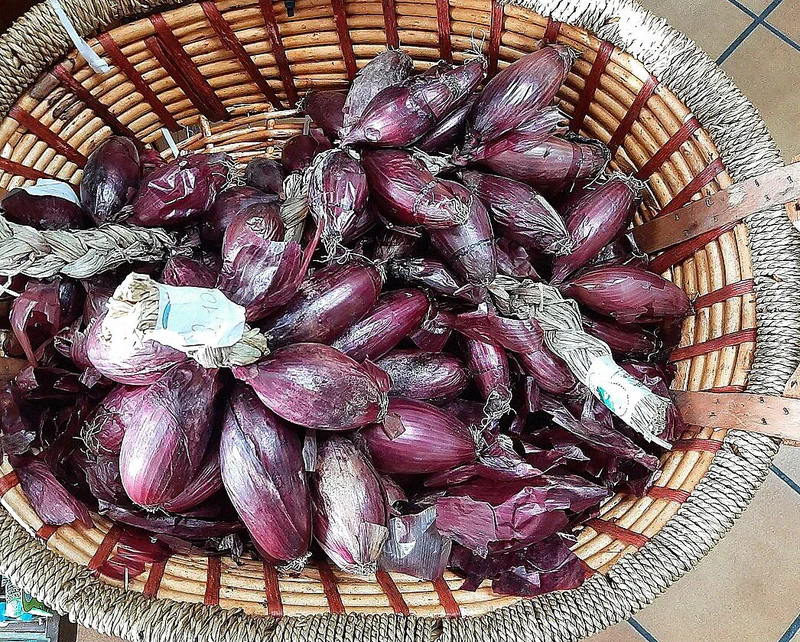
Between October and March you’ll find the cipollotto (spring onion), pale white at the base with a faint rose blush: it is tender, high in water, and meant to be eaten raw in salads within a few days. From mid-April through late May comes the cipolla da consumo fresco (fresh-market bulb onion, locally called primaticcia) with its thick green stems still attached, while June and July bring the harvest of the cipolla da serbo, the deep ruby-skinned keeping onion grown to last through the cooler months.
Pulled by hand from the dry early-summer soil, the keeping onions are laid out in the rows for a few days, shielded under their own tops so the fierce southern sun doesn’t scald the skins. Once the foliage dries to crisp parchment, farm courtyards between Ricadi and Briatico fill with the rustle of dry stems and salty sea air as workers plait the bulbs by hand into traditional reste (hanging braids of twelve or sixteen onions). Once a week I walk down to my neighborhood market in Bologna, and I can tell you that the only sure way to avoid buying generic red onions passed off as Tropea is to check the braid for the numbered seal of the Consorzio di Tutela.
How to inspect a braid at the market: Press your thumb gently against the neck of the onion right where the bulb narrows into the braided stem. It should feel tight, papery, and bone-dry; if the neck feels spongy or damp, the bulb was pulled before it cured properly and will spoil in your pantry within a fortnight.
From Market Stall to Pantry Jar: Agrodolce, Compote, and Slow Soffritto#
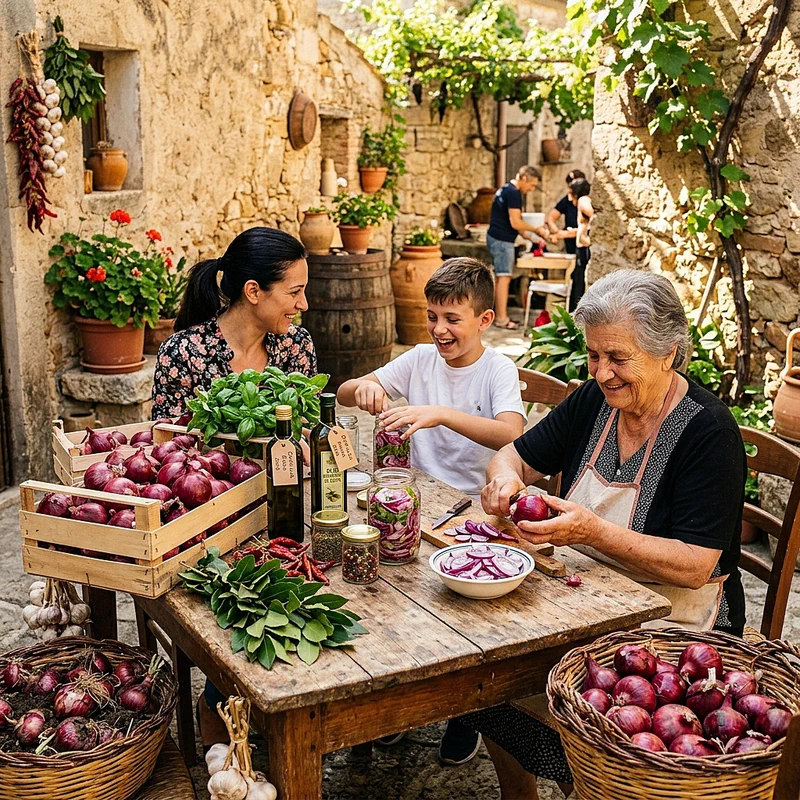
While late summer in Apulia revolves around steaming cauldrons and the communal ritual of bottling tomato passata, June and July along the Calabrian Tyrrhenian coast are all about filling glass preserve jars for winter. Whenever you bring home two full braids from the coast, one hangs in a cool dark hallway and the other goes straight into the pot.
The quickest and most versatile pantry staple is cipolla in agrodolce (sweet-and-sour onions): thick wedges blanched briefly in white wine vinegar, a spoonful of sugar, and coarse salt before being packed into sterilised jars under local extra-virgin olive oil. The sharp cloud of hot vinegar rising from the stove clears your sinuses in seconds, and after a month in the cupboard those crisp ruby fillets cut effortlessly through rich Calabrian cured pork or a wedge of aged Pecorino del Monte Poro PDO.
With an extra hour to spare, home cooks simmer finely sliced bulbs over a gentle flame with brown sugar and a splash of red wine or vinegar until they collapse into a dark garnet onion compote. If you buy a jar already made in one of Tropea’s food shops, flip the jar and check the percentage on the back label: an honest artisan compote lists at least 65–70% Cipolla Rossa di Tropea PGI and doesn’t pad the weight with glucose syrup or industrial pectin.
During a summer evening spent cooking in a country kitchen above Ricadi, I got impatient waiting for dinner and turned the burner too high under a wide pan of onion compote while chatting out in the courtyard. Within minutes the natural sugars at the bottom of the pan began to catch; we saved the batch just in time by deglazing hard with half a glass of white wine vinegar, and that deeper, slightly smoky edge turned out brilliant spread over warm country bread with baked ricotta.
Where to Taste and Buy It Around Tropea, Ricadi, and Campora#
In Tropea, the sweet smell of red onion softening slowly in new olive oil drifts out of ground-floor windows by mid-morning, mingling with the sound of footsteps along the dark volcanic paving stones of Corso Vittorio Emanuele. Before sitting down for lunch, walk to the cliffside railing at the end of the avenue overlooking the rocky islet of the Sanctuary of Santa Maria dell’Isola, and step inside the quiet twelfth-century Norman Cathedral of Maria Santissima di Romania, just past the carved tuff portals of Palazzo Toraldo and Palazzo Mottola. If you visit in spring, my colleague Luca captures the town’s street life in his guide to experiencing Tropea’s I Tri da Cruci festival.
To taste the onion cooked properly without getting stuck at tourist traps displaying laminated photo menus (one of my biggest pet peeves in seaside towns), head for kitchens that treat the bulb with respect:
- Osteria della Cipolla Rossa (Via Lungomare, Tropea): a tiny eight-table osteria run by Michele with no fixed printed menu and no freezers; each evening the kitchen cooks whatever came in from the morning market and the boats, from Calabrian vegetable starters and stroncatura pasta with anchovies and toasted breadcrumbs to sweet-and-sour caponata with Tropea onion.
- Marasusa Bistrot di Mare (Largo Sannio 2, Tropea, open seasonally): tucked into a small square in the historic centre, pairing fresh Tyrrhenian catch, tender octopus, and rich fileja ragù with local red onion.
- Gelati Tonino (Corso Vittorio Emanuele 52, Tropea): a historic artisan gelateria near Piazza Ercole famous across Calabria for its savoury-sweet local flavours, including real Cipolla Rossa di Tropea gelato and ’nduja gelato.
- Farm stalls between Ricadi and Briatico: when buying braids to take home, skip the souvenir shops along the main pedestrian street and pull over at the family farms along the provincial road toward Capo Vaticano or up in Campora San Giovanni, where you pay real farm-gate prices.
Practical Logistics Along the Coast of the Gods#
Reaching the Tropea onion growing strip is straightforward, though getting out to the hillside farms and cheese producers takes a bit of planning:
- By air and regional train: The closest airport is Lamezia Terme (SUF), roughly 55 kilometres north of Tropea. From Lamezia Terme Centrale station, coastal regional trains along the Ferrovia Tirrenica Meridionale (the “Train of the Gods” line) take about an hour to hug the shoreline down to Briatico, Tropea, and Ricadi.
- By car: If you want to drive up onto the Monte Poro plateau to buy pecorino directly from small dairies or stop further north at the medieval cliff town of Fiumefreddo Bruzio and the ruins of Castello della Valle, picking up a rental car at Lamezia airport gives you far more freedom.
- Packing it home: If you’re flying with cabin luggage only, remember that airport security will confiscate glass jars of onion compote or agrodolce over 100 ml under liquid rules; buy a dry braided resta wrapped in brown butcher paper instead, which clears security without fuss and keeps in a cool kitchen for months.