
Introduction#
Are you seeking an authentic and immersive experience in Italy’s ancient history? Allow me to guide you on a journey through a mysterious land often overlooked by travelers: Tuscia. This region, located northwest of Rome in northern Lazio, is a treasure trove of Etruscan culture and natural beauty. Here, the air feels different—a perfect blend of millennia-old history and pastoral tranquility, far removed from the chaos of the capital.
My first visit to Tuscia during my university studies was driven purely by archaeological curiosity. I still recall the scent of wet grass and damp tuff mingling with the gentle breeze from the Tyrrhenian Sea. The profound silence, interrupted only by the song of cicadas, felt like stepping into a suspended time. If you share my passion for history, I assure you that the stones of this land will tell you intimate and dark stories that you won’t find in textbooks.
If this slow and ancient rhythm captivates you, I highly recommend extending your journey just beyond the border to the north, to discover the nearby stone villages of Valnerina in Umbria. It’s a perfect extension of your travels.
Tarquinia: A Dive into the World of the Dead#
If you’ve always wanted to immerse yourself in the visual culture of ancient Etruria, Tarquinia is an absolute must-visit. This charming town in Lazio is renowned worldwide for its frescoed tombs, offering the most thrilling archaeological experience on the peninsula before Pompeii.
Located about an hour and a half by train from Rome, Tarquinia is the beating heart of Etruscan civilization. The first thing you need to understand? The Necropolis of Monterozzi, a UNESCO World Heritage site, is not just an archaeological site; it’s a journey into the afterlife. It houses over 6,000 tombs carved into volcanic rock. The true magic lies in the dozens of burial chambers adorned with incredibly well-preserved frescoes. These paintings do not depict macabre scenes but rather vibrant stories of daily life, banquets, dancers, and musicians, providing a unique glimpse into the joy of living of a mysterious people.
When I first descended the steep steps into the Tomb of the Leopards, I was struck by an overwhelming sense of reverence. Under the dim artificial light, the vivid colors—ochre red, lapis blue—seemed to whisper secrets that are 2,500 years old. A tip from an expert: bring a hefty dose of patience. As an active archaeological site, some vital tombs may be closed without notice for restoration or humidity measurements. It’s the price we pay to preserve the art.
You cannot leave Tarquinia without visiting the National Archaeological Museum, housed in the magnificent Renaissance Palazzo Vitelleschi. This museum is a triumph: it holds invaluable artifacts, such as the famous “Winged Horses” in terracotta. A small warning: ignore outdated audio guides. Let your curiosity lead you; read the panels or, even better, book a local licensed guide.
After such a historical immersion, you deserve a worthy break. I recommend seeking out one of the historic tuff-carved wine cellars in the medieval center, where you can savor hearty, rustic dishes like pappardelle with wild boar ragù. Don’t forget to ask for a glass of local DOC white wine.
Cerveteri: The City of the Living for the Dead#
Just 35 km from Rome, Cerveteri (the ancient Caere) offers a completely different experience. While Tarquinia is famous for its paintings, the Necropolis of Banditaccia (also UNESCO-listed) is renowned for its impressive urban architecture.
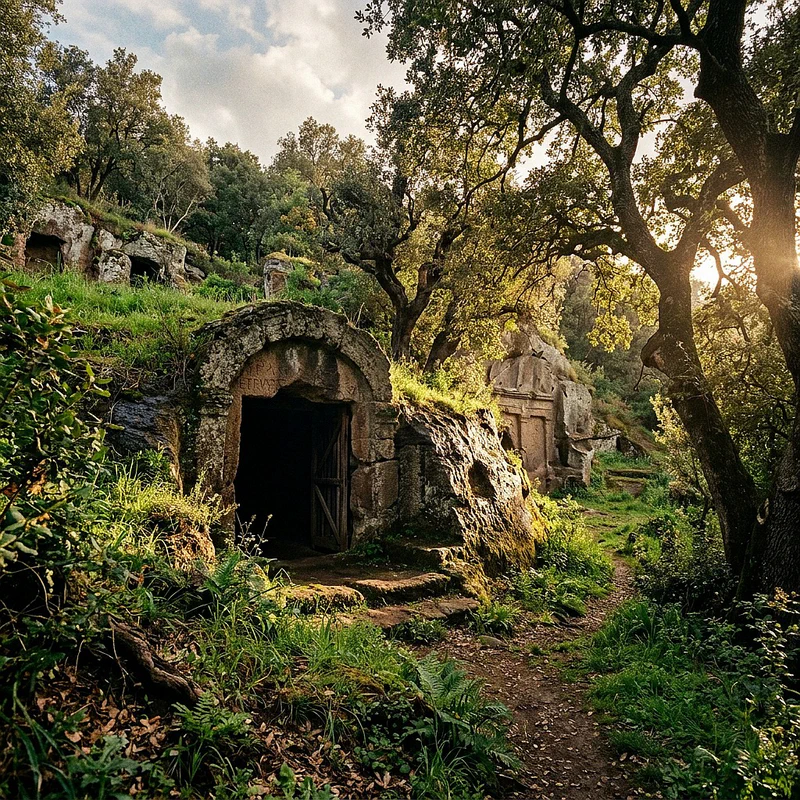
Here, the burial mounds are enormous domes of grass and stone that resemble small houses grouped into actual neighborhoods: there are streets, squares, and sidewalks carved directly into the tuff. Exploring them allows you to imagine how the city of the living was structured. The Etruscans replicated the interiors of their homes for the deceased, carving beds, chairs, shields, and beams into the stone ceilings.
Strolling along the “Via degli Inferi” in Cerveteri during autumn, the rustle of the wind among the towering maritime pines and the earthy scent of damp soil accompany you on a mystical journey. I remember stepping into the Tomb of the Reliefs, an absolute masterpiece. A magical moment, unfortunately marred by the ignorance of some tourists who reached out to touch the ancient stuccos, disregarding the safety ropes. Please, respect these stones. The oils from our fingers destroy what time has preserved for millennia.
Once you finish your outer tour, head down to the current village to visit the small but well-maintained National Museum of Cerite. Here, you can admire the famous bucchero ceramics, black and shiny like metal. However, be mindful of Italian hours: avoid scheduling your museum visit right at lunchtime, or you may find the doors locked.
To refuel, leave the main squares and wander into the side streets to find small family-run taverns where you can order Roman-style artichokes (when in season) and fettuccine with porcini mushrooms from the Tolfa Mountains.
Practical Tips for Tuscia#
If you’ve decided to explore ancient Tuscia, you need to organize yourself with a bit of logistics. Here’s a quick fact-check to ensure you’re well-prepared:
- Combined Tickets (Fact Check): Both Tarquinia and Cerveteri offer combined tickets (Necropolis + Museum). They are very convenient and usually valid for two days, allowing you to break up your visit without stress.
- Free Areas: In Cerveteri, while the main enclosed area of Banditaccia requires a ticket, the vast and wild “Via degli Inferi” surrounding it is freely accessible. Often, it’s the most evocative part!
- Thermal Factor: Arrive at the opening of the gates, especially from May onwards. The necropolises are vast plateaus exposed to the scorching sun, and the interiors of the tombs are humid and lacking air circulation. The fresh morning air is essential.
- Equipment: Wear lightweight hiking shoes or sturdy sneakers. The ancient cobblestones and uneven tuff can be treacherous for ankles and unsuitable footwear.
- Planning: Both necropolises require ample time for thorough exploration (at least 3 hours each). Don’t try to visit both in the same half-day: they are about 45 minutes apart by car along the Aurelia, and you’ll end up suffering from “archaeological fatigue.”
Conclusion#
Tuscia is a dense, rugged, and incredibly fascinating region. Its archaeological sites stand as silent yet powerful witnesses to an advanced civilization, joyful yet tragically vanished. Here, archaeology is not confined to sterile glass cases but is earth, dust, and rock that you can still tread upon. Trust me, if you dedicate the time it deserves, ancient Etruria will seep into your blood and never let go.