
Umbria reveals itself only to those who take the time to drive slowly. With the window down, the earthy scent of freshly plowed fields and wood smoke fills your lungs. Amidst the morning mist, the soft rumble of tires on rough asphalt becomes your only companion. The old provincial roads resist the rush of highways, demanding constant gear shifts and spontaneous stops in deserted squares. Forget about quick maps.
Every curve in this region unveils a new secret. As I traveled these hills, I realized that Umbria is not just a tourist destination to check off a list. It’s an intimate, quiet journey to be taken at a leisurely pace. Medieval villages appear suddenly behind limestone cliffs. The adventure begins now.
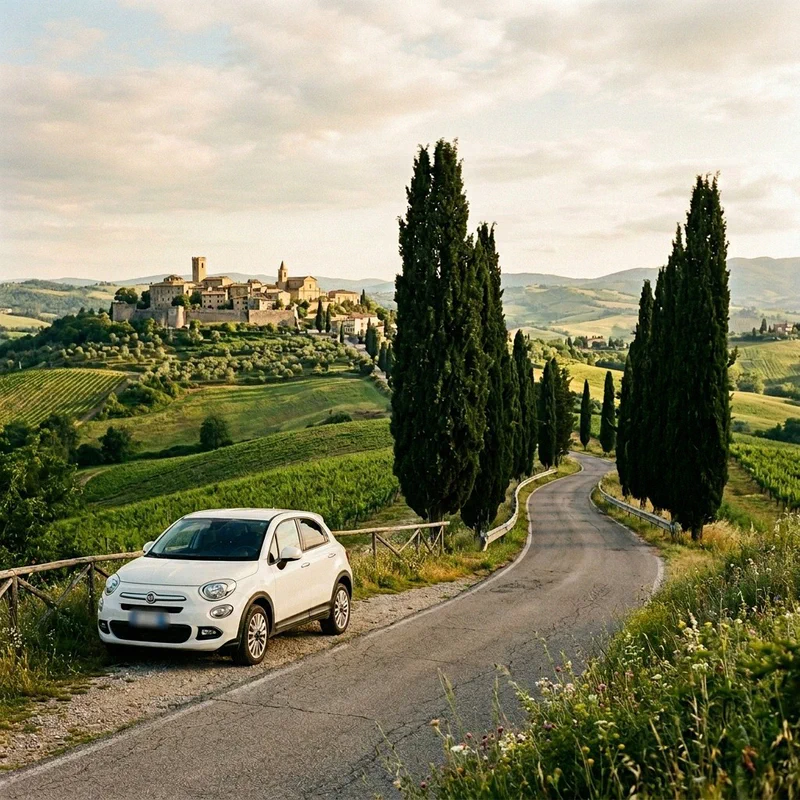
Why a Road Trip in Umbria?#
This land breathes at its own pace. It’s affectionately called the green heart of Italy due to its dense forests and vast valleys. Along the back roads, ancient olive groves and neatly arranged vineyards change colors with the seasons. But the real magic lies in the small stone villages, where the slow rhythm of the day is marked by the sound of noon bells. Here, time stands still.
Here’s why a road trip here is so special:
- Total freedom: You can stop wherever you want, snap photos, have a picnic, or simply enjoy the view.
- Easy access: While some cities have train stations, many of the more remote destinations are only reachable by car.
- The road is part of the adventure: The winding, scenic roads will make you fall in love with every turn.
Recommended Itinerary: From Perugia to Spoleto#
Here’s a route that will take you through some of the best spots in Umbria, perfect for a 3-4 day trip.
1. Starting Point: Perugia#
Perugia welcomes travelers from its hilltop. I recommend leaving your car outside the city center to avoid traffic and high parking fees near the walls. The best way to reach the acropolis is by taking the small automatic train that cuts through the hill. Once at the top, you can wander through medieval alleys and stairs that open up to vast views. Start your journey here.
Don’t miss:
- Piazza IV Novembre with the Fontana Maggiore.
- La Rocca Paolina, a medieval underground city.
- A coffee in one of the historic pastry shops along the main street to try traditional sweets.
Practical tip: Try to leave early in the morning to avoid city traffic and enjoy a stress-free drive.
2. Assisi: The City of St. Francis#
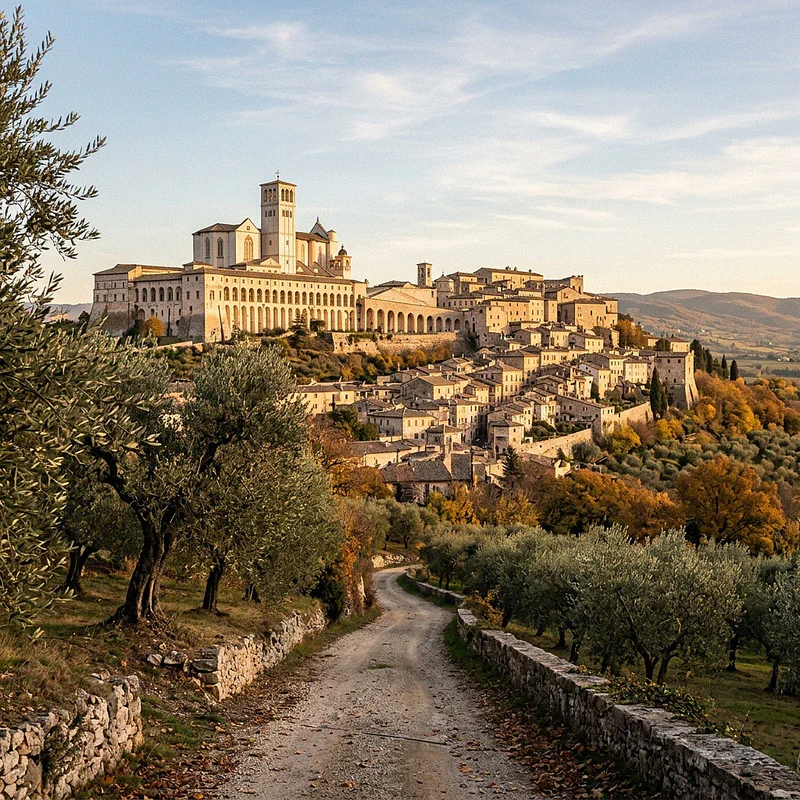
The white stone of Assisi shines from afar. To reach it, I recommend taking the old provincial road that winds through fields and ancient farmhouses. The profile of the monumental basilica looms large against the slopes of Monte Subasio as you approach. Parking near the walls can be pricey, so it’s best to opt for covered parking areas with escalators. The silence here is sacred.
Things to do:
- Visit the Basilica of St. Francis, a UNESCO World Heritage site.
- Stroll through the medieval streets and discover artisan shops.
- Stop for a traditional lunch at a family-run trattoria, where I recommend trying the strangozzi with truffle.
If you’re fascinated by this precious tuber, you can learn more by reading this guide on how to experience an authentic truffle hunt in the woods of Umbria.
Alert: Parking can be expensive near the historic center. I recommend Parcheggio Mojano, which is convenient and well-connected with escalators.
3. Spello: The Flowering Village#
Spello is a maze of stone and petals. Just a few kilometers from Assisi, it’s accessed through ancient Roman gates that are perfectly preserved. Each alley is lovingly tended by locals with floral arrangements that color the pink rock walls. For lunch, look for a typical osteria in the village to enjoy dishes made with wild boar and legumes. Explore it solely on foot.
Don’t miss:
- The Infiorate di Spello (if you visit in June).
- Pinturicchio’s frescoes in the Church of Santa Maria Maggiore.
- Those who love unusual small villages will find a delight by diverting a few kilometers to the charming hamlet of Rasiglia, the village of streams.
Practical tip: Walk around, as the streets are narrow and often pedestrian-only.
4. Montefalco: The Balcony of Umbria#
The road climbs steeply between orderly rows of vines. Montefalco dominates the valley from its hilltop, offering a 360-degree panorama that stretches to Assisi and Spoleto. This is the home of an extraordinarily full-bodied red wine rich in tannins. The best time to head to the terrace in the main square is at sunset when the sun paints the vineyards in gold. Stop for a glass.
Must-do activities:
Taste Sagrantino di Montefalco at one of the many local wineries.
Visit the Museum of San Francesco, featuring frescoes by Benozzo Gozzoli.
Admire the sunset from the panoramic terrace in Piazza del Comune.
My pet peeve: There’s nothing more frustrating than double-parked cars blocking narrow alleys. The town is tiny: use parking outside the walls and respect those who work here.
A Story Along the Way: The Fog and the Stone#
I remember a late October afternoon between Spello and Montefalco. The autumn fog began to rise from the valleys, enveloping the vineyards in an almost surreal silence. I had taken a wrong turn, ending up on a steep dirt road that climbed toward the village. My old car struggled on the damp gravel, while the windshield wipers beat a slow rhythm. I felt completely lost.
Then the road opened up to a grassy clearing. An elderly man in a worn hat leaned against a dry stone wall, watching the fog lift under the last rays of sun. Without saying a word, he pointed to the horizon where the fortress of Montefalco emerged like an island in a sea of golden clouds. It was a sight that no tourist map could ever highlight. That’s the true spirit of travel.
5. Final Destination: Spoleto#
Spoleto concludes the journey with majestic solemnity. The state road leads you to the foot of this fortress dominated by a Roman aqueduct suspended over the void. Among the alleys of the historic center, you can feel the atmosphere of the famous arts festival that attracts visitors from around the world. For dinner, look for a characteristic medieval tavern in the historic center to taste traditional Spoleto dishes. Always book in advance.
What to see:
- The Duomo of Spoleto, with frescoes by Filippo Lippi.
- The Ponte delle Torri, an ancient Roman aqueduct.
- A typical dinner savoring seasonal local products.
Practical tip: If you visit Spoleto during the festival (June-July), book accommodations and parking well in advance.
Practical Tips for Driving in Umbria#
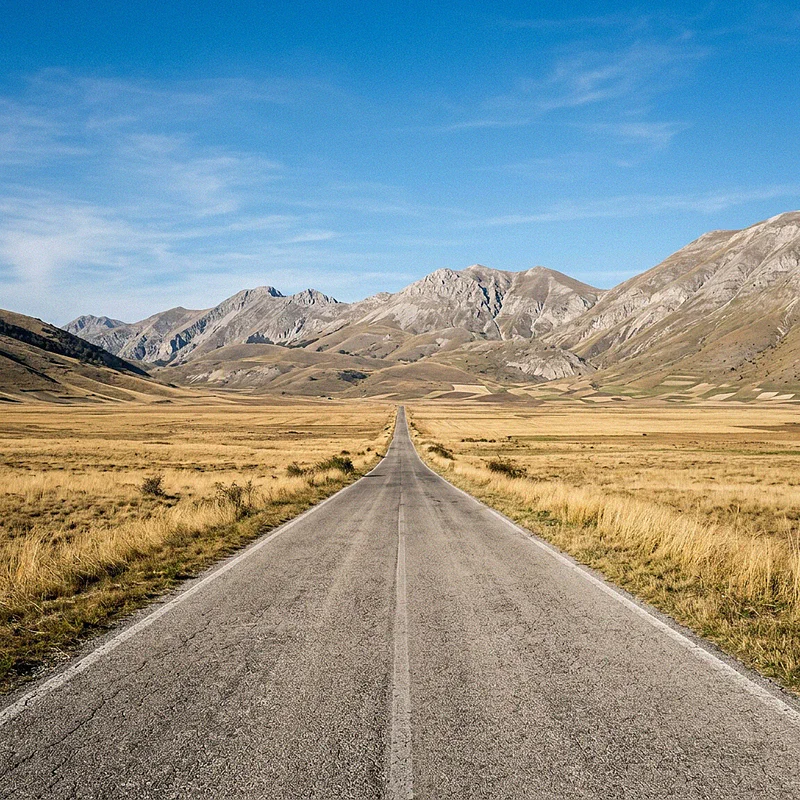
- Scenic roads: The country roads are spectacular but often narrow and full of curves. Drive carefully and honk near blind turns.
- Parking: Look for parking on the outskirts of historic centers. Many villages have ZTL (Limited Traffic Zones), so watch for signs to avoid hefty fines.
- Fuel: Fill up in towns, as gas stations in the countryside can be far apart and may not always accept credit cards.
- Best time to visit: Autumn is the ideal season in Umbria. The colors of the leaves, local festivals, and the grape harvest create a unique atmosphere.
Conclusion#
This land will stay in your heart for a long time. The beauty of driving through these valleys is that there’s no wrong path to follow. Every unexpected detour and every village not marked on the map will reveal precious discoveries. The genuine cuisine of the oil mills and the tranquility of the hilly roads will accompany you with every mile. Turn off the map and drive.
For those looking to extend their itinerary northward, the Sienese hills offer an ideal continuation with a road trip guide to Tuscany.
Engine on, road ahead… let’s go!