
Greetings, fellow travelers! Today, I’m taking you to a place I consider a true treasure, carefully preserved amidst the rolling hills of the Marche region. It’s a stronghold of beauty and knowledge that profoundly shaped European culture: Urbino. This city is far more than just a historic town; it stands as an anthem to the Renaissance itself. It offers a living testament to an era of unparalleled splendor, where art and knowledge blossomed unlike anywhere else.
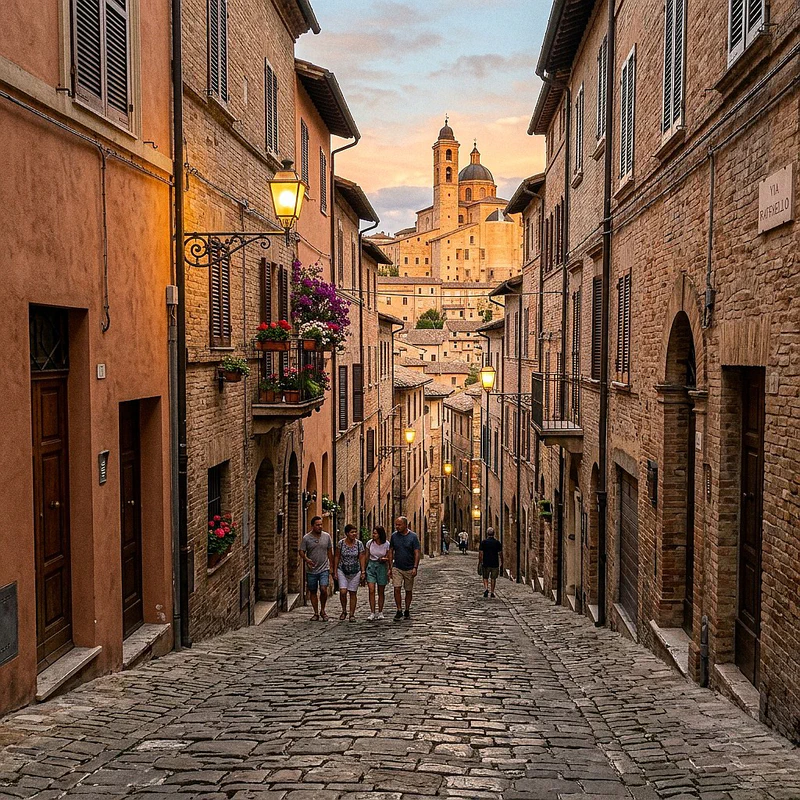
As I stroll through its cobblestone streets, I often feel like Indiana Jones, on the verge of uncovering an invaluable treasure. Every corner, every single brick, seems eager to whisper a story, a secret kept for centuries. This place has borne witness to centuries of innovation and grandeur, and its atmosphere is something every true admirer of Italy should experience. It truly feels like stepping back in time.
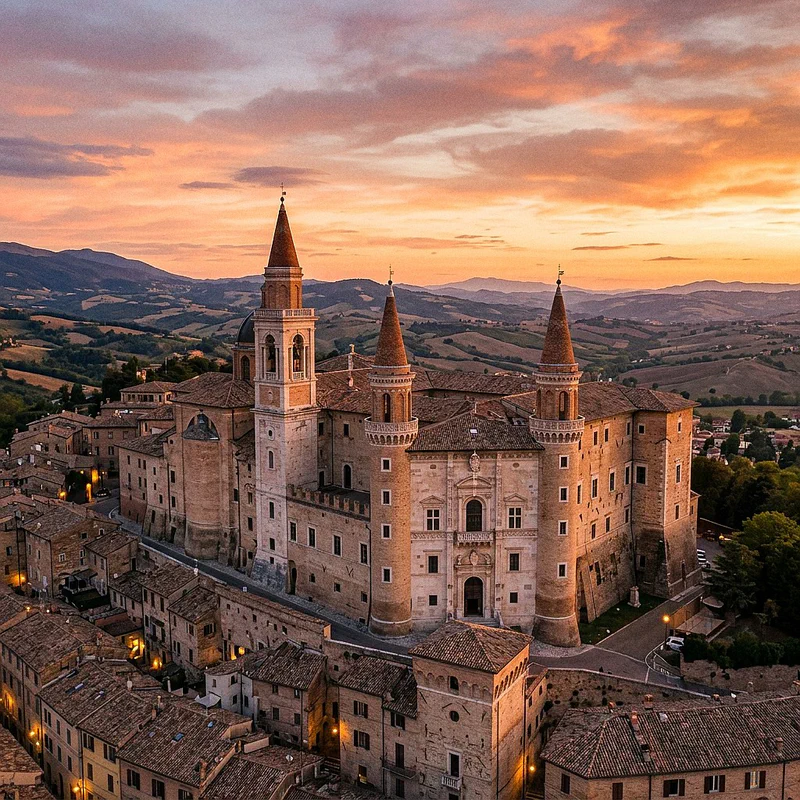
Urbino holds its UNESCO World Heritage status for very good reason. Here, the vision of one man, Federico da Montefeltro, materialized into an ideal city, where the harmony of forms merged seamlessly with profound intellectual thought. Prepare yourself for a journey that will truly captivate you, far from the usual crowds and those poorly made souvenir replicas – one of my minor pet peeves, I must confess! This is authentic Italy at its finest.
The Renaissance Core: The Ducal Palace#
The undisputed focal point of Urbino is the Ducal Palace, prominently situated in Piazza Duca Federico. This is no mere palace; it stands as a true architectural manifesto of the Renaissance itself, a place where human ingenuity and beauty ascended to unimaginable heights. Its grandeur is simply astounding.
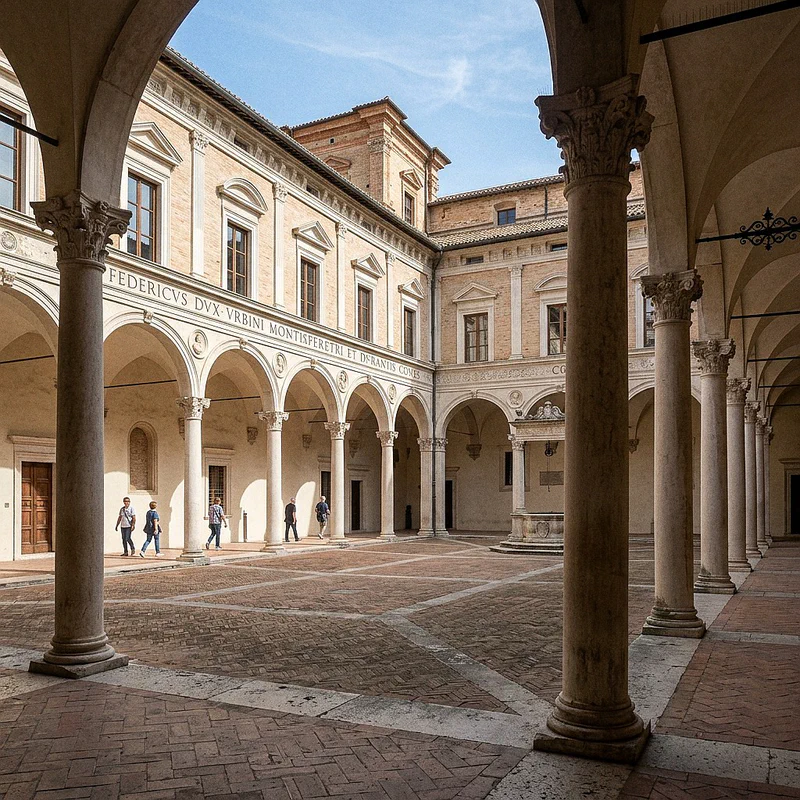
- An Architectural Masterpiece: Observe its iconic ‘Torricini,’ the twin towers that rise elegantly against the city’s skyline, and allow yourself to marvel at the perfection of its internal courtyards. Federico da Montefeltro envisioned his ‘ideal court’ here, and every detail speaks to that ambition. It is a testament to his vision.
- The National Gallery of the Marche: Within the Ducal Palace, you will discover the National Gallery of the Marche, a veritable treasure trove of artworks. This collection includes masterpieces by Piero della Francesca, such as the “Flagellation of Christ” and the “Madonna of Senigallia,” alongside Raphael’s celebrated “Muta.” It is a truly remarkable collection.
- I strongly recommend dedicating at least half a day to this gallery. It is an experience that truly nourishes the soul, but please, if the audio guide sounds like a robot, switch it off and simply lose yourself in the unfiltered beauty! I always prefer my trusty paper guides or, even better, a good book. Immerse yourself fully.
Behind these walls lies a story of patronage, of intellectuals and artists who found the freedom to create here. They left us a legacy that continues to astonish us today. It’s a profound historical narrative.
Strolling Urbino’s Streets: Art and University Life#
Beyond the Ducal Palace, Urbino offers an endless array of corners to explore, a true piece of Italian history brought to life. The city pulses with a dual soul: one ancient, steeped in history, and the other youthful, provided by its prestigious university. This creates a fascinating contrast.
- Raphael’s Birthplace: You simply cannot visit Urbino without seeing the Casa Natale di Raffaello, or Raphael’s Birthplace. It was here that the great Renaissance master took his first steps and learned the initial rudiments of art. It’s a unique emotion to walk through the rooms where such a genius grew up. A truly inspiring visit.
- Urbino Cathedral: Rebuilt in neoclassical style after an earthquake, the Cathedral houses important canvases by Federico Barocci, another great painter from Urbino. It certainly merits a visit to admire its imposing architecture and the artworks it safeguards. A quiet place for reflection.
- The University of Urbino “Carlo Bo”: Founded in 1506, the university plays a vital role in keeping the city’s atmosphere lively and dynamic. You’ll see students animating the squares and cafes, creating a wonderful contrast with the solemnity of the historical monuments. It adds a youthful energy.
If you are fortunate enough to visit Urbino in early September, you will witness a magical event. On the first Sunday of the month, the historic Festa dell’Aquilone (Kite Festival) brings the sky above the city to life. I still remember my first time watching the colorful handmade paper and reed kites dance in the wind from the Cesane hills. This tradition is deeply connected to the famous poem L’Aquilone by Giovanni Pascoli, who studied at the local Raffaello college. It is a genuine local celebration that unites the entire community.
A brotherly warning: prepare yourself for steep slopes. Climbing on foot toward the Albornoz Fortress or simply reaching Raphael’s birthplace will put your calves to the test. Urbino’s steep brick-paved streets are beautiful, but with a stroller or heavy luggage, they can become exhausting. Furthermore, on rainy days, the wet terracotta pavement becomes as slippery as an ice rink. Be sure to wear shoes with excellent grip.
Getting to Urbino: Expert Advice (and a Warning!)#
Now, let’s discuss logistics, because reaching Urbino certainly requires a bit of planning. And here, I must make a crucial clarification to help you avoid any unpleasant surprises. This is a common point of confusion.
ATTENTION: Urbino no longer has an active train station! The historic Urbino-Fabriano railway, conceived in the late 19th century as a strategic section of the “Subappennina” line, was heavily damaged by retreating German troops in 1944. Unlike other sections recently revived as tourist lines, the final track to the ducal city was decommissioned in 1987. Today, the passenger building houses a local pizzeria (Locanda della Stazione), but to reach the city you must combine train and bus.
Here are the best options for reaching this Marche pearl:
- By Bus: This is the most common and practical solution.
- From Pesaro: The nearest train station is Pesaro, located on the Adriatic coast, approximately 35-37 km away. From there, you can catch a regular bus service, such as Adriabus, which will transport you to Urbino in about 45-75 minutes, depending on traffic and stops. It’s a straightforward connection.
- From Fano: From Fano, another coastal city, bus connections are also available. These routes offer convenient alternatives for travelers. Check schedules in advance.
- From Rome: Direct bus services, such as FlixBus or Adriabus, also connect Urbino with Rome’s Tiburtina Bus Station. This can be a convenient option for those traveling from the capital. Always verify schedules and book tickets ahead of time.
- Urbino’s Bus Station is located in Borgo Mercatale, right at the edge of the historic center. Do not fear the ascent: a very convenient elevator will whisk you directly to the upper part of the city, just a short walk from the Ducal Palace. It makes arrival surprisingly easy.
- By Car: Urbino is accessible by car, but do keep the restrictions in mind. The historic center is a Limited Traffic Zone (ZTL), meaning you cannot enter freely. There are parking facilities available just outside the center, such as in Piazza Mercatale, directly beneath the bus station. The roads leading to Urbino are often winding and steep, so prepare for attentive driving. A scenic, but careful, journey awaits.
- By Plane: The nearest airports include:
- Ancona (Marche Airport, AOI)
- Rimini (RMI)
- Bologna (G. Marconi) is an excellent option for international flights. From these airports, you will need to reach Pesaro or Fano by bus or train, and then take a bus to Urbino. Plan your connections carefully.
Where to Eat in Urbino: Authentic Marche Flavors#
After all that walking and admiring, hunger will surely set in! Urbino offers several excellent options for savoring typical Marche cuisine, characterized by robust flavors and genuine ingredients. Here are some of my personal favorites, where you’ll rarely find a soulless ’tourist menu.’ These are places with true character.
- Antica Osteria da la Stella: An enduring classic located just steps from Raphael’s birthplace, where tradition meets top-quality ingredients.
- Posta Vecchia: Cozy and informal, this is the ideal spot for a glass of Marche wine paired with simple dishes and local cold cuts.
- Locanda della Stazione: Set inside the historic rooms of the old disused railway station, it offers traditional dishes and excellent wood-fired pizzas.
- La Fornarina: The perfect tavern to rediscover traditional peasant cuisine in a warm and welcoming atmosphere.
Remember that many of these establishments are family-run and may have particular opening hours, especially for their afternoon ‘riposo’ or rest. One of my minor complaints is when museums or restaurants close for a break precisely during peak hours, but that’s part of Italy’s charm, isn’t it? Embrace the local rhythm.
Practical Tips for Your Urbino Visit#
To fully appreciate Urbino, here are a few suggestions from someone who knows these streets intimately.
- When to Visit: Spring (April-May) and autumn (September-October) are the ideal times to visit. The weather is mild, and the crowds are significantly smaller compared to summer. In summer, it can get very hot, and the uphill walks through the center truly make themselves felt. Choose wisely for comfort.
- Comfortable Shoes: Urbino is a hilly city with numerous ascents and descents. Wear comfortable, sturdy shoes; your feet will undoubtedly thank you. Prioritize comfort for exploration.
- Book in Advance: For the Ducal Palace, especially if you are visiting during high season, it is always a good idea to book your tickets online in advance. This helps you avoid potentially long queues and ensures a smoother entry. Planning ahead saves time.
- Explore the Surroundings: If you have time, the Marche hills surrounding Urbino are dotted with small towns and unforgettable vistas. Renting a car for a day will allow you to discover lesser-known corners. It’s a rewarding excursion.
- Be Patient: Italy is an experience, not a race. Enjoy the slower pace, the coffee breaks, and the conversations with locals. This is truly how you discover the country’s authentic soul. Savor every moment.
Urbino is not merely an open-air museum; it is an experience that connects you deeply with the history and soul of Italy. Allow yourself to be enveloped by its magic, its silences, and its stories. You certainly won’t regret it.
I hope this guide proves useful for your next journey. As always, Italy has so much to offer, and Urbino stands as one of its most luminous pearls. It is a true piece of living history, just waiting to be discovered by you. Happy travels!