
Hey there, fellow road warriors and curve enthusiasts! If any region in Italy makes you feel like an ancient explorer, it’s definitely the Aosta Valley. Picture alpine valleys, majestic peaks, and fortresses and castles scattered everywhere, each telling centuries of stories. It’s a place where history truly comes alive. This region is a time capsule on wheels.
For me, there’s no better way to discover this alpine jewel than getting behind the wheel. The freedom to stop anywhere, to detour onto a scenic route, or to find that small village not listed in any guide is truly priceless. That’s exactly the kind of adventure waiting for you on a road trip through the castles of Fénis, Verrès, and Bard. Pure driving freedom awaits.
Get ready, because today I’m taking you along on an adventure. This trip combines history, incredible views, and, of course, plenty of practical tips to make your journey absolutely perfect. I’ll share all my insider knowledge for navigating these historic roads. Buckle up, let’s hit the road!
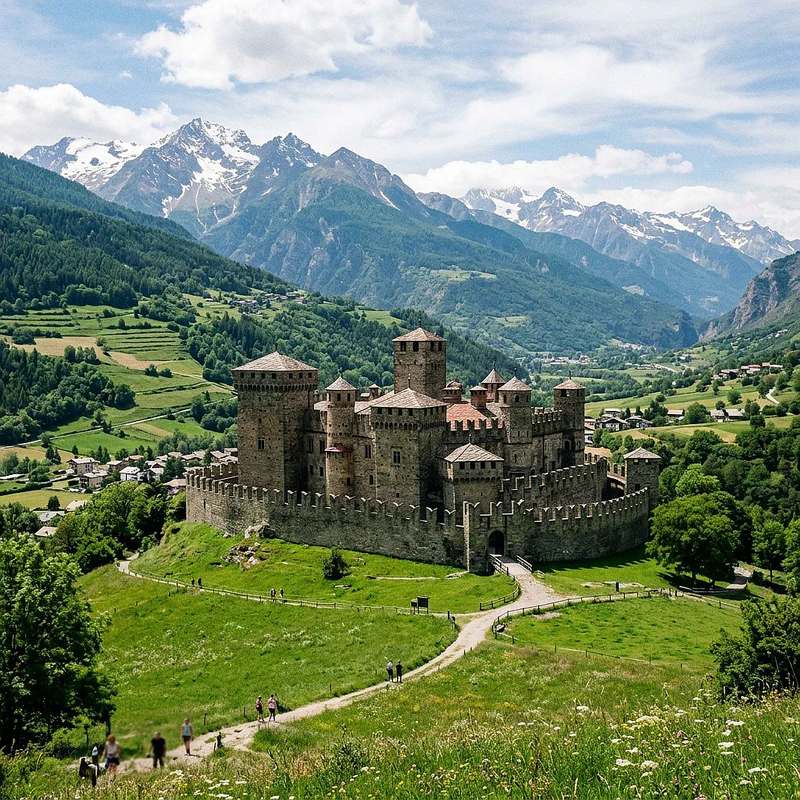
Fénis Castle: A Medieval Dream Just Outside Aosta#
We’re kicking off our journey with one of the Aosta Valley’s most iconic strongholds: Fénis Castle. This place is a real marvel, with its crenellated towers and frescoed walls, instantly transporting you back to the Middle Ages. You can almost hear the knights clanking around the courtyards. Pure medieval magic.
Getting There by Car:
- Route: Driving to Fénis Castle is straightforward. Just hop on the A5 motorway (Torino-Aosta) and take the Nus exit. From there, the signs for Fénis are crystal clear, guiding you straight to the castle in just a few minutes. Easy access, no fuss.
- Parking: You’ll find plenty of parking close to the castle. Here’s a pro tip from Marco: arrive early to snag the best spots, especially on high-season weekends. There’s nothing worse than wasting precious exploration time hunting for parking, right? Park smart, explore more.
Alternatives: Train and Bus (with a Small “But”):
- Train: Fénis doesn’t have its own train station. The closest one is Nus, about 5 km away, from where you can catch a local bus (line 464 or 110) or a taxi. Personally, I stick to the car because the bus drops you at Fénis Municipio or La Châtelaine, leaving you with a 25-30 minute walk to the castle. Driving wins for convenience.
- Bus: Bus lines 464 and 110 are indeed an option. Line 464 runs from Aosta Bus Station to Fénis Municipio, while line 110 goes from Aosta to Fénis – La Châtelaine. However, as I mentioned, be ready for a decent walk from the drop-off point. Buses mean more steps.
What to Do and Where to Eat in Fénis: After exploring the castle’s frescoed halls and inner courtyard, don’t forget to check out the surroundings. There’s more to Fénis than just the fortress itself, so take some time to wander. You’ll find charming spots and local flavor just a stone’s throw away. Beyond the castle walls.
- Recommended Restaurants:
- Café du Château: For refueling, Fénis has some great spots. The Café du Château is perfect for a quick coffee break or a light lunch right by the castle.
- La Tavola di Fénis: If you’re after authentic regional cuisine made with local products, La Tavola di Fénis is an absolute must-try. This place is truly unmissable for a taste of the region.
- Osteria Le Chèvre: For a tasty pizza or a satisfying sandwich after your visit, Osteria Le Chèvre is a solid choice. Good food, great options.
- Other Points of Interest:
- Beyond the main attractions, there are other points of interest. The Church of San Lorenzo is just a short distance away and worth a quick look.
- You can also visit the MAV - Museum of Aosta Valley Handicrafts to learn about local traditions. It’s a great way to round out your visit and understand the region’s culture. More to see nearby.
Verrès Castle: The Impregnable Fortress#
Our journey continues east to the imposing Verrès Castle. This fortress, built as a cubic dwelling-fortress, dominates the valley from a rocky promontory. It’s a true marvel of medieval engineering, showcasing incredible defensive design. A powerful, historic stronghold.
Getting There by Car:
- Route: From Fénis, getting to Verrès is a pleasant drive. You can either jump back on the A5 or take the more scenic SS26. The journey takes about 35 minutes from Aosta or roughly an hour and 15 minutes from Torino. Enjoy the drive.
- Parking: Parking is available in Verrès town center. From there, you’ll make your way up to the castle on foot. Just a heads-up: watch out for paid parking, as some spots can feel like tourist traps with inflated prices. Park smart, avoid rip-offs.
Train and Bus: Verrès’s Convenience:
- Train: Unlike Fénis, Verrès has its own train station. It’s conveniently located on the Aosta–Ivrea (Trenitalia) line, just a short walk from the historic center. From the station, the path up to the castle is clearly marked, making it quite accessible. Train travel is easy here.
- Bus: Bus line 110 is another option for Verrès. This route, running from Aosta to Pont-Saint-Martin, stops at “Verrès – Brambilla.” From that stop, you should factor in about a 25-minute walk to reach the fortress. Bus means a good walk.
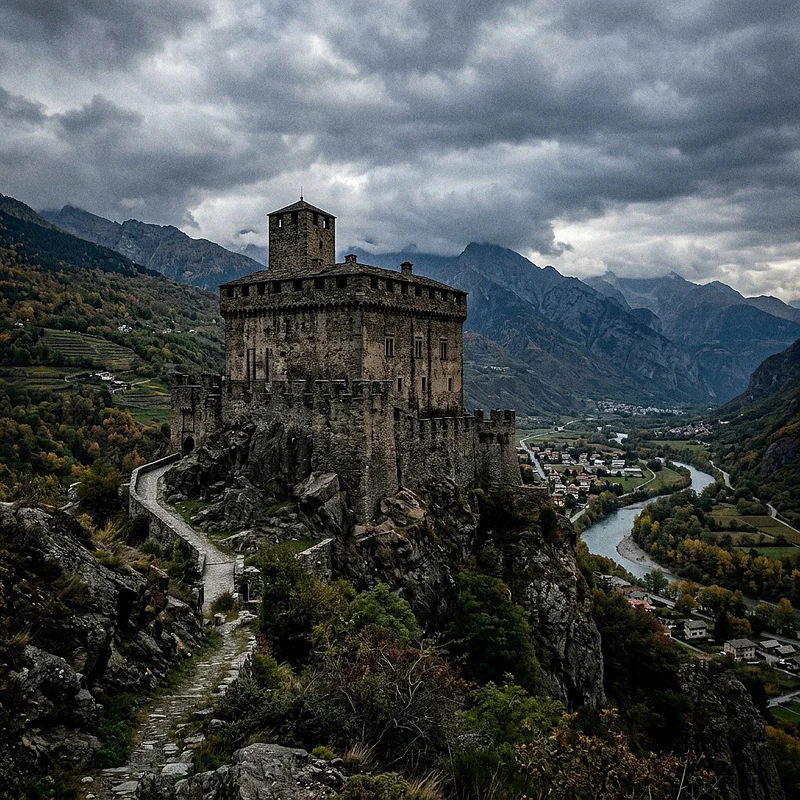
What to Do and Where to Eat in Verrès: After marveling at the castle’s grandeur, with its imposing halls and atmospheric inner courtyard, take time to explore the village. The castle itself is a powerful statement of medieval architecture and history. But the surrounding borgo offers its own charm and stories. Castle and village await.
- Recommended Restaurants:
- Ristorante La Tour: When hunger strikes, Verrès has some solid dining options. Ristorante La Tour, close to the castle, serves traditional Aosta Valley dishes and is a classic you shouldn’t miss.
- Trattoria Omens: Trattoria Omens is another excellent choice for local cuisine, offering authentic flavors. You’ll find delicious, hearty meals here.
- Taverne du Caférin: For a casual drink or a quick snack, Taverne du Caférin is a good spot to relax. Plenty of local flavor.
- Other Points of Interest:
- Don’t miss the other points of interest in Verrès. The Church of San Nicola and the medieval historic center are perfect for a relaxing stroll. You can soak in the atmosphere and imagine life centuries ago. Walk through history.
Bard Fortress: A Millennial Guardian#
Our final, but equally spectacular, stop is Bard Fortress. This imposing structure stands on a rocky spur at the entrance to the Aosta Valley, acting as a true bastion that has shaped the region’s history. The best part of this route is the sheer sense of adventure you get arriving at Bard, with the fortress majestically greeting you. A powerful, historic welcome.
Getting There by Car:
- Route: Reaching Bard Fortress by car is straightforward. It’s easily accessible from the A5 motorway, which runs between Torino and Aosta. The road signs are clear and will guide you without any trouble. Direct and simple.
- Parking: You’ll park in the village of Bard, right at the foot of the fortress. From this point, you have a couple of options for making your way up to the top. It’s a convenient setup, allowing you to decide your ascent style. Parking at the base.
Train and Bus: Hône-Bard Within Reach:
- Train: The closest train station for Bard is Hône-Bard. From there, you just need to cross the picturesque stone bridge over the Dora Baltea river to reach the village. After a short walk through the village, you’ll be at the fortress entrance. Easy train access.
- Bus: Local bus services also connect to Bard. You can catch buses from Aosta, or use lines like Pont-Saint-Martin/Aosta or Carema/Montjovet. These routes have stops conveniently located along State Road 26. Bus stops are convenient.
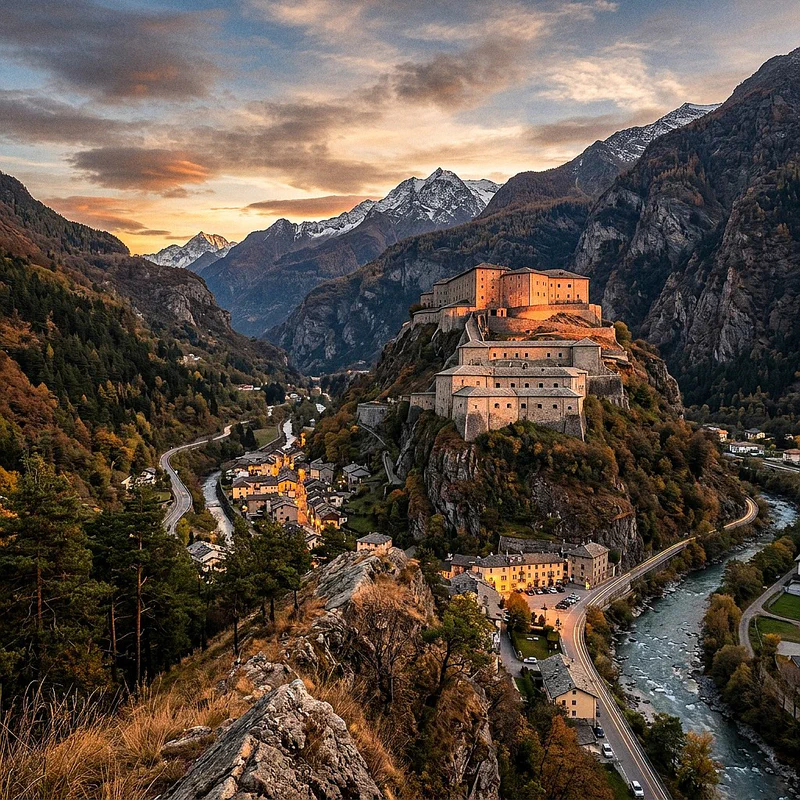
Ascending the Fortress: On Foot or by Panoramic Lift:
- On Foot: You can ascend to the fortress on foot. There’s a pedestrian path, roughly 1 km long, that winds through the picturesque village up to the summit. It’s a lovely walk, offering great views as you climb. A scenic walk awaits.
- Panoramic Lifts: For a more comfortable option, panoramic lifts are available. These lifts will whisk you directly to the top of the fortress, offering fantastic views on the way up. The best part is that the ticket for the lifts is included in your fortress admission fee. Lifts make it easy.
What to Do and Where to Eat in Bard: Bard Fortress is more than just a historical monument. It’s a true cultural center, offering a diverse range of experiences for visitors. You’ll find plenty to explore within its ancient walls. History meets culture here.
- Inside the Fortress:
- Museum of the Alps: Inside the fortress, there’s a lot to discover. The Museum of the Alps offers a multimedia experience, diving deep into Alpine history and culture.
- Art Exhibitions: The fortress also frequently hosts temporary art exhibitions and various shows, so check their schedule. You might catch something truly special.
- Hotel Cavour Et Des Officiers: For a truly unique experience, you can even dine or stay overnight at the Hotel Cavour Et Des Officiers within the walls. Culture and comfort combined.
- In Bard Village:
- Down in the village of Bard, there’s more to see. Take a stroll among the 16th-century buildings, such as the Bishop’s House and the Sundial House.
- Don’t miss the geological archaeological site nearby, featuring the fascinating “marmitte dei giganti” (giant’s kettles). It’s a great way to experience the local history and natural wonders. Village charm and geology.
Marco’s Driving Tips for the Aosta Valley#
Driving in the Aosta Valley is generally a fantastic experience. Road conditions are usually excellent, but remember, you’re in the mountains, so expect plenty of curves and switchbacks. Drive cautiously, especially if you’re not used to winding mountain roads. Good roads, careful driving.
- Best Time to Visit: My favorite times to visit are spring and autumn. The natural colors during these seasons are absolutely spectacular, painting the landscape in incredible hues. Plus, the crowds are significantly smaller compared to the peak summer months, making for a more relaxed trip. Spring and fall are prime.
- Car Rental: If you’re renting a car, always double-check the vehicle’s condition before you hit the road. I once got a car with almost bald tires, and let me tell you, that’s not exactly reassuring on mountain roads. A quick inspection can save you a lot of stress and potential trouble. Inspect your rental.
- Motorway Tolls: A heads-up about motorway tolls on the A5. The tolls for the Aosta Valley section are notoriously expensive, so be prepared for that. Many toll booths are fully automated, so I highly recommend having a credit card or a Telepass ready. Tolls are pricey, pay smart.
- Driving in Villages: When driving through small towns and villages, be aware that roads can be quite narrow. Always pay close attention to ZTL (Limited Traffic Zone) signs to avoid unwanted fines. These zones are common in historic centers and often restrict access to non-residents. Watch for ZTLs.
- Roundabouts and Turn Signals: Regarding roundabouts and turn signals, here’s a tip. A good friend once told me that using your turn signals in a roundabout is a sign of civilization – and he’s not wrong! Joking aside, always use them to indicate your exit; it makes traffic flow smoother and safer for everyone. Signal your exits.
On the Road, I Discovered…#
I discovered that the Aosta Valley is so much more than just mountains and castles. It’s an immersive experience into history, nature, and a truly unique culture. Every curve in the road reveals a new panorama, and every village whispers a new story waiting to be heard. A region full of surprises.
This road trip through Fénis, Verrès, and Bard offers an authentic taste of this wonderful region. Get your favorite playlist ready, make sure your tank is full, and bring your eagerness to explore. The open road is calling, promising adventure around every corner. Your adventure starts now!