
Venezia, suspended between water and sky, transforms in spring into the world stage for avant-garde design. The Venice Biennale 2025 opens its doors in May, bringing to the lagoon the theme Intelligens curated by architect Carlo Ratti. This place has seen centuries of history unfold and today questions the future of coexistence between humans, nature, and technology. Strolling through the historic pavilions is an intellectual and aesthetic experience that requires time and comfortable shoes. Behind these walls lies an open-air laboratory on the destiny of our cities. It’s a journey that will leave you pondering the future.
I recall a May morning a few years ago, when the morning fog slowly rose from the Arsenale canal. I walked along the ancient sixteenth-century cordage, surrounded by the scent of old wood and damp rope. The silence was broken only by the lapping of waves against the wooden pontoons. In that moment, I understood how the Biennale manages to bring together the memory of Venetian master shipbuilders with contemporary eco-sustainable visions. The city’s unique blend of history and innovation is a true marvel.
The Biennale’s history dates back to the late nineteenth century. In 1895, to celebrate the silver wedding anniversary of King Umberto I and Margherita of Savoy, Mayor Riccardo Selvatico proposed a national art exhibition. The initiative was a huge success and quickly became an international event. Over the decades, the exhibition has been enriched with new sections dedicated to music, cinema, theater, and, since 1980, architecture. During the twentieth century, this place has hosted the works of the greatest masters, becoming a barometer of cultural and political changes in Europe. A living piece of Italian history unfolds within the walls of the exhibition buildings, reflecting the tensions and hopes of the last century in their architectural styles. From historical avant-garde to conceptual art, the Biennale has remained the place where art and design question reality. It’s a place where the past meets the present.
Many first-time travelers confuse the different events hosted under the Biennale brand. It is actually a unique cultural foundation that organizes distinct events based on the year and season. The famous International Film Festival takes place every year in late August and early September. In contrast, the two large multidisciplinary exhibitions in the Giardini and Arsenale alternate every two years: in odd years, the Architecture Biennale is held, while in even years, it’s the turn of the Art Biennale. This means that if you visit the city in spring or autumn, you’ll find the national pavilions’ exhibitions waiting for you, while in late summer, the social life and screenings move entirely to the Lido coastline. Those who want to delve into the origins and retro charm of that island can read my guide on the history and symbolic places of the Lido di Venezia, a witness to the golden years of international cinema. The Biennale is a unique experience that showcases the best of art, architecture, and culture.
The Exhibition Map: The Giardini of Castello#
The Giardini publici, created by Napoleon at the beginning of the nineteenth century by demolishing ancient churches and convents, constitute the original nucleus of the exhibition. This vast green area hosts the Central Pavilion and twenty-nine national pavilions built over time by individual nations. The Giardini is a must-visit destination for anyone interested in art, architecture, and culture. It’s a place where you can discover new artists, architects, and designers from around the world.
The National Pavilions Not to Be Missed#
- Venezuela Pavilion (Carlo Scarpa, 1956): An absolute masterpiece of modern architecture. Scarpa plays with exposed reinforced concrete, zenithal light, and rigorous geometries to create an exhibition space in perfect dialogue with the surrounding nature. The pavilion’s design is a testament to Scarpa’s innovative approach to architecture.
- Nordic Countries Pavilion (Sverre Fehn, 1962): A structure famous for its visual lightness. Fehn designed a thin concrete roof that integrates the large pre-existing plane trees, making them grow directly inside the exhibition space. The pavilion’s unique design makes it a standout among the other national pavilions.
- Germany Pavilion: Rebuilt in 1938 based on a design by Ernst Haiger, this building embodies the monumental architecture of the time. Its severe proportions and squared columns offer artists a challenging but fascinating confrontation with historical memory every year. The pavilion’s design reflects the country’s rich history and cultural heritage.
- Austria Pavilion (Josef Hoffmann, 1934): A sublime example of geometric rationalism. Hoffmann defines a symmetrical space characterized by white walls and linear finishes, perfect for hosting contemporary installations. The pavilion’s elegant design makes it a popular destination for art lovers.
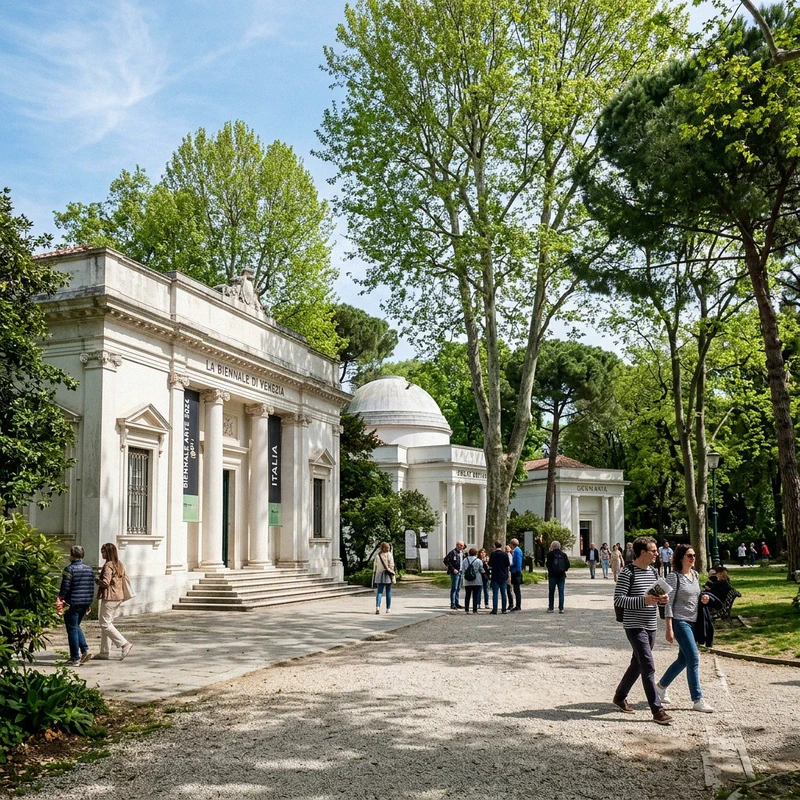
On days of high attendance, noisy tourist groups with megaphones can compromise the contemplation of the artworks. My advice is to visit the Giardini early in the morning and the Arsenale in the early afternoon, avoiding weekends to savor the original silence of these monuments. It’s essential to plan your visit carefully to make the most of your time at the Biennale.
The Arsenale: Industrial Archeology and Innovation#
The Arsenale di Venezia represents one of the largest complexes of industrial archeology in Europe. Founded in the twelfth century, it was for centuries the shipyard of the Venetian Republic, capable of producing a fully armed galley per day. The Arsenale is a testament to Venice’s rich maritime history and its significance in the development of the city. Today, it’s a hub for innovation and creativity, hosting various events and exhibitions throughout the year.
The monumental Corderie, over three hundred meters long, are striking due to the imposing stone columns that support the wooden roof. In this fascinating space, once dedicated to the spinning of ropes for the Venetian fleet, the main exhibition curated by Carlo Ratti unfolds. The Corderie’s unique architecture and history make it an ideal location for the Biennale’s exhibitions.
Do not miss a visit to the Gaggiandre, two extraordinary aquatic sheds for the shelter of ships built in the sixteenth century and attributed to Jacopo Sansovino. Here, the water of the lagoon enters directly into the monumental structures, creating suggestive reflections on the red brick walls eroded by salt. If the indissoluble bond between Venice and the lagoon fascinates you, the historic ceremony of the Marriage to the Sea during the Festa della Sensa represents the ultimate expression of this millenary maritime devotion. The ceremony is a unique experience that showcases the city’s rich history and cultural heritage.
Collateral Events: Art Diffused in Historic Palaces#
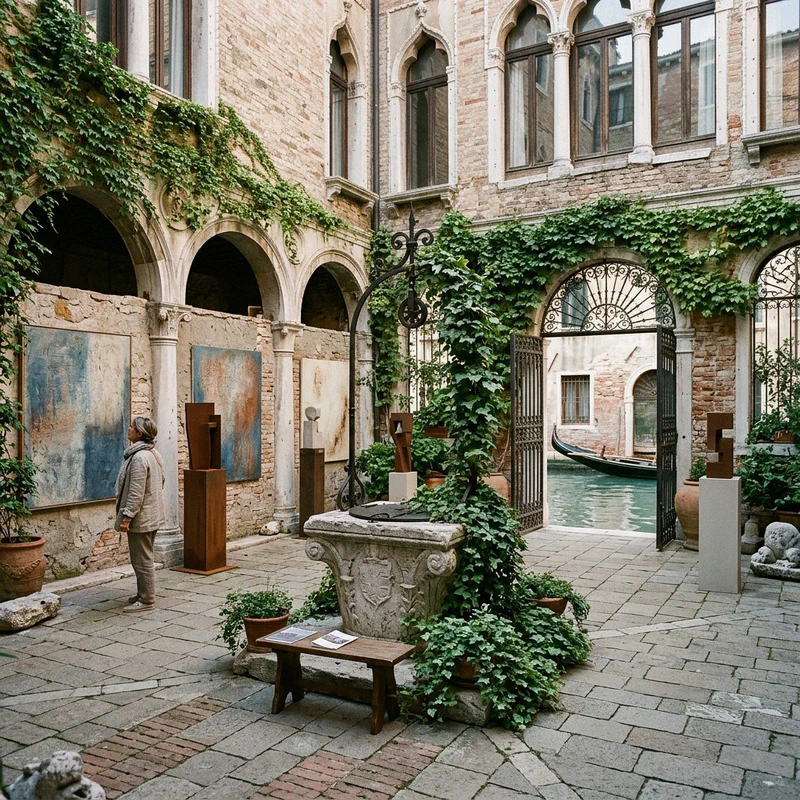
One of the most fascinating secrets of the Biennale lies in its collateral events. In addition to the main venues of the Giardini and Arsenale, dozens of free-admission exhibitions open the doors of places usually inaccessible. The collateral events offer a unique opportunity to explore the city’s hidden gems and discover new artists and designers.
Noble palaces overlooking the Grand Canal, secret gardens hidden behind high brick walls, deconsecrated churches, and ancient cloisters are transformed into temporary galleries. Exploring these exhibitions will allow you to venture into the most authentic and least frequented urban fabric of Venice. You can stumble upon collateral exhibitions that put eighteenth-century frescoes in dialogue with contemporary multimedia installations. It’s a unique opportunity to admire internal courtyards paved with Istrian stone and monumental staircases off the traditional tourist routes.
The Castello District: The Venice of the Venetians#
The Giardini and Arsenale are located in the heart of Castello, the most eastern and populous district of Venice. This area still preserves the authentic atmosphere of lagoon life, far from the commercial frenzy of Piazza San Marco. The Castello district is a must-visit destination for anyone interested in experiencing the real Venice.
The backbone of the district is Via Garibaldi, the only Venetian street officially named “via” (having been created by covering an ancient canal). Here, laundry hung out to dry crosses the narrow streets suspended between buildings, pensioners discuss on benches in the shade, and fishermen sell their catch directly from boats moored along the fondamenta. Stop at one of the small local bars for a coffee or a glass of wine before resuming your visit. Castello offers a haven of tranquility where you can rediscover the slow rhythms of the city, between the scent of saltwater and the clattering of goods carts on the stone fondamenta.
Where to Eat in Venice: Historic Bacari and Osterie#
Avoid restaurants with multilingual tourist menus that serve reheated food and beware of those who propose improper pairings, such as adding parmesan to spaghetti with clams. Here are two addresses for an authentic culinary stop:
- Cantina Do Mori (San Polo, 429): The oldest bacaro in Venice, dating back to 1462, where you can order a glass of red wine and taste traditional cicheti (crostini with baccalà mantecato or meatballs) under the old copper pots hanging from the ceiling. The bacaro is a historic institution in Venice, and its atmosphere is unparalleled.
- Trattoria Antiche Carampane (San Polo, 1911): A historic venue hidden in the alleys near Rialto, renowned for its extremely fresh lagoon seafood dishes, such as sarde in saor and moeche (soft-shell crab) fritters. The trattoria is a favorite among locals and visitors alike, and its cuisine is a true reflection of Venetian tradition.
If you find yourself near the Giardini of the Biennale, look for the Osteria al Portego or the small bacari along Via Garibaldi, perfect for a quick tramezzino or a plate of hot meatballs accompanied by a Select spritz, the historic aperitif born in Venice in 1920. The city’s culinary scene is a unique blend of traditional and modern, and there’s something for every taste and budget.
Practical Tips for Organizing Your Visit#
To reach the exhibition, the vaporetto lines 1, 4.1, or 5.1 will take you directly to the Giardini or Arsenale stops from Venice Santa Lucia train station. Plan at least two full days to visit both main exhibition areas calmly. Buy your tickets online in advance to avoid queues at the Giardini entrance. Wear comfortable and tested footwear: in Venice, you walk constantly, and climbing and descending the numerous stone bridges in Istrian stone can put a strain on your joints. The city’s unique terrain and architecture make it a challenging but rewarding destination for visitors.
If you have time available at the end of the fair, take vaporetto line 12 from Fondamente Nove to visit the smaller islands of the lagoon. In Torcello, in the almost ghostly silence of the semi-abandoned island, you can admire the superb Byzantine mosaics of the Basilica of Santa Maria Assunta, an absolute marvel of medieval art that will reconcile you with history. The island is a hidden gem, and its beauty is a testament to the region’s rich cultural heritage.
Conclusion#
The Venice Biennale 2025 is not just a design showcase, but an invitation to reflect on the state of the planet and our cultural heritage. Crossing the thresholds of the historic pavilions means embarking on a journey through time and space. Take the time to walk along the fondamenta, listen to the sound of the water, and let yourself be inspired by the visions of the great designers of our time. Buon viaggio in laguna! The Biennale is a unique experience that will leave you with unforgettable memories of the city and its people.