
Benvenuti, dear families! I am so happy you are here. If you are reading this, you might be feeling a little bit of that “Venice Anxiety.” I know it well. Even though I’ve been traveling through Italy for years, before I brought my own children to the Serenissima for the first time, my mind was filled with images of strollers getting stuck on ancient stone steps and my youngest wandering too close to the edge of a canal.
If you enjoyed this, you’ll love my other post about Skiing with Kids in Bormio: The Affordable Olympic Alternative for Families, where I share tips on making the most of a family vacation in the Italian Alps.
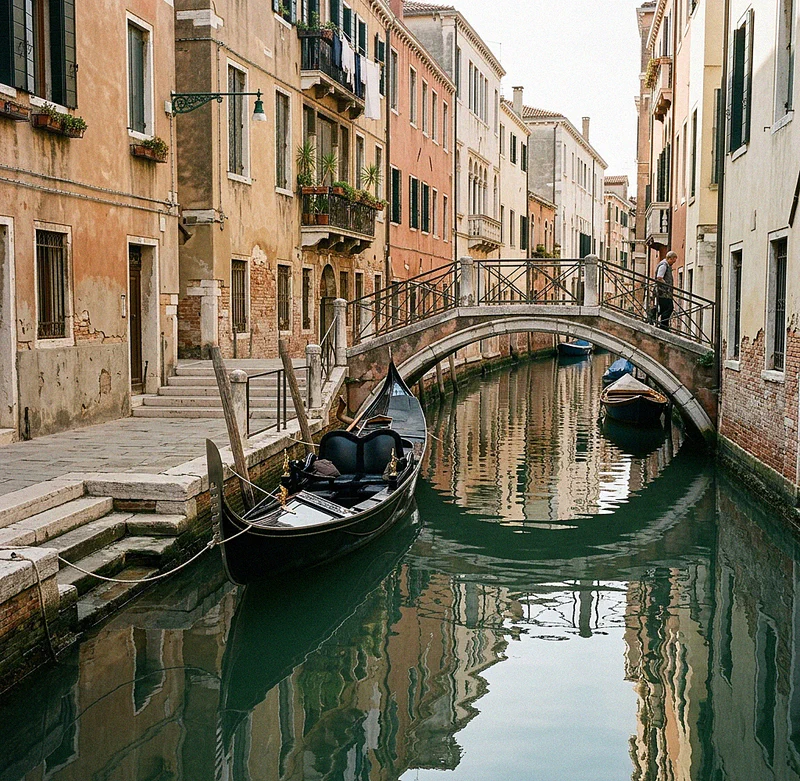
But let me tell you a secret: Venice is, in fact, one of the most magical places on Earth for a child. Without the roar of cars, the fumes of traffic, and the constant danger of scooters, the city transforms into a giant, silent, winding playground. It is a place where every corner holds a mystery, every bridge is an adventure, and the “streets” are made of shimmering water that reflects centuries of history.
Traveling with children can be equal parts chaotic and magical, I know it well. But with a little bit of my “mamma-tested” planning that I’ve refined over years of adventures, you can navigate the canals without the stress. Just as I learned while organizing our skiing weeks in Bormio with the kids, the secret is turning every potential obstacle into an occasion for discovery.
The Big Question: Strollers or Carriers?#
This is the question I get asked most often! Venice has over 400 bridges, and almost all of them have stairs.
My practical advice: If your child is small enough, a high-quality baby carrier (like an Ergobaby or Osprey) is your best friend. It allows you to navigate the narrow calli (streets) and bridges with ease. However, I know that for a long day of sightseeing, a stroller is often necessary for midday naps.
If you must bring a stroller, choose a lightweight, collapsible “umbrella” model. During our trips, my husband Lorenzo and I got used to the “Venetian lift”—one person at the front, one at the back, lifting the stroller over each bridge. It’s a great workout, I guarantee! If you’ve already experienced the freedom of a coastal holiday, as in my story about Castiglione della Pescaia, you’ll know that simplicity in gear is the key to success.
Insider Tip: Look for the “Accessible Venice” maps provided by the City Council. They highlight routes without barriers, particularly around St. Mark’s Square and along the Zattere, where ramps are often installed and left up for several months.
Getting There: The Arrival Magic#
First impressions matter! To avoid a stressful start, I strongly recommend not taking the bus from Marco Polo Airport to Piazzale Roma. It’s often crowded, hot, and lacks that sense of wonder that Venice deserves.
Instead, take the Alilaguna water bus (the Blue or Orange lines). It’s much more affordable than a private water taxi but still gives the children that wonderful “we are on a boat!” excitement. Seeing the skyline of Venice rise from the lagoon for the first time is a fantastic way to make memories as a family.
If your budget allows for a splurge, a private water taxi directly to your hotel’s dock is the ultimate stress-reducer. It feels like being in a James Bond movie, and seeing my children’s faces, Leonardo and Beatrice, as we sped through the waves is a memory I will cherish forever.
Where to Stay: Finding Your Family Nest#
While San Marco is the heart of the action, it can be overwhelming for little ones due to the crowds. I always recommend looking for accommodation in the neighborhoods of Cannaregio or Castello.
- Cannaregio: This is a “real” neighborhood where many Venetian families actually live. The Rio Terà San Leonardo is wide and easy to walk even with little ones.
- Castello: If you head toward Via Garibaldi, you’ll find wide sidewalks (a rarity in Venice!) and the beautiful Parco delle Rimembranze, which has a wonderful playground—ideal for letting the kids run free.
Leonardo and Beatrice loved staying in an apartment rather than a hotel. Having a small kitchen to prepare a quick pasta dinner when everyone is too tired for a restaurant is a lifesaver. Plus, visiting the local fruit seller who sells directly from his boat is an activity in itself!
The “Lion Hunt”: Keeping Little Explorers Engaged#
Venice is a living museum, but we can’t expect children to look at altarpieces for hours. We have to make it a game!
The symbol of Venice is the Winged Lion of St. Mark. When we visit, we organize a “Lion Hunt.” There are hundreds of them: carved into walls, sitting atop columns, and even hiding on door knockers. I give my children a little notebook, and every time they find a lion, they get a sticker. This keeps them attentive and curious for hours while we walk.
Another magical place that children love is the Libreria Acqua Alta in Castello (Calle Lunga Santa Maria Formosa). It is often called “the most beautiful bookstore in the world.” Books are kept in bathtubs and even a full-sized gondola to protect them from floods. My kids spent an hour climbing the staircase made of old encyclopedias in the back courtyard to look over the canal wall. It’s pure visual poetry.
Navigating the Water: Gondolas vs. Traghetti#
A gondola ride is the dream, isn’t it? But at €80-€100 for 30 minutes, it can be a heavy hit to the family budget.
Elena’s Secret: Use a Traghetto. These are large gondolas used by locals to cross the Grand Canal at specific points (like between Campo Santa Sofia and the Rialto Market). It only costs €2 per person, and the ride lasts about two minutes. It’s the perfect way to give the kids the “gondola experience” without the high price tag.
For general transport, buy a Vaporetto (water bus) pass. Children under six travel for free! Sitting at the front or back of a Vaporetto is the best way to see the Grand Canal palaces without tiring out little legs. If traditional rowing fascinates you, (Update: I’ve dedicated a full guide to the legendary Vogalonga of Venice, a breathtaking event).
Dining with Picky Eaters: Beyond Pizza#
Italian food is generally kid-friendly, but Venice can be tricky with its focus on seafood or squid ink.
- Gelato Stops: You cannot go wrong with Gelateria Nico on the Zattere. Grab a “Gianduiotto” (a block of chocolate hazelnut gelato drowned in whipped cream) and sit on the wide promenade while the kids watch the giant ships and tugboats go by.
- Cicchetti for Parents, Pizzette for Kids: Head to Cantina Do Mori (near the Rialto). It’s the oldest bar in Venice. While you enjoy an ombra (a glass of wine) and some traditional cicchetti, the kids can have delicious pizzette or simple crostini with ham.
- The Best Family Meal: Visit Trattoria dalla Marisa in Cannaregio. It’s cozy, welcoming, and they treat children like royalty. There is no fixed menu; Mamma Marisa simply tells you what she cooked that day. It feels like eating in a grandmother’s kitchen. It reminds me of the authentic atmosphere of the handmade orecchiette in Bari Vecchia that my colleague Giulia loves to talk about.
Practical Safety Tips for Peace of Mind#
I know the water can be scary for parents. Here are my nurturing tips for staying safe:
- The “Wall Side” Rule: When walking along canals without railings (which is most of them!), always keep the children on the “inside” of the path, closest to the buildings.
- Bright Colors: Venice is a labyrinth. Dress your children in bright colors so you can spot them instantly in a crowd.
- Identification: I always tuck a business card from our hotel into my children’s pockets, or use a temporary tattoo with my phone number on their arm.
- Water Fountains: Venice has wonderful, safe drinking fountains (fontane) everywhere. Bring a reusable bottle and let the kids be in charge of “finding the next fountain” to stay hydrated. It’s a great way to save money and teach them the value of public water.
A Moment of Peace: The Secret Gardens#
When the crowds of St. Mark’s get too much, head to the Giardini della Biennale. It is a vast green space with plenty of room to run and play. It is perfect for children who need to burn off some energy after a morning in narrow streets. There is a lovely cafe there where you can sit under the trees while the children play nearby. If you are looking for the absolute silence of a fairy-tale lake after the dynamism of the lagoon, (Update: my colleague Sofia recently published a dreamy guide to Lake Orta, a destination worth the trip).
Creating Lasting Memories#
On our last evening in Venice, we always do the same thing. We buy a few slices of pizza from a “take-away” window (like Antico Forno near Rialto), find a quiet campo (square) with an old well-head in the center, and have a picnic while the local children play soccer.
Venice isn’t just about the monuments; it’s about the light hitting the water, the sound of the church bells, and the joy of being together in a place that feels like a fairy tale. Don’t try to see everything. If you only see one church but spend two hours feeding the pigeons or watching a glassblower in a small shop in Murano, that is a successful day.
Traveling with your children is a gift. It won’t always be perfect—there might be a tantrum near the Doge’s Palace or a dropped gelato in Cannaregio—but those are the stories you will tell for years to come.
Safe travels, dear families. Enjoy every magical moment in the Serenissima!
With love, Elena