
The Verona Opera Festival 2025 is a prestigious event that transforms this historic city into a global capital of opera every summer. The Arena di Verona, an extraordinary monument steeped in centuries of history and culture, offers a unique natural acoustics experience. This year, the festival will take place from Friday, June 13 to Saturday, September 6, 2025. Strolling through the stone arches of this Roman amphitheater at sunset creates an unbreakable bond between archaeology and grand music. Behind these walls lies a timeless artistic legacy.
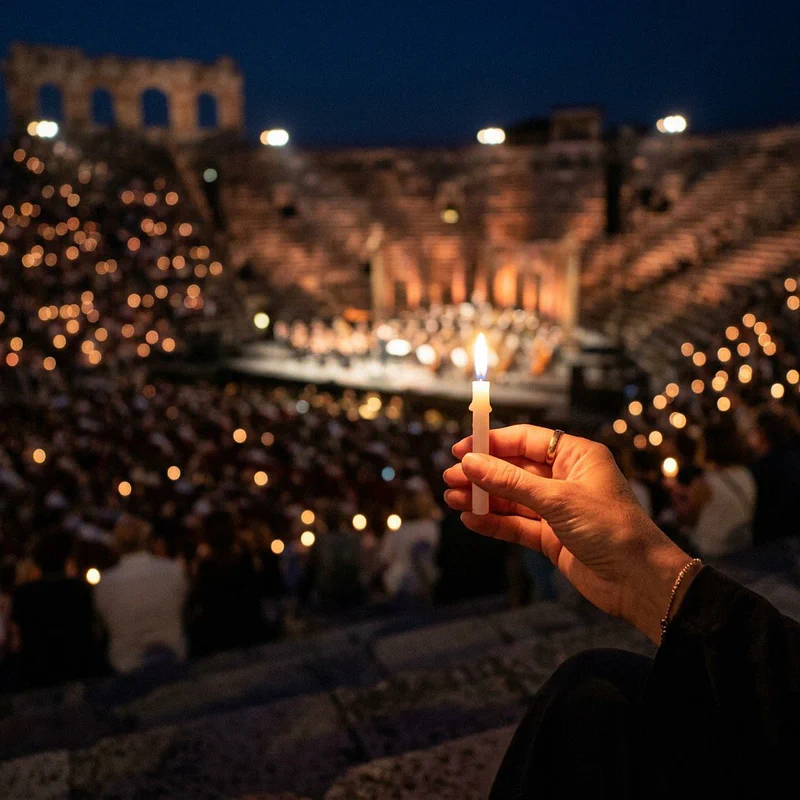
I recall a July evening a few years ago, seated on the stone steps as twilight faded into a deep blue. At the first note of the Aida prelude, thousands of spectators lit their traditional candles, distributed at the entrance. The golden glow of that constellation of flames against the ancient stones from the 1st century AD created a moment of pure emotion. It was an aesthetic and intellectual experience that etched the greatness of Roman ingenuity and the power of opera into my memory.
The Arena di Verona: A Masterpiece of Roman Architecture#
Constructed in the early 1st century AD during the reign of Tiberius or Claudius, the Arena di Verona is one of the largest Roman amphitheaters still in exceptional condition. Originally located outside the city walls, it could accommodate up to thirty thousand spectators who watched gladiatorial combats and fierce beast hunts.
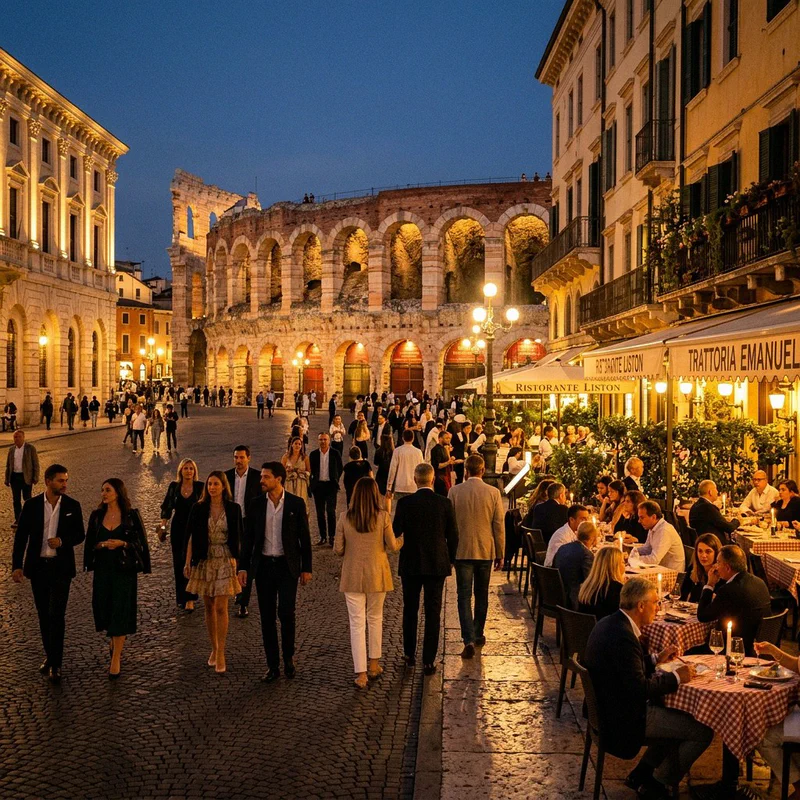
The earthquake of 1117 nearly destroyed the triple order of external arches, leaving only a small portion of the outer perimeter known today as the Ala. This monumental fragment, with its three remaining large arches made of Valpolicella limestone, is the most famous visual symbol of Verona.
During the Renaissance, the amphitheater underwent significant restorations and began hosting jousts, tournaments, and theatrical performances. However, the pivotal moment came in 1913 when the Veronese tenor Giovanni Zenatello and impresario Ottone Rovato decided to celebrate the centenary of Giuseppe Verdi’s birth by staging Aida in the Arena, inaugurating the world’s largest outdoor opera festival.
The Physics of Arena Acoustics and Seating Division#
The acoustics of the Arena are a marvel of empirical engineering. The elliptical shape of the cavea (the seating area) acts as a vast natural sound reflector. Sound travels from the central stage, gliding along the limestone steps without dispersing, allowing the unamplified voice of a single singer to reach the highest rows, even near the Ala.
Historically, this space reflected a rigid social hierarchy:
- The Platea: Located at the bottom of the arena, where gladiators once fought. It was reserved for Roman patricians and magistrates. Today, it features numbered seats occupied by evening-dressed spectators seeking a close view of the stage.
- The Gradinata Numerata: Positioned halfway up, this area was once occupied by the middle class of merchants and affluent citizens. It offers an excellent compromise between visual comfort and acoustic quality.
- The Gradinata Non Numerata: The upper stone steps, historically designated for the common people. This is the most authentic and democratic section of the festival. Here, spectators arrive well before the performance, sharing food, wine, and conversation in a convivial atmosphere reminiscent of past popular festivities.
The Program for the 102nd Edition of the Festival in 2025#
The 2025 opera season presents an extraordinary lineup alternating historic productions with innovative interpretations:
- Aida (Giuseppe Verdi): The symbolic opera of the Arena returns in a visionary and monumental production by director Stefano Poda, featuring modern light and mirror effects.
- Nabucco (Giuseppe Verdi): A highly anticipated new staging, also directed by Stefano Poda, focused on the dramatic power of the famous chorus Va, pensiero.
- La Traviata (Giuseppe Verdi): The refined and elegant staging by director Hugo de Ana, enriched with majestic period furnishings and sumptuous costumes.
- Carmen (Georges Bizet): The legendary and spectacular production by maestro Franco Zeffirelli, rich in performers, colors, and Spanish passion.
- Rigoletto (Giuseppe Verdi): Presented in the classic and historical staging by Ivo Guerra, a tribute to the philological tradition of Italian opera.
The program also includes special non-subscribed evenings, such as the classic dance performance Roberto Bolle and Friends and the monumental execution of Carmina Burana under the stars.
My greatest annoyance in Verona is the fake gladiators dressed in cheap plastic armor who linger in Piazza Bra. Not only do they detract from the historical dignity of the Roman amphitheater, but they also aggressively insist on taking paid selfies with unsuspecting tourists. Ignore them firmly and focus on the true archaeological beauty of the Roman stones.
What to See in Verona During the Day#
Before the opera begins, Verona deserves a careful exploration of its architectural and historical treasures:
- Castelvecchio and the Ponte Scaligero: This 14th-century military fortress of the Della Scala dynasty now houses an exceptional museum restored by architect Carlo Scarpa. The attached fortified bridge, with its imposing swallowtail battlements, crosses the Adige, offering picturesque views.
- Piazza delle Erbe: Built on the site of the ancient Roman forum, it is considered one of the most picturesque squares in Italy, framed by frescoed houses and dominated by the 14th-century fountain of Madonna Verona and the soaring Torre dei Lamberti. The latter, standing at 84 meters, offers an unforgettable panorama of the city’s red-tiled roofs.
- Giardino Giusti: On the eastern side of the Adige River, this Italian Renaissance garden, celebrated by Goethe in his Italian Journey, features a maze of boxwood, ancient cypress trees, and a rocky terrace that provides a romantic and tranquil view of Verona.
Practical Tips for Your First Time at the Arena#
To fully enjoy the performance without unpleasant surprises, it is essential to prepare adequately for the evening:
- The Heat of the Roman Stones: This is a detail many visitors overlook. The stone steps of the Arena absorb solar heat throughout the summer day. When the gates open in the late afternoon (around 6:00 or 7:00 PM), the stones can be extremely hot, almost burning to the touch. Dress in cool, natural fabrics.
- The Need for a Cushion: Sitting for three or four hours on bare stone can be both hot and extremely tiring for your back. Avoid the unauthorized vendors outside the amphitheater selling poor-quality sponge cushions at inflated prices. Inside the Arena, official cushion rental services are available for just a few euros, providing clean and comfortable options.
- Dress Code Requirements: If you purchase a ticket for the platea (the numbered seats below), elegant and decent attire is required (shorts and flip-flops are prohibited). In the non-numbered seating area (the stone steps), dress is casual and informal, but I still recommend bringing a light jacket or shawl for the nighttime humidity that settles after midnight.
How to Reach the Amphitheater#
The Verona Porta Nuova train station is the city’s main hub, well-connected to Milan, Venice, and Bologna via high-speed trains. From the station, you can reach Piazza Bra with a flat 20-minute walk along Corso Porta Nuova or by using the frequent urban buses (lines 11, 12, 13) that stop right in front of the square’s gardens.
If you arrive by car, remember that Verona’s historic center is a ZTL (Limited Traffic Zone) monitored by cameras. Park your car outside the historic perimeter in paid underground lots like Parcheggio Arena or Parcheggio Cittadella, located just a short walk from the amphitheater.
Where to Eat in Verona: Between Historic Taverns and Noble Wines#
Veronese cuisine boasts a centuries-old tradition linked to the products of the plain and Valpolicella. Avoid touristy restaurants with illustrated menus directly facing Piazza Bra, where prices are inflated and quality is mediocre.
I recommend venturing into the historic alleys to discover these culinary institutions:
- Antica Bottega del Vino (Via Scudo di Francia, 3): Active since the mid-19th century, it is one of Italy’s wine temples. Sit at the wooden counter for a glass of Amarone della Valpolicella paired with local cicheti, or book a table to savor the legendary Amarone risotto or braised beef.
- Osteria da Ugo (Vicolo 3 Marchetti, 4): A typical Veronese tavern located just steps from Juliet’s house. It offers traditional dishes crafted with care, including bigoli with duck ragù and pastissada de caval. The latter is a historic Veronese horse stew slow-cooked in red wine and spices, with a recipe dating back to 489 AD, when Theodoric’s soldiers used this preservation method after the battle against Odoacer.
- Pasticceria Flego (Via Stella, 13): The ideal spot in the afternoon for an artisanal coffee accompanied by refined traditional pastries or modern high-end mignon.
Conclusion#
The Verona Opera Festival 2025 is a unique opportunity to experience a living piece of Italian history. Sitting on the ancient steps of the Arena, lighting your candle, and letting the notes of the masters of opera envelop you under the starry sky is an experience that enriches the spirit. I hope this guide helps you navigate the warm stones, cushions, and historic taverns for a perfect evening filled with beauty and art. Enjoy the opera in Verona!