
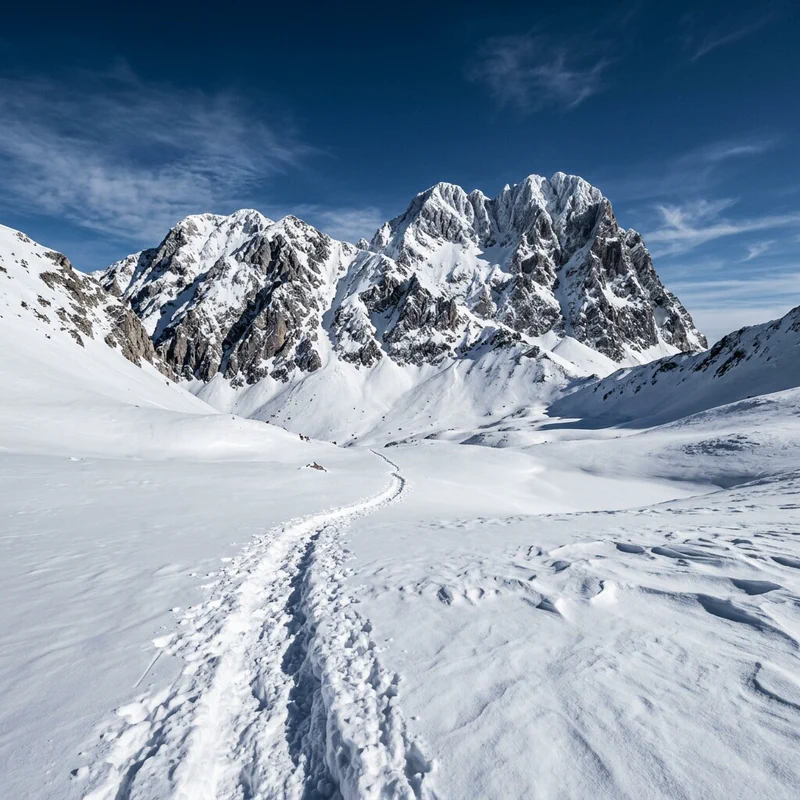
When winter loosens its icy grip, the Gran Sasso Massif in Abruzzo becomes a breathtaking haven for snowshoe enthusiasts. This rugged chain of peaks, crowned by Corno Grande (2,912 m), the highest mountain in the Apennines, offers an untouched wilderness that feels like stepping into a snow globe. Here, it’s just you, the crunch of snow beneath your feet, and views that stretch all the way to the Adriatic on clear days. Worth every drop of sweat, trust me.
But don’t let the quiet beauty fool you. The Gran Sasso demands respect—this is not a place for flip-flops or casual strolls. If you’re ready for an adventure that will leave your legs burning and your heart full, snowshoeing here is the perfect way to bid winter goodbye.
As I mentioned in my guide to the Sentiero Italia, the Abruzzo sections are among the most wild and rewarding.
Why Choose Gran Sasso for Snowshoeing?#
If you’re visiting in the warmer months, you might prefer my multi-day high-altitude trek through Abruzzo National Park, which explores the greener side of these peaks. The Gran Sasso Massif is part of the Parco Nazionale del Gran Sasso e Monti della Laga, one of Italy’s largest and most diverse national parks. Its high-altitude plateaus, dramatic peaks, and peaceful forests make it a dream for outdoor lovers.
Highlights:
- Campo Imperatore: Known as “Little Tibet,” this vast plateau at 1,800 meters is a snowshoeing paradise. The open space, surrounded by towering peaks, is perfect for beginners and seasoned trekkers alike.
- Corno Grande Summit: For advanced adventurers, reaching the highest point of the Apennines in winter is a bucket-list achievement. CAI Difficulty: EEA (Experts with Alpine Equipment).
- Rocca Calascio: A medieval fortress perched on a ridge at 1,460 meters, offering panoramic views. The snow-draped ruins are straight out of a fairytale.
Best Time to Visit#
The ideal window for snowshoeing in Gran Sasso is late January to early March, when the snow is still fresh but the days start to lengthen. Avoid weekends if you crave solitude. While the Massif is still off the radar for many tourists, locals flock here on sunny winter weekends.
Getting There#
- By Car: Rent a car for the most flexibility. From Rome, take the A24 motorway toward L’Aquila and continue to Assergi (about 2 hours). From there, follow signs to Campo Imperatore or other trailheads.
- By Public Transport: From L’Aquila, buses run to Assergi, but schedules are limited in winter. Check the latest timetables on the TUA website (Abruzzo’s public transport operator).
- Pro Tip: If you plan to stay overnight, consider basing yourself in Santo Stefano di Sessanio, a beautifully restored medieval village just 20 minutes from key trailheads.
What to Pack#
Gran Sasso in winter is as unforgiving as it is stunning. Pack smart to stay warm, safe, and prepared:
- Snowshoes & Poles: Essential for navigating snowy terrain.
- Insulated Boots: Leave the city shoes at home, please—your toes will thank you.
- Layers: Thermal base layers, a waterproof jacket, and insulated gloves are non-negotiable.
- Gaiters: Keep the snow out of your boots.
- Backpack Essentials: Map, compass, snacks, water, a headlamp, and a small first-aid kit.
- Avalanche Gear: If you’re tackling high-altitude routes, bring a beacon, probe, and shovel—and know how to use them.
Top Snowshoeing Routes#
1. Campo Imperatore Loop#
- Distance: 8 km (loop)
- Elevation Gain: 300 m
- Difficulty: Easy to moderate
- Route Details: Start at the Campo Imperatore Hotel (yes, the same one where Mussolini was imprisoned). This loop takes you across the sweeping plateau, with stunning views of Corno Grande.
2. Monte Aquila Ascent#
- Distance: 6 km (out-and-back)
- Elevation Gain: 600 m
- Difficulty: Moderate
- Route Details: From Campo Imperatore, follow the trail that climbs to Monte Aquila (2,494 m). The ascent is steep but manageable. On clear days, you can see the Adriatic shimmering in the distance.
3. Corno Grande Summit (Western Ridge)#
- Distance: 12 km (round trip)
- Elevation Gain: 1,200 m
- Difficulty: Challenging (CAI Level: EEA)
- Route Details: Start at Campo Imperatore and follow the western ridge. This route requires technical gear and experience with winter mountaineering. Not for the faint-hearted, but the reward? A 360° view that will take your breath away.
Responsible Snowshoeing#
The Gran Sasso Massif is a fragile ecosystem. Let’s keep it pristine:
- Leave No Trace: Pack out all your trash, even biodegradable items like orange peels.
- Stay on Marked Trails: Avoid disturbing wildlife and delicate vegetation under the snow.
- Respect the Silence: Loud music has no place here. Let the crunch of snow and the call of a distant chough be your soundtrack.
- Share the Trail: Snowshoers and skiers often share paths. Be mindful of others, and never block the way.
Après-Snowshoeing: Where to Eat and Stay#
After a long day on the trail, nothing beats a hearty meal and a cozy bed.
- Eat: Try Trattoria Fore le Mura in Santo Stefano di Sessanio for traditional Abruzzese dishes. The lamb arrosticini and saffron-infused risotto are standouts.
- Stay: Sextantio Albergo Diffuso, a restored medieval village-turned-boutique hotel, offers rustic charm with modern comforts.
A Final Word#
Snowshoeing the Gran Sasso Massif is a journey into the heart of wild Italy. It’s not about the selfies or the likes—the mountain doesn’t care about your followers, respect it. Pack smart, tread lightly, and embrace the solitude. Winter’s last breath up here is an experience that will stay with you long after the snow melts.
Let’s hit the trail—two feet, one step, zero regrets.